


Oca Pavilion | 1st floor | Live Lab
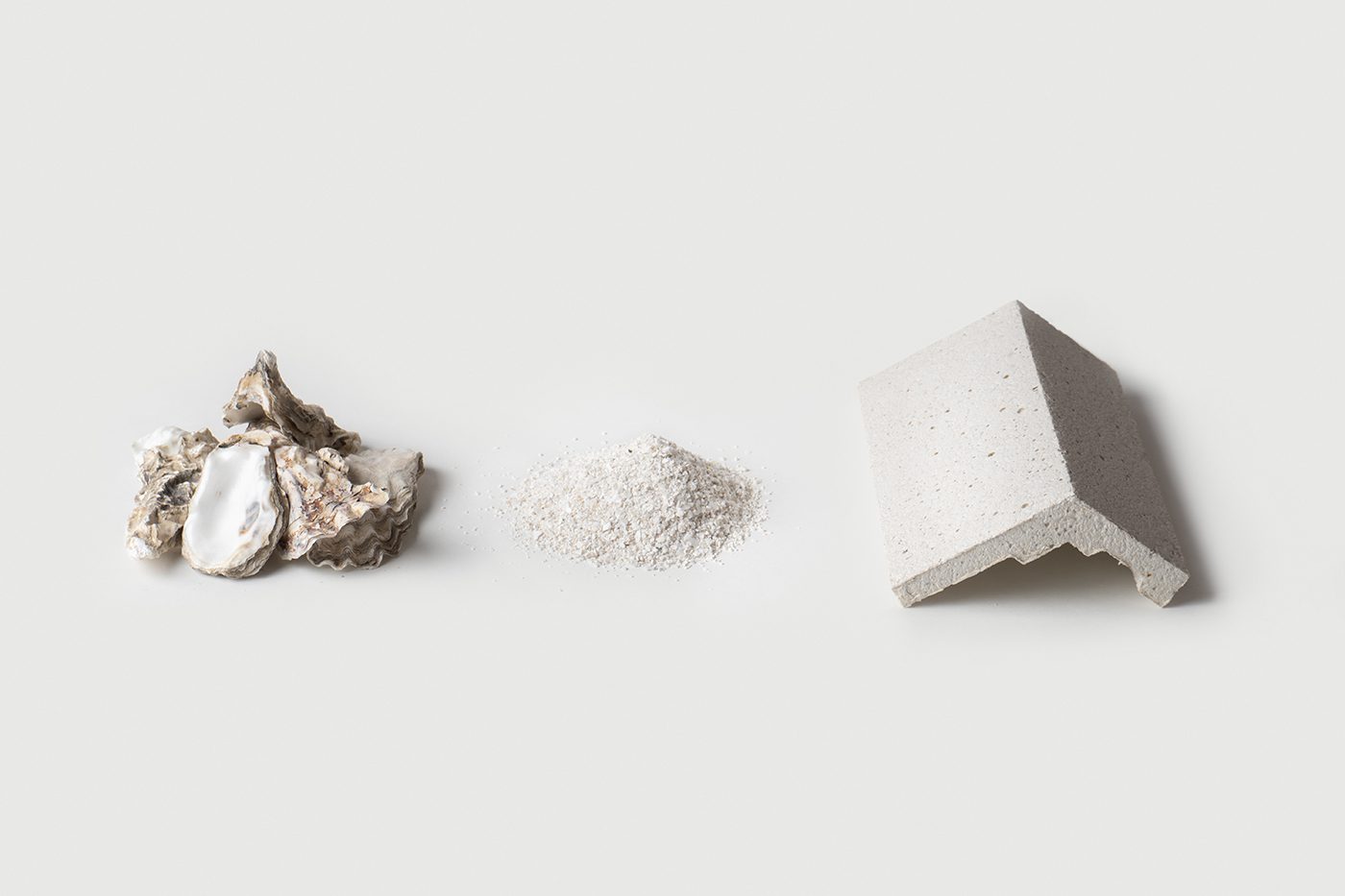
The workshop will explore the potential of marine biomaterials, based on the CONQ project, developed by Heidi Jalkh and Angie Dub. Inspired by nature, this solution investigates how materials such as seashells can be transformed into bioceramics at room temperature. These bioceramics represent a sustainable alternative for building facade cladding systems, monomaterials custom-designed to achieve a variety of mechanical and aesthetic properties. Participants are also invited to reflect on the environmental and social impacts of using waste as a resource, highlighting the potential of marine-derived biomaterials in regenerative design and the local circular economy.
Every year, more than 10 million tons of shells—primarily from oysters, scallops, and mussels—are discarded as waste. This project explores how marine resources, often overlooked as byproducts, can serve as a basis for material experimentation in architecture, design, crafts, and science. It highlights innovative material practices that redefine the relationship between the built environment and the ecosystems that sustain it.
Spanning multiple scales—from buildings and building elements to material value chains—the project examines how design can foster new interdependencies between materials, construction, and ecological systems.
At the heart of this investigation is the collaborative research of environmental architect Angie Dub and experimental designer Heidi Jalkh, who have been transforming discarded seashells into a sustainable material for the built environment. By combining crushed seashells with algae-based biopolymers, they produce a heat-free bioceramic composed entirely of marine biomass. This practice-based research rethinks bioregional value chains, exploring the potential of marine waste within urban areas such as Buenos Aires and Berlin, the cities where the designers are based.
Through prototypes, raw materials, molded components, and test samples developed during the research phase, the project offers a detailed exploration of material transformation—from shell to final product.
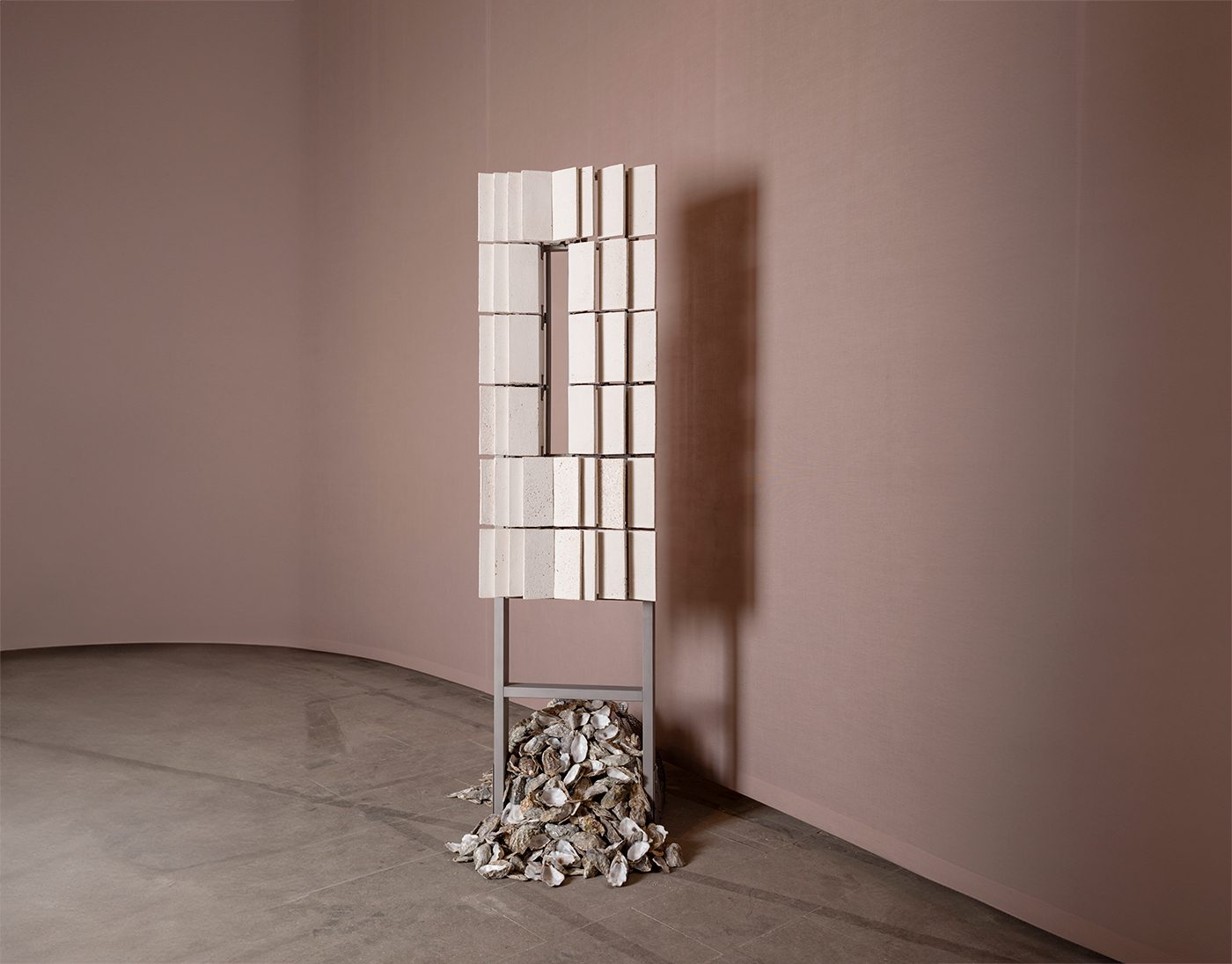
CONQ presents an emerging modular construction system, illustrating the potential application of this shell-based bioceramic and pointing to future research directions. Furthermore, the material samples reveal the diversity of colors and finishes that naturally emerge from different shell species, demonstrating the material's inherent variability and the design's balance between mechanical performance and aesthetic versatility.
The project emphasizes the urgent need for a transition from extractive practices to regenerative and circular economies. Rather than viewing natural resources as inert and merely extractable elements, it proposes a dynamic and systemic approach that recognizes the deep interconnections between materials, buildings, and the ecosystems that sustain them.