

Project implementation: Brazil
Project development: Brazil
Students: Domenico S., Gabriel W., Luigi F., Rodrigo C., Tereza P., Yuri T.
Orientation Analia A.
With the advent of the climate crisis, housing becomes a systemic problem. We've moved on from the era in which housing was limited to the boundaries of each owner's lot.
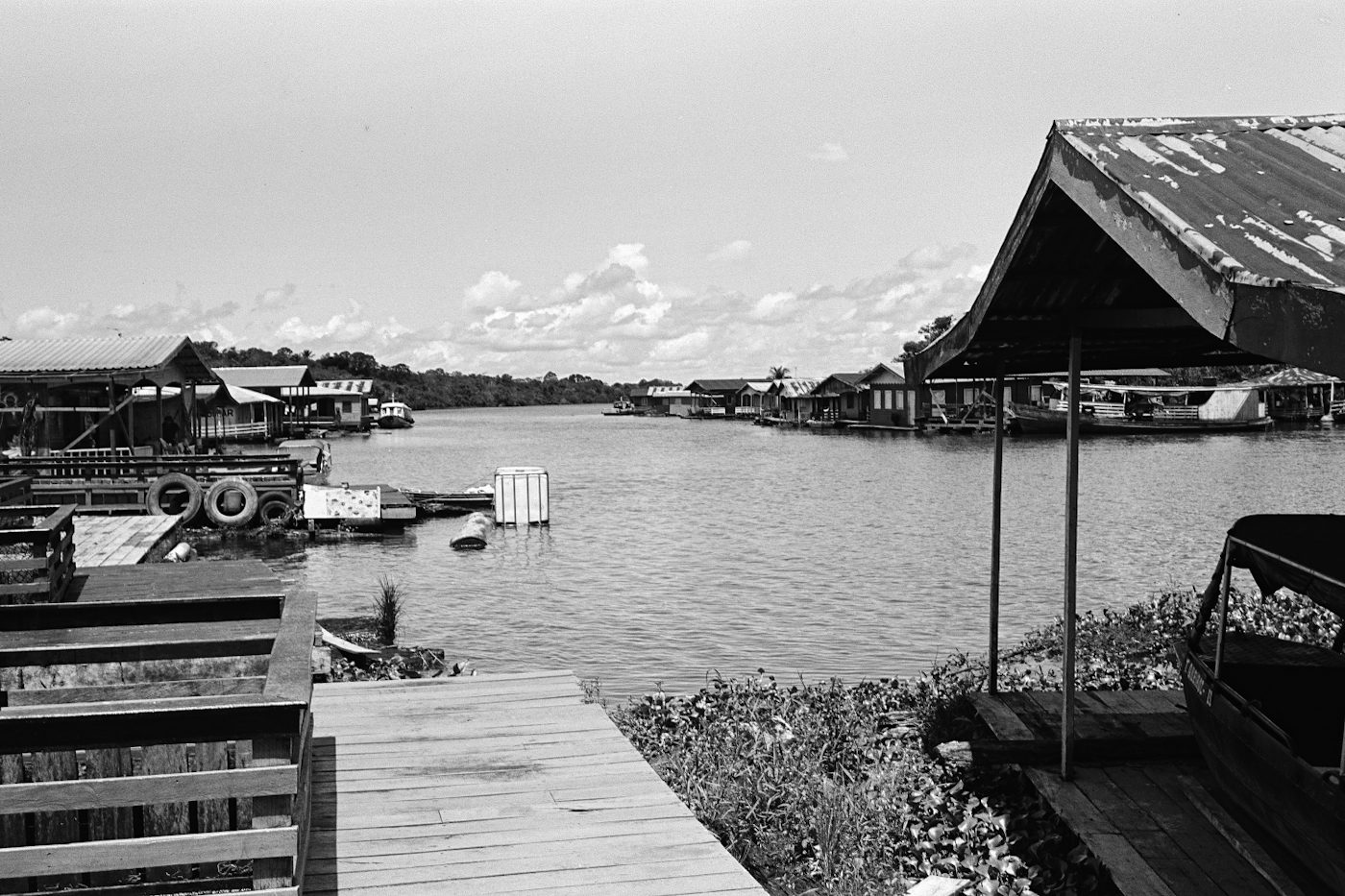
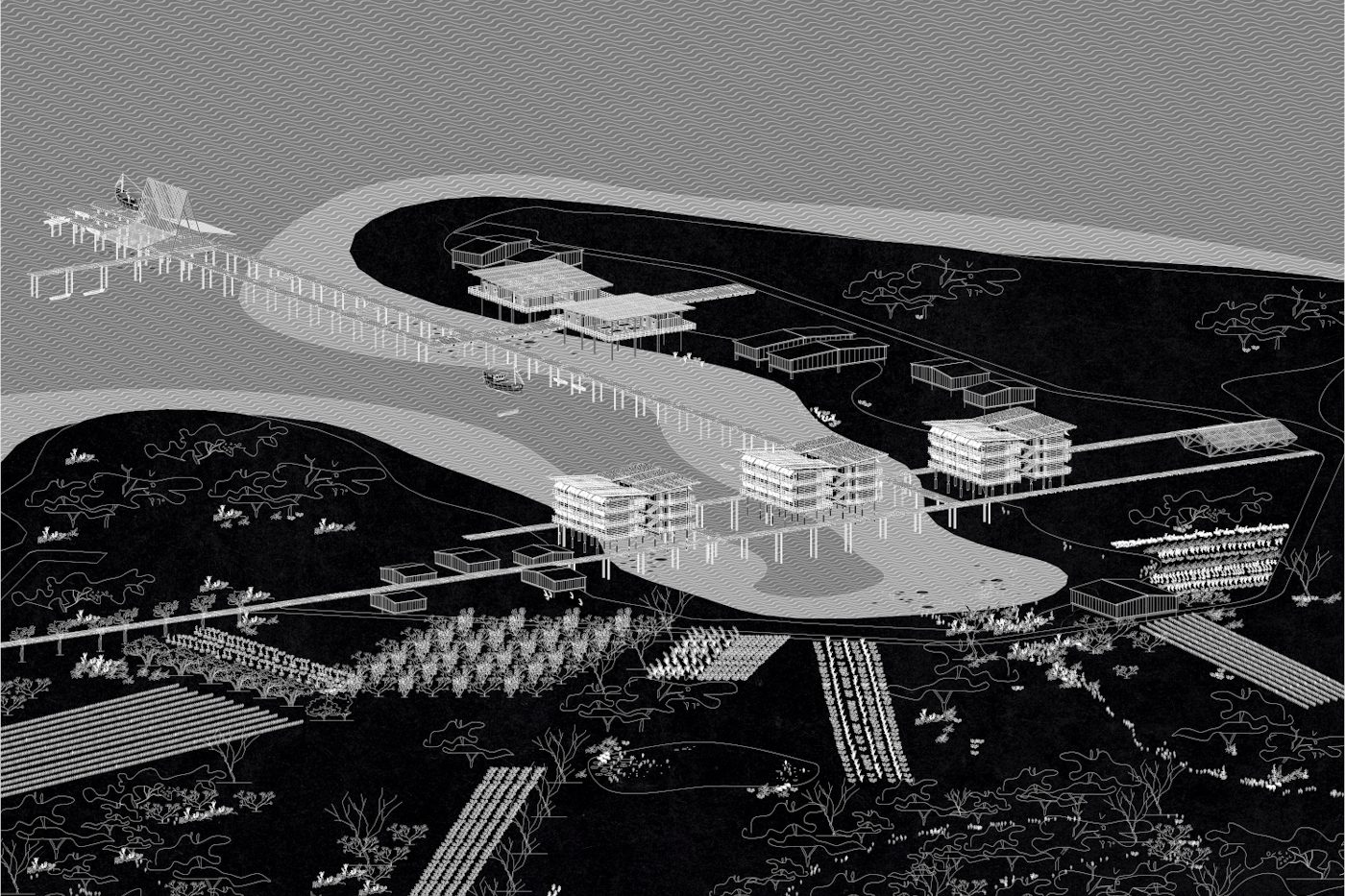
Our hypothesis is based on the recognition of a historically exploratory extractive model that has produced not only environmental devastation but also the economic and social dependence of local populations on cycles of exploitation. The project, implemented in the river plain of Lake Janauacá, seeks to reverse this logic: restoring degraded areas through the management of native species to regenerate soils, activating autonomous production chains, and enabling communities to self-manage their vital resources.
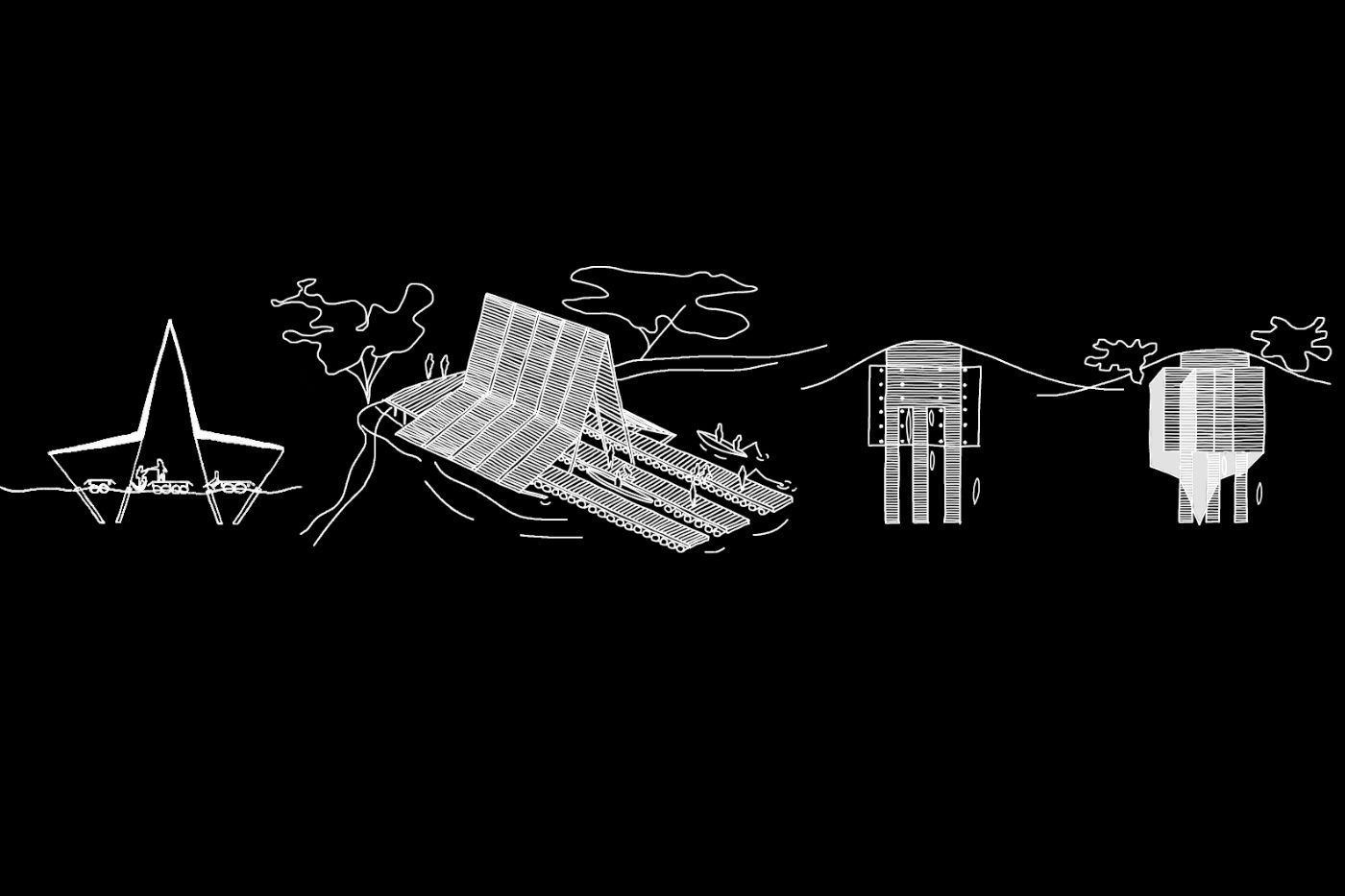
The territorial occupation is organized around cooperative centers that share collective infrastructure built with prefabricated systems made from local wood. These centers, such as a school, cultural center, social housing, market, and health unit, are connected by a hydrographic network and create a city capable of withstanding floods and droughts, capable of adapting to the dynamics of the territory.
In this study, we seek to imagine new forms of occupation in the Amazon territory. Cities free from extractive logic, sovereign in their means of subsistence, capable of inhabiting without depredation. By envisioning new landscapes, we envision emancipated ways of life, in which the relationship between humans and nature is symbiotic, enabling the flourishing of new social and ecological pacts.