

Students: Ishiyama, Condori, Fuentes, Meneses, Paucar, Quispe
Lima is located in one of the few desert valleys on the Peruvian coast and is a major draw for migrants seeking opportunities. The city grew haphazardly, receiving residents from the interior who settled precariously, often in vulnerable and unsuitable locations.
San Juan de Lurigancho (SJL) is the district with the largest population in Lima and is a clear reflection of the city's overflow phenomenon.
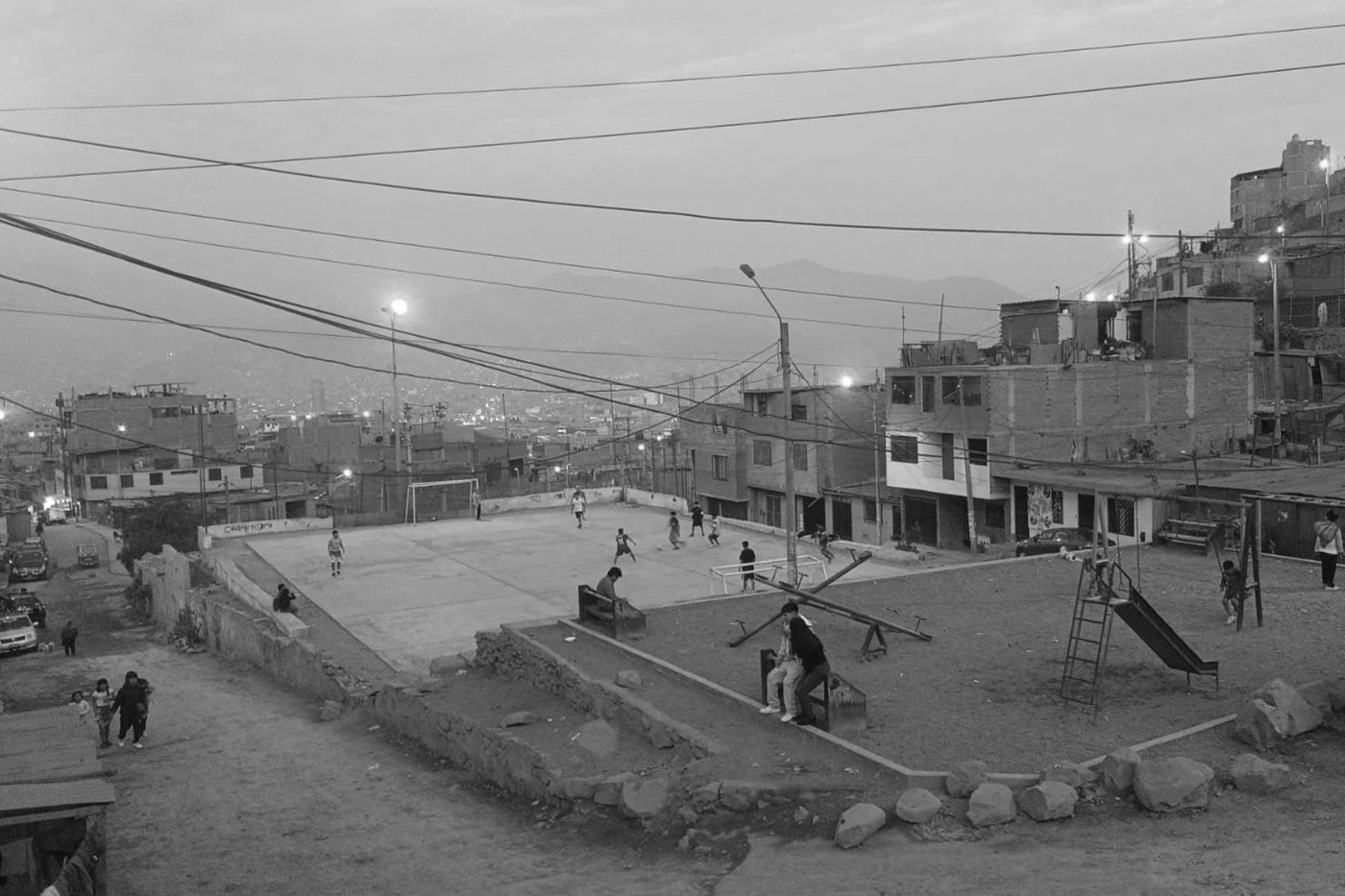
“San Fernando” is located in sector 4 of SJL, and is formed by a group of young communities that share a school, businesses and a single public space.
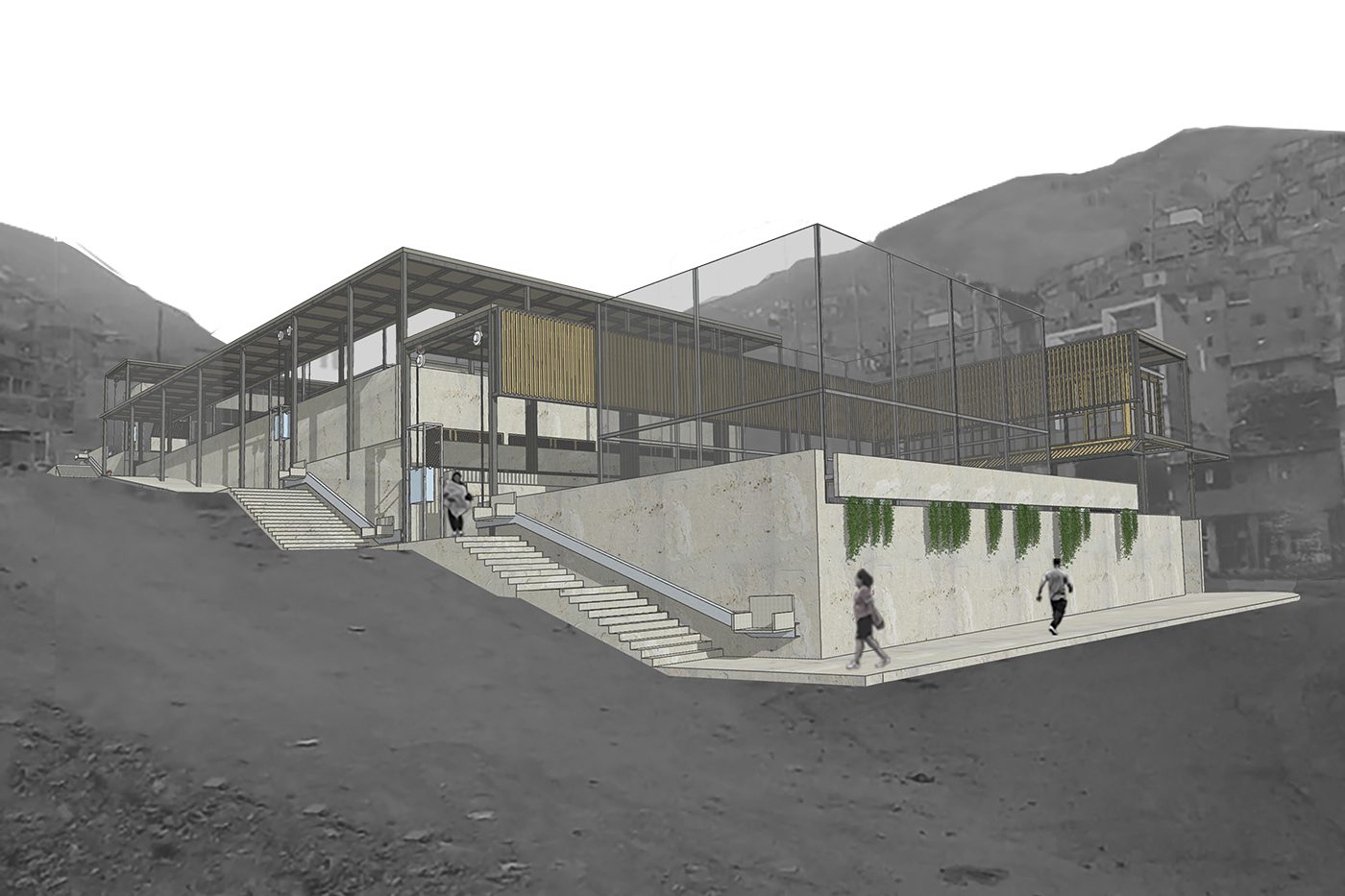
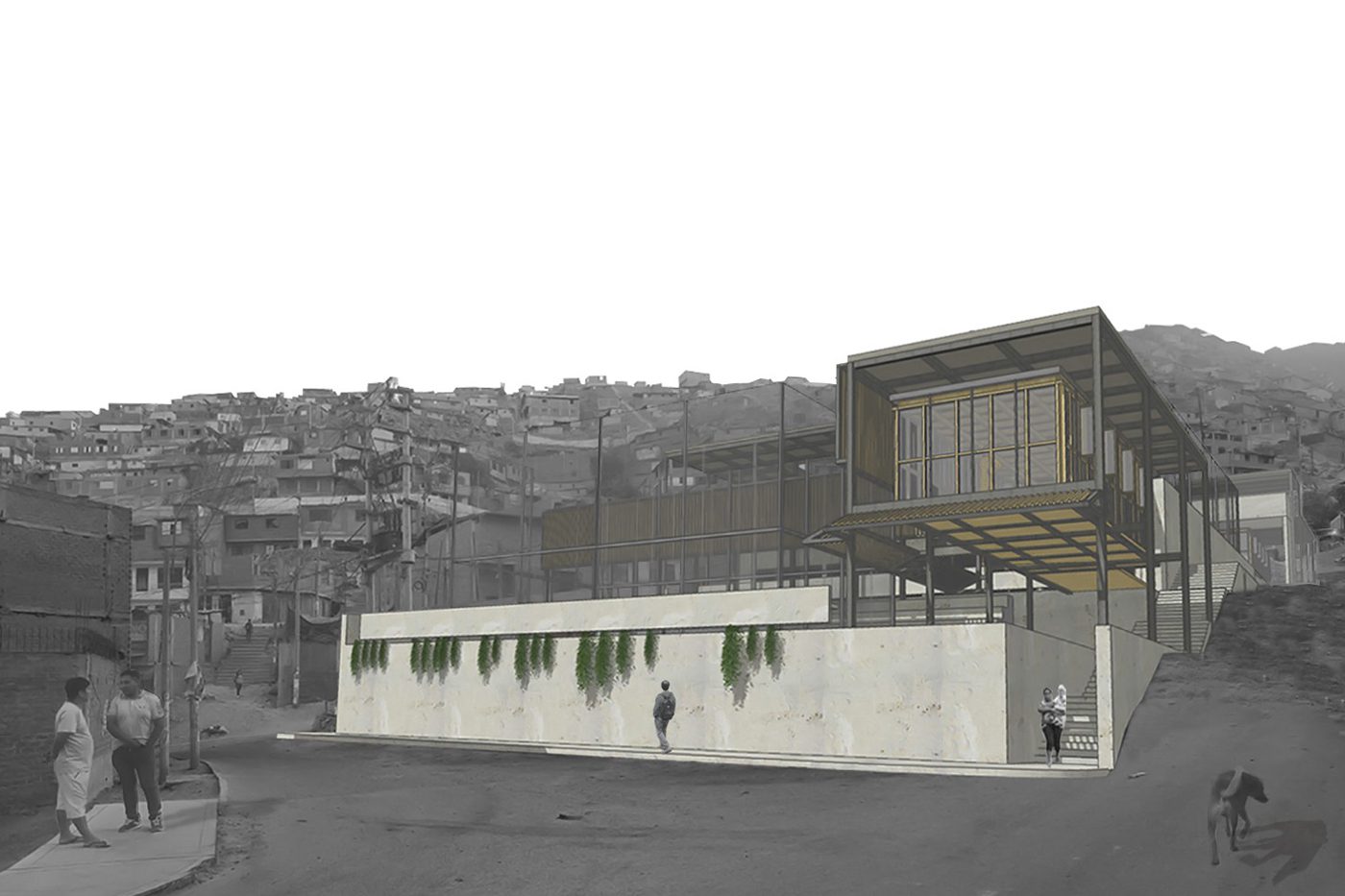
The public space consists of three platforms arranged in a descending order. The lower platform is the volleyball court, the middle platform is the multipurpose slab, and the small upper platform is the games area. The project proposes reusing the site's infrastructure, making small improvements to enhance existing activities and promote new ones through the use of flexible space.
The sun's path is studied to expand shaded areas and take advantage of natural ventilation. Energy is generated for equipment and lighting using solar panels, treated graywater is reused to enable hydraulic mechanisms to assist people with disabilities and maintain a community green space.
The installation of a water storage reservoir and a gravity distribution system is proposed to guarantee access to the resource in periods of drought, emergency or disaster.
The project seeks to improve the sector by doing a lot with a little. We hope that the neighborhood will find adequate support in improved public spaces to gather, organize, and face challenges.