
Project implementation: Brazil
Project development: Brazil
Coming soon.

Project implementation: Switzerland
Project development: Switzerland
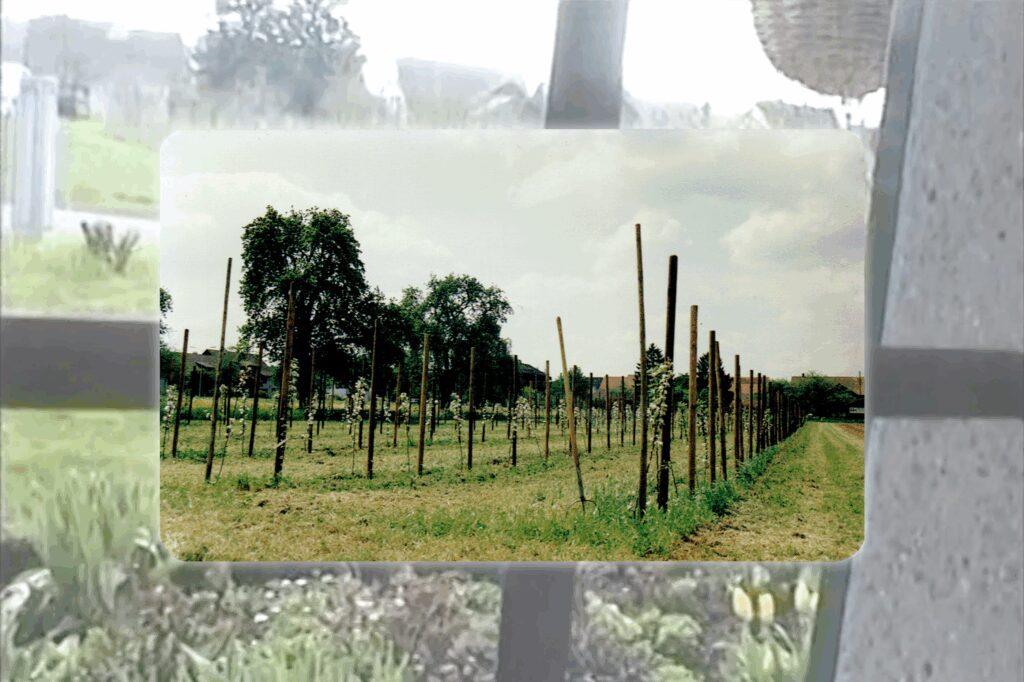
“Öpfelchüechli” (“Fried Apple Rings”) is a film essay by David Menzi that explores the transformation of Swiss farmland into suburban sprawl and the parallel erosion of cultural memory. Central to the film is the memory of a dish from his grandmother’s kitchen, intimately linked to the apple trees that once surrounded the family home in Volketswil, a suburb of Zurich. As Menzi recalls, “Whenever I smell the aroma of the dish, I have very vivid memories of picking apples from the farmland.” Through these sensory memories, the film connects personal notes with broader issues of environmental and cultural change.
Using overlapping aerial images, found footage from the family archive, and sequences capturing the current landscape, Öpfelchüechli traces how the land was transformed into a generic suburban cluster of gas stations, parking lots, and industrial developments. The film creates a juxtaposition of different contemplative media that allows viewers to perceive both the changes in the landscape and in cultural memory.
Öpfelchüechli functions not only as a metaphor for the traces of a vanished landscape, but also as a reflection on the disappearance of biodiversity caused by urban sprawl. The film invites the audience to reflect on their own heritage and the environments they inhabit.
The film was inspired by and developed from conversations about “Urban Food” with Günther Vogt at ETH Zürich in 2022.
David Menzi (he/him, b. 1992) spent a year collaborating with professionals beyond the field of architecture in pursuit of post-disciplinary ambitions. He completed his architectural studies in Zurich, Switzerland, and Ahmedabad, India. Through his practice and encounters, Menzi explores issues of placemaking, narrative construction, collaborative processes, and more.
Project implementation: Brazil
Project development: Brazil
We need to reforest ourselves. There is no separation between nature and people. There is only nature. Ecology encompasses everything: humans, animals, trees, rivers, fish, rain, wind, and sun. The forest is the whole, visible and invisible, a vast intelligent organism. Right now, the genes we share with the trees speak to us, and we can feel their grandeur. It's about feeling the life in others—in a mountain, in a bird—and engaging with it. The presence of other beings not only makes up the landscape, but transforms everything. Either you listen to the voice of all beings that share the planet, or you declare war on life.
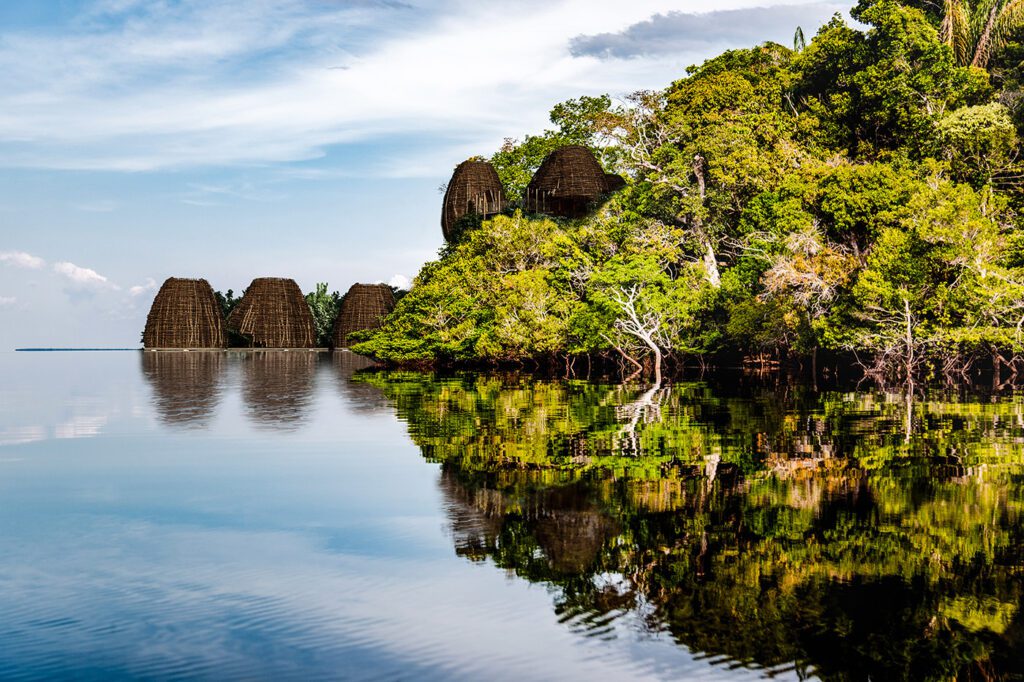
The Tumbira community, previously dependent on illegal logging, deforested the forest to survive, in a cycle of subsistence without progress. With educational programs and support from the Sustainable Amazon Foundation (FAS), in 2008, they realized that the standing forest was more valuable. They shifted to ecotourism and community tourism, attracting visitors from around the world. This transition brought social progress: the construction of schools, houses, a restaurant, solar energy systems, and Wi-Fi. FAS supported with awareness, training, and infrastructure investments, strengthening the community and its connection to the forest.
The question guiding the project is: "How can we envision architecture made from the forest, for the forest, that is part of the forest?" The answer comes from two fundamental concepts: the "nest," associated with protection, welcome, tranquility, and family; and the "path," which symbolizes collective experience, trails, and human integration with the environment.
These concepts translated into an in-depth analysis of the place, the people, and the local culture, observing the interaction between vegetation and water in the igapós (flooded forests), the aquatic reflections, the island labyrinths, and the nests of the japiins (Cacicus cela). The oval shape and materiality result from this interpretation, proposing a sensitive and poetic insertion into the environment. Branches covering the structures create natural shade in a region with high temperatures, often exceeding 30°C.
At the end of their useful life, these elements can return to the soil as organic matter, reintegrating into the natural cycle. The project also utilizes wood residues from small-scale forest management, previously without commercial value, transforming them into products that align with the Sustainable Development Goals (SDGs 1, 8, 12, and 13): poverty eradication, decent work and economic growth, responsible consumption and production, and climate action.
Thus, the proposed architecture not only shelters, but participates in the ecosystem, reflecting the life that pulses in the forest and reinforcing the human role as an inseparable part of it.
Project implementation: Venezuela
Project development: Venezuela
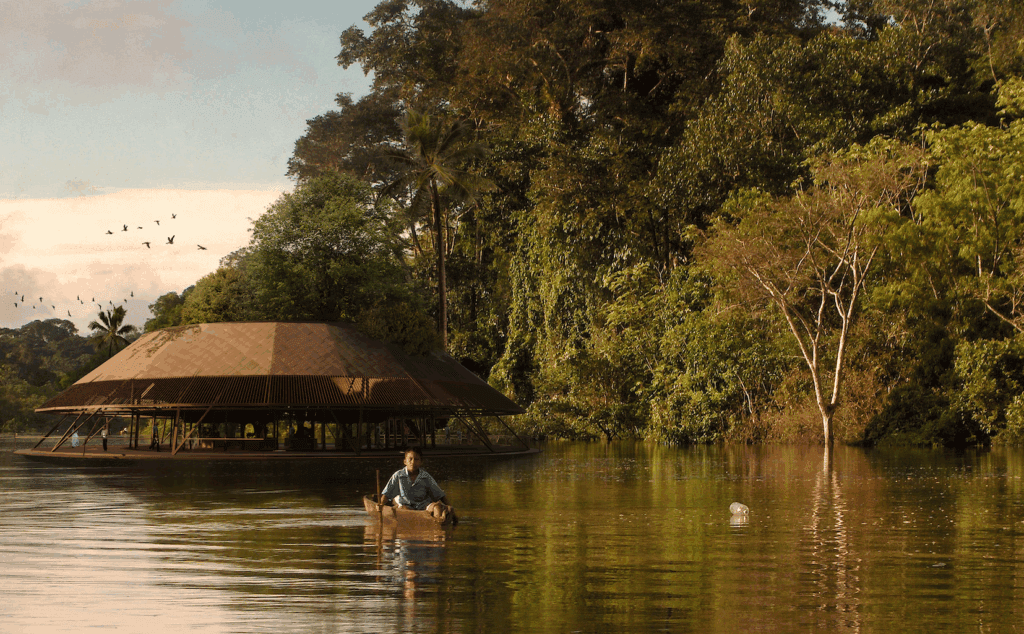
Given the evident and territorialized human impact on much of our societies, which has generated the global climate emergency, the project explores transitional imaginaries, proposing habitability scenarios that recognize the radical interdependence between species and entities. It articulates spatial practices and climate narratives to propose resilient and restorative futures through mestizo ecosystems in territories degraded by extractivism, primarily mining, in the Venezuelan Orinoco-Amazon region.
Based on the contradictions of our present, the research generates hybrid ecosystems: hybrid spatial and climatic models that combine ancestral forms of inhabitation with speculative design strategies and critical ecology. This concept challenges the fragmentation inherent in extractivism and proposes modes of territorial occupation that promote the coexistence of diverse communities, species, and materials, thus fostering relationships of care and regeneration in degraded landscapes.
In the global context and its various crises, the project highlights the need to understand the cultural dimension of this situation and contribute to overcoming the limitations of imagination in the face of the present and the future, through ecotopias.
Technical sheet:
Maximillian Nowotka.
Gabriel Visconti Stopello.
Michelle Isoldi Campinho (collaborator).
Maria Betina Rincón (collaborator)
Jennifer Carmona (contributor).
Contributions from:
Ana María Durán Calisto, Carlos Segura, EcoCiencia (Environmental Foundation), Emiliano Teran Mantovani (sociologist), Helena Carpio (environmental journalist), Instituto del Bien Común (environmental civil association), Luis Felipe Gottopo (anthropologist), Luisa D'Angelo (biologist), Nelifred Maurera Graterol (geographer), Ricardo Avella (architect), SOSOrinoco (advocacy group), Wataniba (socio-environmental group).
Project implementation: Brazil
Project development: Brazil
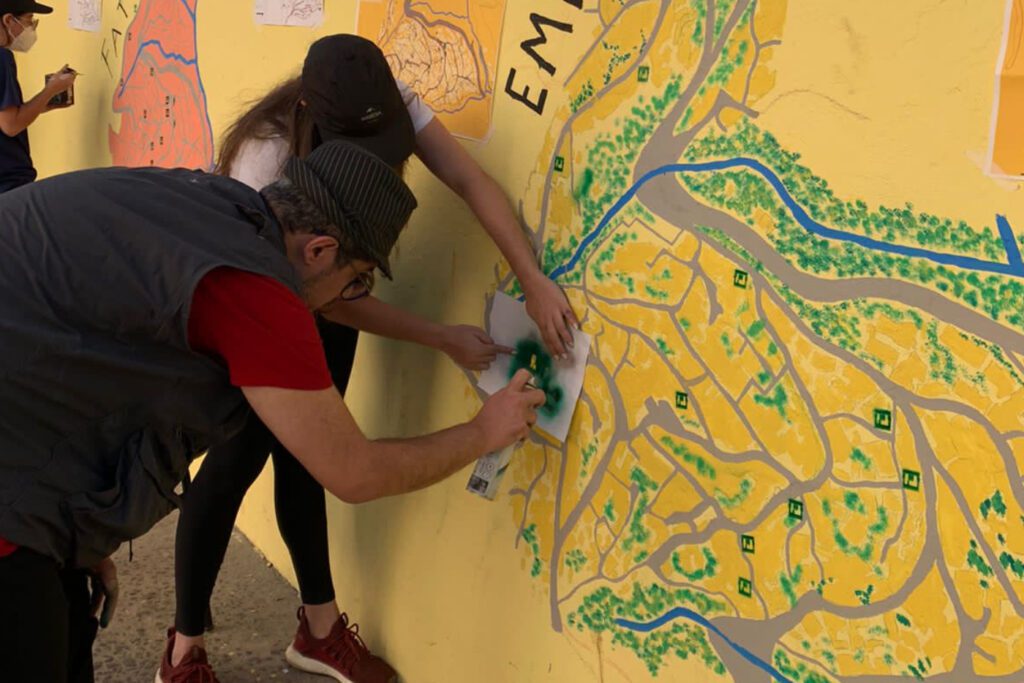
In the Serra cluster in Belo Horizonte, the Mais Favela, Menos Lixo program demonstrates that transformations can arise from collective effort. Created in 2022 in response to community demand for improved waste management, the project has been built with the support of residents, students from the UFMG School of Architecture, and local partners such as Projeto Itamar, the Methodist Church, Cerâmica Santana, and Roots Ativa. The initiative combines popular and technical knowledge to address the precarious management of solid waste. The initiative affirms the favela as a powerful territory of invention, autonomy, and leadership.
The initiatives are developed through extension courses that connect students with the local reality. With over 50 projects completed, the areas of action include the creation of street furniture, outreach strategies, debris management, and urban agriculture. One of the most notable solutions is the installation of over 800 custom hooks to hang garbage bags until collection, a measure that protects rivers and forests from pollution and siltation.
The project also renovates areas with vegetable gardens and orchards, promotes composting, and reuses materials. Other interventions include the creation of educational games on construction waste management and the painting of the "Mapão do Serrão," an informative mural at the Professor Edson Pisani Municipal School. Furthermore, to strengthen community relations, ceramics workshops and film screenings are held in locations previously used for dumping garbage and debris.
The project has already expanded beyond the neighborhood, taking its practices and experiences to events in Brazil and abroad, consolidating its position as a benchmark in community self-management and sustainability. With six national and international awards, it has accumulated recognition that reinforces its relevance. Among them, second place in the CAU-MG Good Urban Practices Award. A significant achievement for the community and for Professor Edson Pisani Municipal School, a central partner in the initiative, was its contribution to the school being elected the best in the world by popular vote and one of the top three in the Community Collaboration category by T4 Education. Awards, reports, and academic presentations, from Jornal Nacional to conferences in Mexico, Copenhagen, and Montevideo, increase the visibility of the initiatives and highlight its contributions to the fields of architecture and urbanism and to tackling the waste crisis. Now, the project is arriving at the São Paulo International Architecture Biennial, reaffirming that the city of the future is built on the strength of the communities that inhabit it.
Project implementation: Brazil
Project development: Brazil
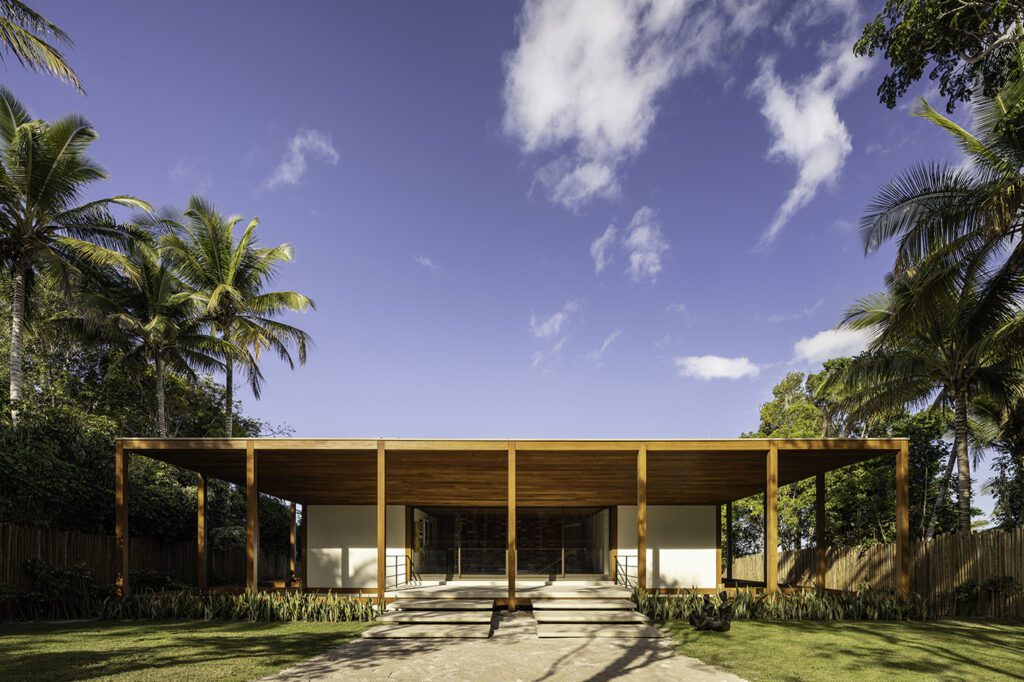
Located on Itapororoca beach in Trancoso, Bahia, the project revives elements characteristic of Brazilian colonial houses, where large eaves and verandas that surround the building provide spaces for transition, shade, and interaction. This spatial logic is also found in Brasília, where government palaces, some of its most important buildings, boast generous roofs that structure the relationship between building and landscape.
The Itapororoca House combines these characteristics in a fast and lightweight construction using 80% dry construction and minimal plant extraction. A 360cm x 360cm orthogonal modulation system defines the "grid" of the glued laminated timber (GLT) pine structural system. This structural modulation, in turn, guides the compartmentalization of the interior spaces. The Itapororoca House proposes a careful integration into a sensitive coastal area, whose occupation is regulated by IPHAN (National Institute of Historic and Artistic Heritage).
Located on a 3-meter slope and 30 meters from a cliff, the project takes advantage of its topographical features to articulate the house's program in a semi-underground structure, integrating it into the natural profile of the lot. Thus, from the entrance level, the building appears as a single story, while from the seaward side, it reveals two levels.
Both the living areas and bedrooms of the house face the rising sun and the view of the Bahia sea, ensuring adequate sunlight and constant natural ventilation.
Project implementation: India
Project development: India
Rebuilding Flood Resilience: Saraswati Vidyalaya, Kelthan
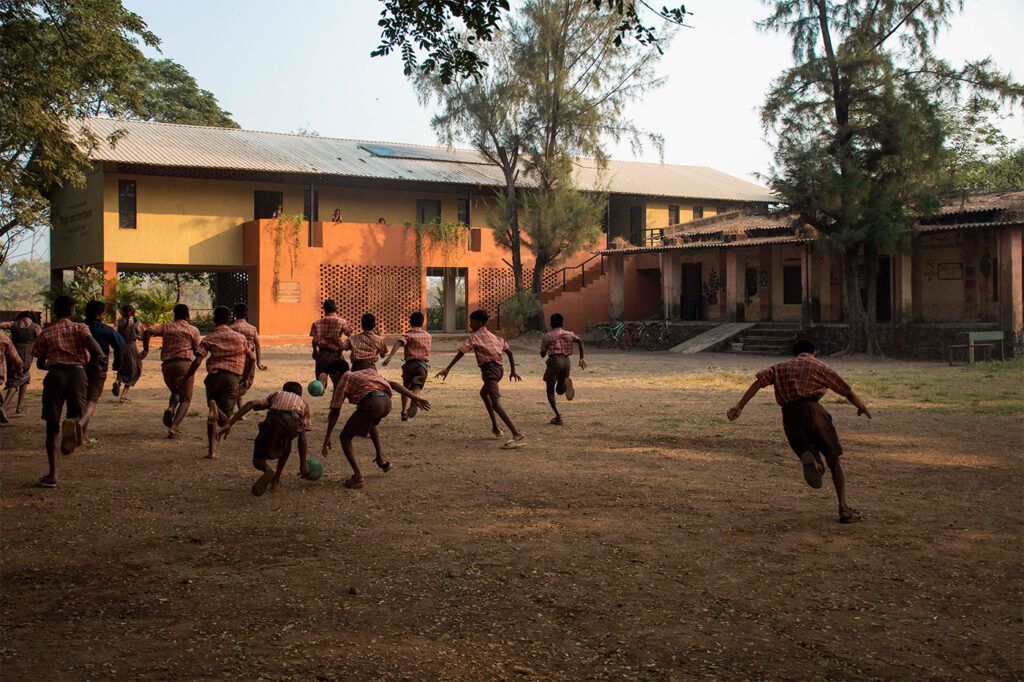
Saraswati Vidyalaya is a highly affordable rural government school located on the banks of the Tansa River, educating 180 students in grades 8-10 in the tribal village of Kelthan in Palghar, Maharashtra. Suffering from the ravages of nature, the school was partially submerged in the 2019 floods, causing irreparable damage to its infrastructure, making it dangerous for students and teachers to occupy the premises.
The Resilience Rebuilding journey began in 2020, when the architects, together with a local NGO, decided to intervene through a participatory process with the school's teachers and students. The proposal was to build the school in two phases, ensuring regular classes during construction while also facilitating fundraising.
The redesigned school, planned with extreme sensitivity to climate and regional context, incorporates passive solar strategies. Located in the northeast corner of the 1-acre (approximately 4,000 m²) site, the built form helps maximize the school's playing field. The school is elevated on stilts to offer the least possible resistance to floodwaters. The first floor of Phase 1 features three bright, cross-ventilated classrooms with a north-lit roof, along with a staff room, a girls' locker room, and restrooms. These classrooms overlook Mandakini Hill and the lush rice fields, a visual treat for students. The community kitchen is located on the ground floor, serving daily meals to students. The elevated ground floor weaves a multifunctional social space, hosting school activities, community meetings, medical clinics, and awareness campaigns.
A locally sourced material palette helped achieve an incredible construction cost of Rs. 1,200 per square foot (approximately US$13.50 per square foot), ensuring a low carbon footprint. With a concrete structure, the body of this sustainable school is constructed of locally fired red bricks laid in a rat-trap bond (which creates an air chamber within the wall). This reduces the number of bricks while also providing thermal insulation for the classrooms. Brick jalis (trusses) in strategic locations act as visual filters and also ensure breeze flow. The Filler-Slab technique was used on the ground floor, in which locally handcrafted clay discs are inserted into a free-flowing ceiling pattern, reducing the amount of concrete while adding a vernacular aesthetic. Recycled Indian stone flooring, using discarded stones obtained freely from local suppliers, was used to lay the ground floor, in a pattern inspired by the meander of the Tansa River. Puff insulation panels on the roof ensure that classrooms remain thermally comfortable year-round. Roof-mounted solar panels make the school net-zero, self-sufficient in its energy needs. The school's facade, envisioned as a biophilic interface, features green planters as a key design element, maintained by the school's students. The surrounding open space was partially used by the students to grow seasonal vegetables, used in daily meals. The students, along with their farmer parents, contributed to the construction through shramdaan (labor donation), with hands-on training in alternative techniques provided by the architects, bringing skills to the locals.
Saraswati Vidyalaya has now become an example of how rural schools can be reimagined and built sensitively, economically, and yet aesthetically beautiful. Phase 1 generated immense social impact, with increased enrollment, encouraging vulnerable tribal parents to exercise their right to education. An effort to elevate and empower the local, through the local, and with the local.
Project implementation: Brazil
Project development: Brazil
Since 2013, Arquitetura na Periferia has been providing technical assistance to women in peripheral communities, using a method based on knowledge sharing, cooperation, and empowerment. Recognizing the protagonism of women in their territories, the initiative contributes to ensuring that spatial planning and production are tools for addressing urban inequalities and the effects of the climate crisis, which are increasingly intense in peripheral communities. In 2023, the AnP BIO project emerged with the goal of applying the guiding principles of AnP's technical assistance to the restoration of community spaces, using low-environmental-impact techniques and nature-based solutions.
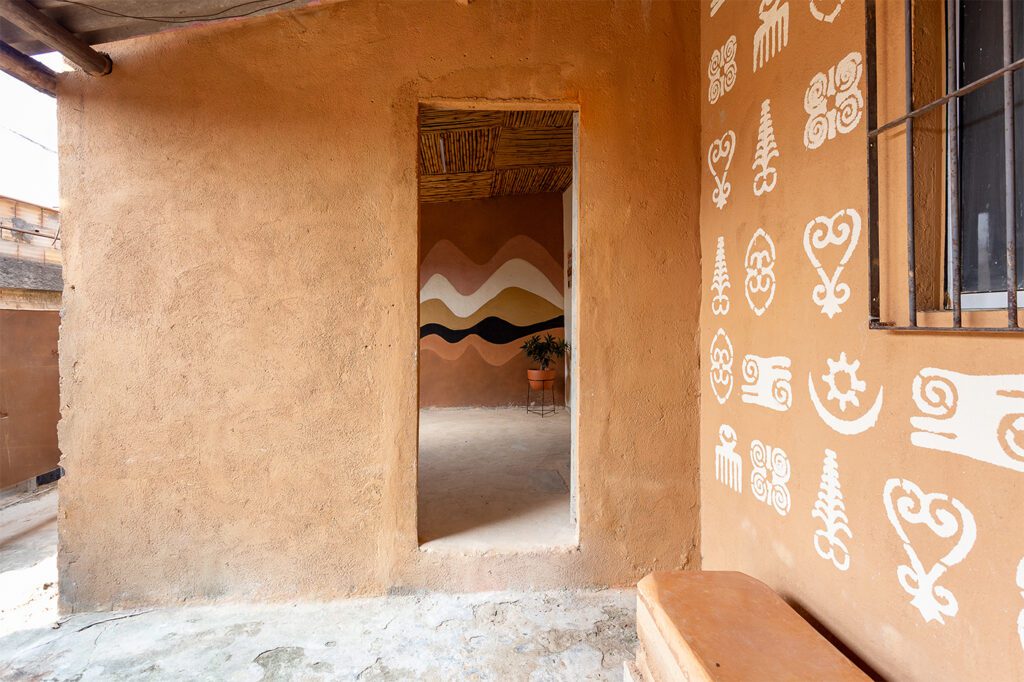
The project that comprises the exhibition was carried out at the Paulo Freire Occupation Cultural Center in Belo Horizonte. The experience brought together women in a training cycle that combined discussion groups and studies on non-colonial building cultures of Latin American, African, and Indigenous peoples, co-creation workshops, field trips, hands-on workshops, and community outreach. The group collectively designed the necessary improvements and implemented interventions using earth, bamboo, and recycled materials. Highlights of the transformations include: plastering and painting the facade with earth, earthen flooring in the living rooms, bamboo ceilings, a rammed earth bench in the outdoor living area, the reuse of ceramic tiles for the bathroom, and the construction of a green roof. The participants also incorporated Adinkras into the walls, reviving these symbols, originating from West Africa, as a gesture of identity affirmation and resistance.
More than just physically restoring the space, the experience redefined the territory and expanded the collective imagination about what it means to build from nature and available resources. By giving women back the power to create their own spaces, the project creates a network of knowledge transmission that extends beyond the construction site, influencing daily practices and possible futures for the community.
Architecture built with natural materials and ancient techniques in peripheral urban areas poses significant challenges. Confronting the stigma that associates land use with precariousness and adapting these practices to dense areas with small lots and pre-existing buildings requires inventiveness. The method proposed by AnP BIO, open and developed in collaboration with residents, allows these limitations to be transformed into creativity and collective experimentation, revealing the transformative nature of the practice.
By connecting architecture and political ecology, experience shows that transforming space is also an act of resistance and affirmation of rights. The renovation of the Paulo Freire Cultural Center made the space more welcoming and resilient and, above all, pointed to ways to address the climate emergency through self-management, care, and the collective strength of women.
Project implementation: Brazil
Project development: Brazil
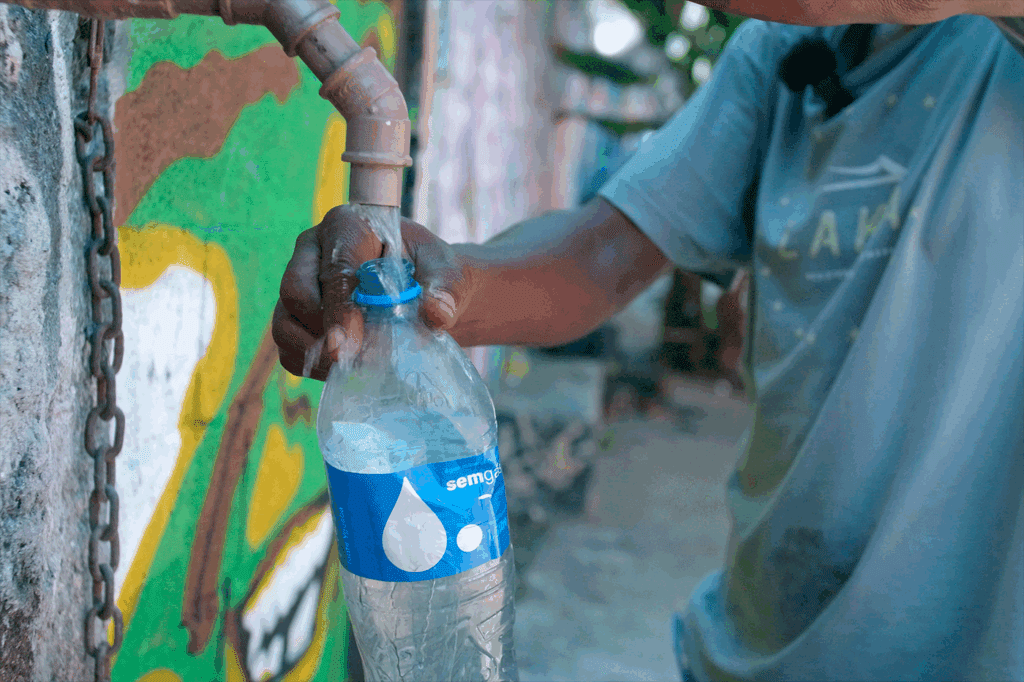
Conexão Água is a short documentary that begins with the invisible presence of the Água Preta stream, buried under layers of concrete in São Paulo, to reveal how water insists on creating connections—territorial, environmental, and human—even in contexts of erasure. The film weaves through various scenes in which water takes center stage: the spring that endures and feeds a community pond; a class held in an alley, where students encounter a river running hidden beneath their feet; and the daily reality of homeless people who, deprived of shelter, are also deprived of a tap.
Between São Paulo and Buenos Aires, between scarcity and abundance, the documentary reveals how water exposes inequalities but also opens up possibilities for encounter, care, and collective imagination. The camera follows the artistic and environmental experiences of the collective (se)cura humana, which has been active in São Paulo since 2015 with performances, installations, and urban interventions focused on the visibility of buried water, the creation of community spaces, and the demand for the right to the city and nature. Works such as Lago da Travessa, Torneira da Travessa, and Parque Aquático Móvel are featured in Ocupação (se)cura, a living territory on Travessa Roque Adóglio in the Vila Anglo Brasileira neighborhood, where the film gains much of its poetic and political power.
Conexão Água proposes a critical fable: what if we recognized rivers and waters as subjects of rights, capable of reorganizing collective life and urban design? In this sense, the short film documents community practices and serves as a gesture of art activism, blurring the lines between cinema, performance, urbanism, and environmental pedagogy.
Authors
Flavio Barollo is a video artist, performer, and co-founder of the collective (se)cura humana. His filmography includes the works Utopian Cities in an Ancestral Future (2025); Water Connection (2024), selected at the Suncine Barcelona Festival; PARELHA – A Look at Reality (2024); Deserto SP (2023); I'm Going to Tell a Story I Don't Even Know How to Start (2021); Freedom Freedom (2021); It's All a Fight and Poetry Rules (2020); My Body, My Border (2020); Brick Brazil (2015); (se)cura humana, the film (2015); Loberia (2015); Véio (2010), winner of the Popular Jury at the Cascavel Festival; and Blood for the Children (2009).
Wellington Tibério is a musician, educator, geographer, and co-founder of the collective (se)cura humana. A doctoral candidate at FFLCH-USP, he works as a teacher in schools and community projects, integrating teaching practices, art, and urban ecology. At (se)cura humana, he develops performance-based classes in water-filled territories, integrating scientific knowledge, local wisdom, and artistic and activist experience. He is the author of the essay "WATER AND URBANISM: ARTISTIC ACTIONS FOR AN (IM)POSSIBLE CITY," published in the Redobra journal of the Federal University of Bahia (UFBA).
Project implementation: Brazil
Project development: Brazil
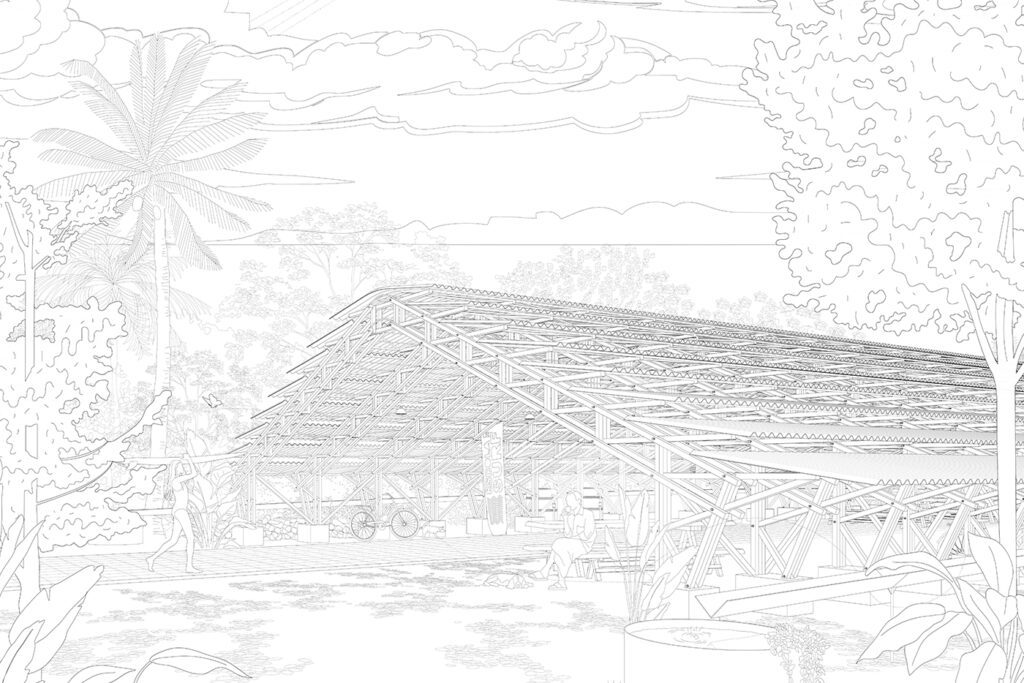
Located on the coast of São Paulo, the project was commissioned by a client who runs a small shipyard in the region, dedicated to renovating wooden fishing boats. The project required a ventilated roof capable of housing retired surfboards and canoes, landscaping tools, and, occasionally, serving as a support space for informal gatherings and meetings.
The design is based on technical expertise and local labor, which is responsible not only for assembling the roof but also for designing and executing the wooden parts themselves. Much of the material used comes from the shipyard's own reclaimed wood stock, with particular emphasis on elements that already bear the marks of previous cuts, time, and sea air.
The structure consists of lattice-framed frames made of sawn timber, assembled using techniques similar to those used on ship hulls. These frames rest on concrete footings, which emerge from the ground at some points to ensure the structure's stability. The lattices extend to support galvanized metal tiles, spaced evenly to allow natural light and promote cross-ventilation, while also ensuring protection from rain.
The pieces are finished with pigmented natural oil, applied in thin layers with a cloth and brush, an artisanal method that helps preserve the wood in humid and saline environments, without creating impermeable barriers or compromising the interpretation of its original texture.
The implementation respects the existing terrain, reorganizing its use without altering its character. The project is a direct extension of the contractor's and his family's work routine, integrating knowledge of naval carpentry with the field of architecture. By establishing this bridge, the construction reveals the power of simple, well-executed solutions, rooted in local know-how and the specificities of the territory in which it is located.
Project implementation: Brazil
Project development: Brazil
The Terra Nostra farm project included the location of the main house, as well as support buildings for a small cheese production operation, in a mountainous terrain. At 1,530 meters above sea level, next to Serra da Bocaina National Park, the horizon is vast.
The Paraitinga River runs along the edge of the land, still crystal clear, just after its source. This river flows toward São Paulo and soon joins the Paraibuna, where it then becomes the Paraíba do Sul. It turns out that in the town of Guararema, this river reverses course and turns north, a sort of return journey: the Paraíba Valley, which separates the Bocaina and Mantiqueira mountain ranges and flows toward Rio de Janeiro.
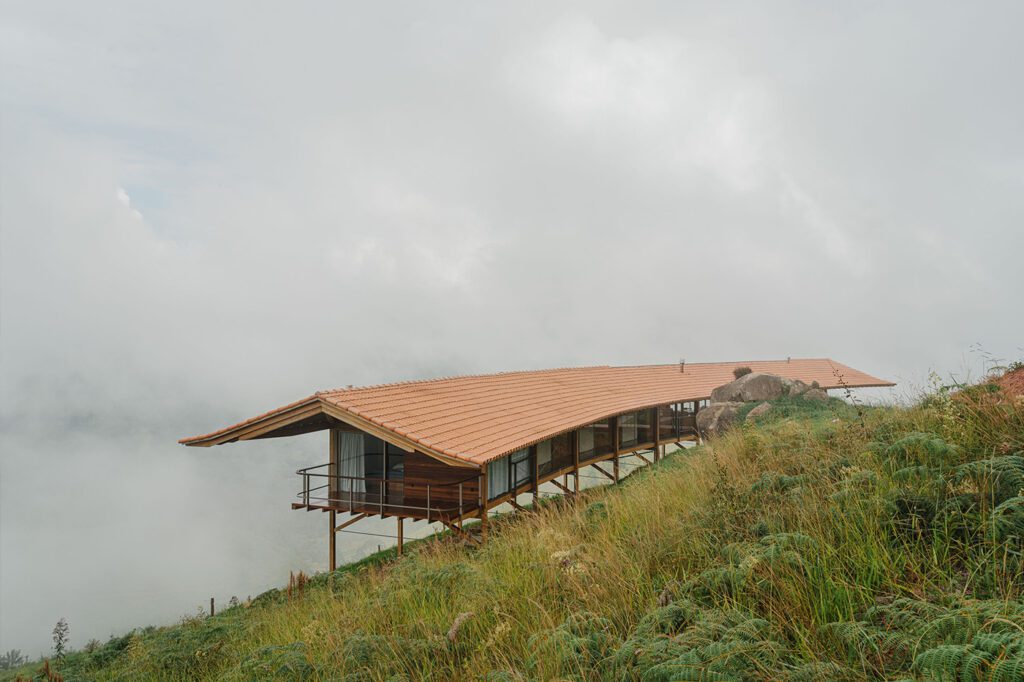
From this terrain, you can see the entire geography, the entire valley, and, in the distance, the next mountain, the Mantiqueira. Given this vastness, we decided to focus on a specific landscape, where we believe it makes sense to build a house. Amidst the sloping grassland, there's a single tree, growing on a rock, which defines the house's design.
The idea was to create a lightweight structure, gently elevated above the ground, allowing the terrain to maintain its natural course and preserving a continuous reading of the valley. Constructed of glued laminated timber (GLT), the structure connects to the terrain via a narrow walkway, positioned precisely next to the tree and its rock. The material presence of the tree and the rock introduces a human scale to the immensity of the landscape. It is through this contrast that the place takes shape.
The structure's arched geometry references this striking feature of the landscape and the natural contours of the terrain. It also serves as a clever way to withstand the horizontal forces of high-altitude winds while minimizing the use of wood and metal bracing. The landscape shapes the project, and its form is its structure.
Less wood also means less material to be moved to the difficult-to-access terrain: the entire structure was produced in a controlled factory environment in collaboration with João Pini and the team at ITA Engenharia em Madeira, who were responsible for the structural design, fabrication and subsequent assembly on site by a team of specialized carpenters.
We sought to capture the essence of the site, while simultaneously introducing a high-tech wooden engineering project into the rural landscape. Seen from a distance, it qualifies as a work that tests the spatial and constructive potential of prefabricated wooden structures. Seen up close, the house is anchored to an existing rock with minimal disturbance to the site and recognizes its language in the local architecture of ceramic tile and wood huts.
Project development: Türkiye
The title "Design for Disaster" is borrowed from a video about the Los Angeles fires. As early as the 1960s, wildfires shaped the city—then seen as exceptions. Today, the scenario repeats itself with alarming regularity. Disaster no longer appears as an interruption, but as a cyclical pattern inscribed in urban life. "Design for Disaster" addresses this dual horizon: the history of catastrophe and reconstruction on the one hand, and the question of architecture in a permanent state of emergency on the other.
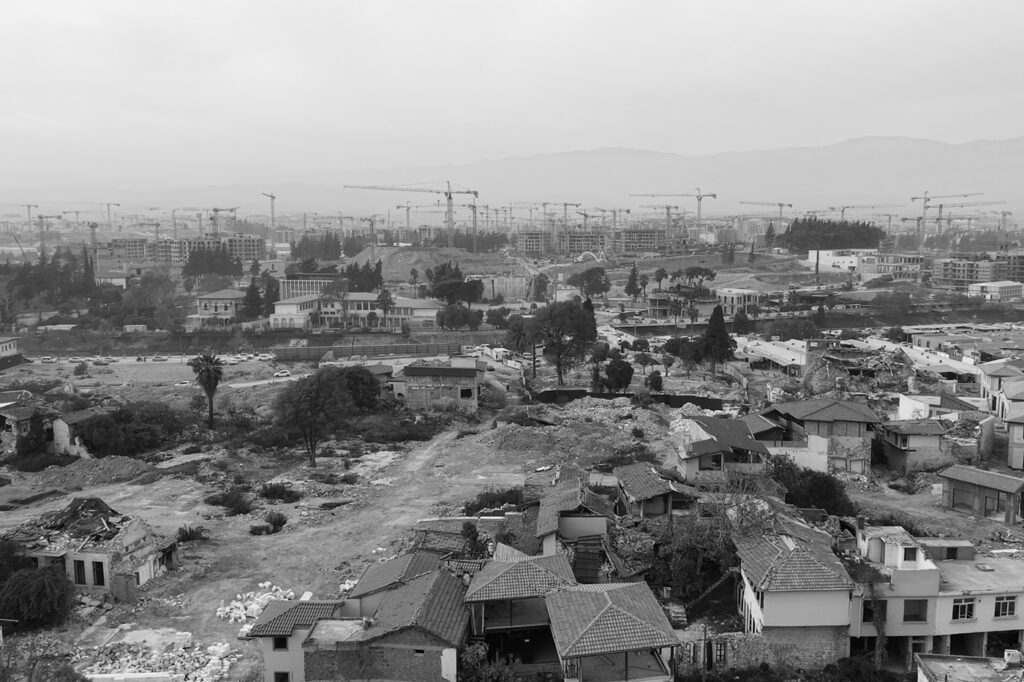
The 2020 and 2023 earthquakes in Turkey and Syria revealed a paradox. Millions lost their homes—yet it wasn't until three years later that aluminum shelters appeared on a large scale. At the same time, high-rise districts sprang up at record speed—not for survivors, but as speculative real estate projects. Disaster thus becomes a driver of capital.
The 1:20 model presented at the Biennale reflects this contradiction. Lightweight, fire- and earthquake-resistant, these houses promise quick solutions, but in practice they remain belated, temporary, and precarious. Paul Virilio called this the politics of accident: "With every invention, we also invent its accident." The shelter is both a space of protection and a symbol of fragility—a structure haunted by the very catastrophe it seeks to resist.
Virilio's insight resonates with Giorgio Agamben's thesis that the state of exception has become the rule. In Turkey, this is evident in the late displacement: shelters are provided only when provisionality itself becomes permanent. Peter Sloterdijk's cultural philosophy of emergency describes societies as vulnerable immune systems. Architecture becomes an immune apparatus—but immunity is unevenly distributed: towers emerge, survivors remain in camps. Martina Löw's relational theory of space emphasizes that space is never neutral, but socially produced. These houses are not neutral shelters, but crystallizations of geographies of crisis.
From Anatolia to Los Angeles, the pattern repeats itself: accelerated reconstruction here, delayed relief there. Disaster is no longer exceptional, but—as Virilio wrote—the hidden face of progress.
"Design for Disaster" stages this ambivalence. The skeletal model is not a solution, but a question: can resilience be designed—or are we merely building monuments to the accident?
Project implementation: China
Project development: China
“A revolution that does not produce a new space has not realized its full potential.” — Henri Lefebvre
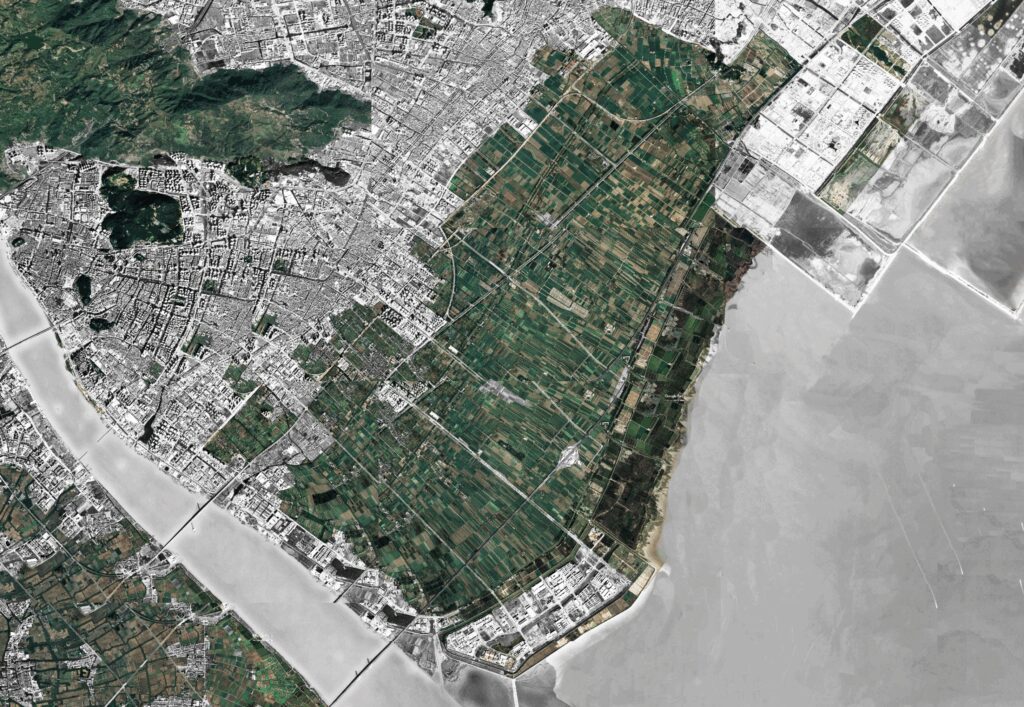
The 21st century has revealed the structural limits of growth-driven urbanization. Industrial expansion and continued development have brought environmental degradation, housing shortages, and growing inequality. These challenges are systemic, not temporary.
Future Urban Landscapes is a design studio examining these conditions through the lens of the peri-urban region of Wenzhou, China. The findings highlight how these territories—where factories, warehouses, dormitories, and informal housing intersect—are simultaneously highly productive and socially segregated from the local environment. Migrant workers, part of China's Floating Population of 380 million, sustain industry but remain excluded from various forms of formal housing, services, and civic life, as mediated by the Hukou system.
Work is central to this condition. It structures both the local economy and the multiple communities that care for these landscapes. The periphery makes this fissure visible, between migrant and local, rural and urban citizen, where overcrowded housing and precarious infrastructure coexist within a vital economic activity.
As migration continues to intensify in these regions in the coming decades, these peripheries of arrival will only grow in importance. This exhibition invites a reconsideration of their role—not as neglected zones of production, but as potential hubs in their own right. Places that can be designed for inclusion, resilience, and new forms of collective life in China's urban future.
Project implementation: Brazil
Project development: Brazil, Switzerland
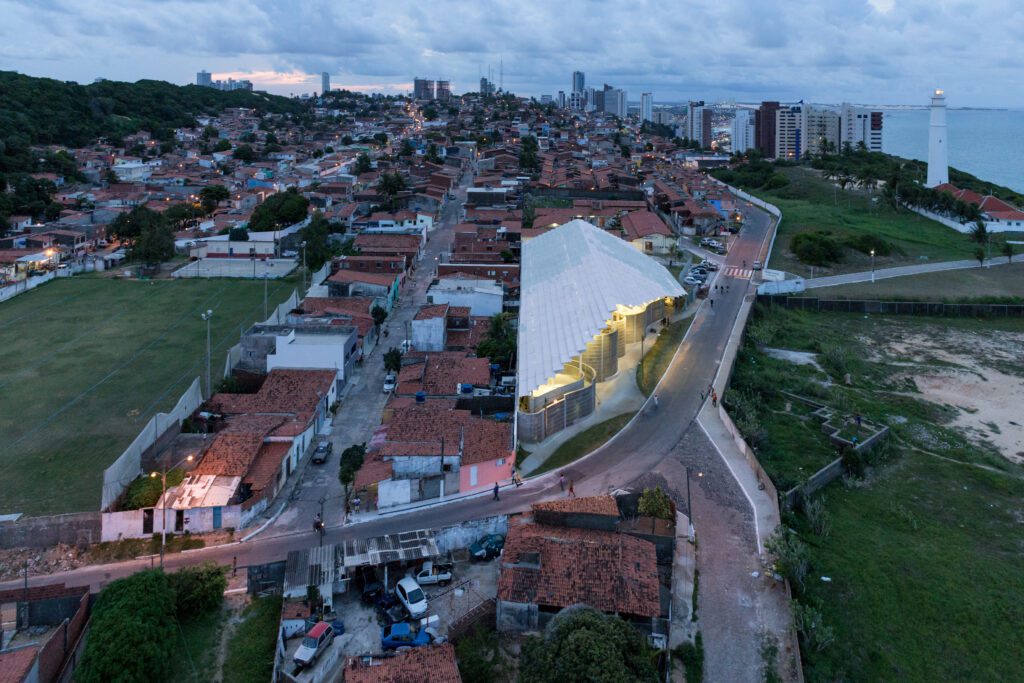
Mãe Luiza occupies a unique place in the city of Natal, capital of Rio Grande do Norte, due to its geographic location and the political and social position its community occupies. A densely populated neighborhood created through a process of self-construction, it is mostly made up of brick houses, organized according to a well-defined urban structure: a north-south axis forms the backbone of the neighborhood along João XXIII and Sabino Gentili streets; side streets intersect the main axis and meet with a parallel road system, organized by Guanabara and Camaragibe streets. At the end of this street are the Mãe Luiza Lighthouse and the Arena do Morro multi-sport gymnasium, opened in 2014.
The building symbolizes the realization of a development project developed by the community throughout its history of social inclusion and improvement of its spatial conditions. It was structured in the 1980s with the arrival of Italian priest Sabino Gentili, who founded the Centro Socio-Pastoral Nossa Senhora da Conceição [CSPSNC], a philanthropic civil entity and a forum for community discussion to respond to the many challenges they faced. A network of supporters formed around the CSPSNC, developing educational and assistance activities for young people and the elderly.
Architecturally, it is an emblematic building. Composed of few elements, it is configured as an immense white roof, supported by porticos resting on the single paved floor. A third element completes the ensemble: a sinuous envelope that unfolds between the others, mediating not only between them but also between the interior and exterior. The hollow concrete elements that comprise it, more than a constructive element, represent its identity; they configure the project's internal and external enclosures, and can be considered the most complete application of the Herzogdemeuronian way of working.
Herzog & de Meuron's first project in Brazil, it incorporates two fundamental concepts into the firm's production: material experimentation through testing with models and prototypes as part of project development, and the transformation of traditional construction elements through operations that, in addition to altering their physical appearance, their form of use and application, introduce new production methods.
Over the years, it has become a community center that extends beyond educational and sports activities, hosting the neighborhood's main collective, cultural, and social events, and serving as a space for debate and celebration. The political dimension of Mãe Luiza's existence and trajectory is notable in its community-based practice of participation and grassroots management. The reach and expansion of its actions point to a possible path for other communities and represents a new paradigm not only for architectural work in areas of urban, social, and environmental vulnerability, but also for forms of shared management, promoting equality, inclusion, and more just and inclusive forms of urban development.
Project implementation: Brazil
Project development: Brazil
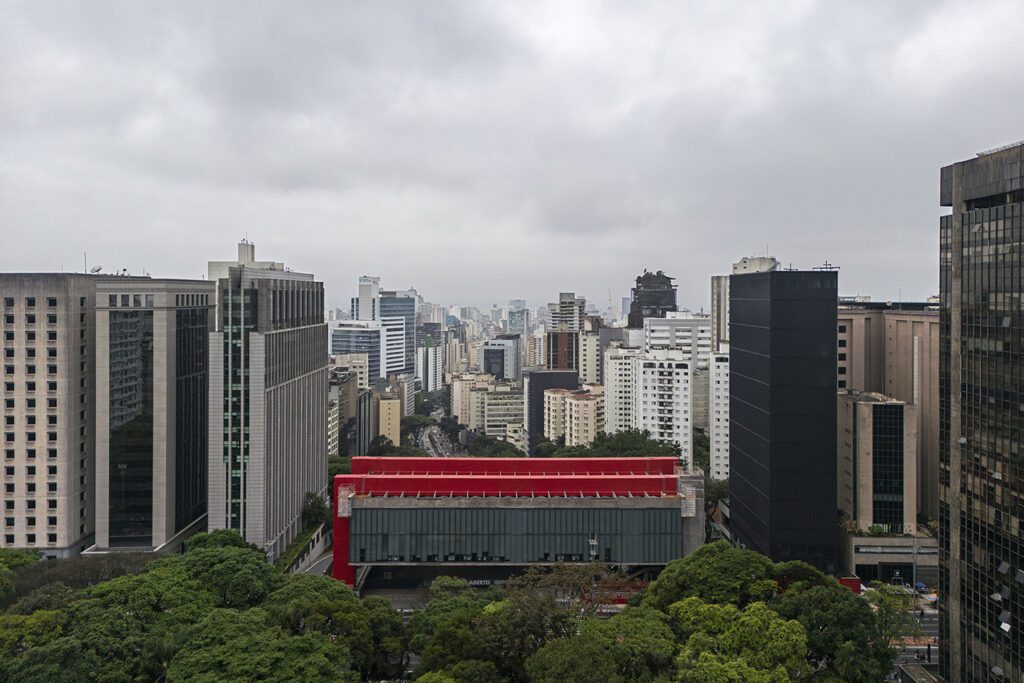
In 2014, MASP's new board of directors began a series of renovations aimed at adapting the facilities to the increased number of visitors and restoring the fundamental architectural principles of the main building. One of the main challenges was adapting the building to fire safety standards while respecting its materiality and historical value.
The adopted solution ensures an escape route protected against fire and smoke for up to 120 minutes, meeting the Fire Department's requirements. The project included compartmentalizing the stairwell between the ground floor and the second floor using a system of fire-resistant steel and glass frames; separating the first and second floors with a vertical flap to prevent the spread of smoke and flames; reversing the air conditioning system to function as a smoke exhaust system; and opening tilt-and-turn windows on both main facades to allow outside air to enter.
The restoration of the concrete structure of the external porticos and the roof slab of the open span deepened the discussion on the restoration of the exposed concrete in the main building, which had previously begun with the intervention on the facades to install the tilting modules. All of these interventions were based on the premise of preserving the original characteristics of the historic concrete—texture, color, and formwork—and were preceded by tests that validated the adopted solutions. In the case of the porticos, laboratory tests were also conducted to evaluate the durability and level of protection afforded to the concrete structure by the application of paint.
The architectural design for the renovation and expansion of the new building, along with its underground connection to the MASP headquarters, proposed the partial demolition of the existing structure and the construction of a new one beneath Avenida Paulista, allowing for the full functional integration of both the technical and public areas. The construction increased the museum's area by over 7,000 m², with additional gallery floors, classrooms, a technical reserve, a restoration laboratory, a restaurant, a shop, and event areas, expanding the current activities and the museum's capacity to accommodate visitors.
The building is a regular rectangular prism with a transparent ground floor, accessible to the public. A perforated metal skin unifies the facades and allows for the lighting and temperature control required for the exhibition of works of art. The air conditioning, lighting, and security systems employ the most advanced technologies available for museums. The materials used—exposed concrete, steel, glass, and stone—and the industrialized systems allow for the configuration of spaces suited to contemporary museum standards and reference the characteristics of MASP, ensuring the integration of the complex.
Visitors can access the museum via Rua Professor Otávio Mendes—where the ticket office and museum shop are located—or Avenida Paulista, where the public can access the services of a restaurant/café. The first floor features a multifunctional area for exhibitions and events, and a terrace overlooking the Lina Bo Bardi Building. The exhibition spaces occupy five floors with 5-meter ceilings. These flexible areas can be adapted to each exhibition project.
Project implementation: Brazil
Project development: Brazil
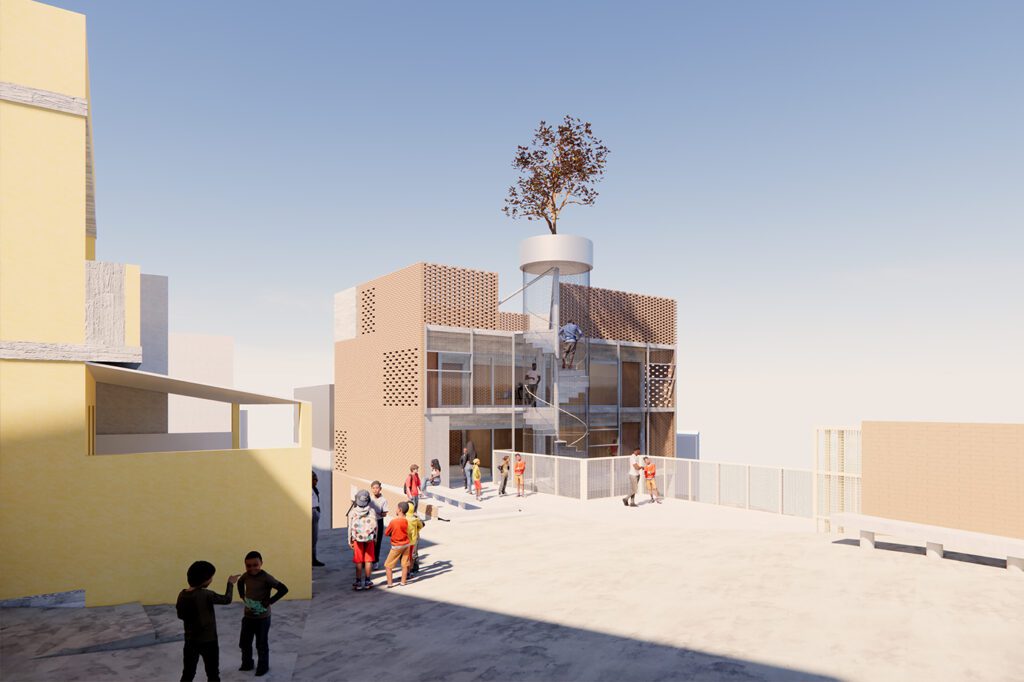
The School on Morro da Providência is the name given to the school located on Brazil's first informal housing hill. It emerged as an expansion of Casa Amarela, an important educational center and local community agency. The project is based on the relationship between two spaces: the School and the Workshop-School. The first aims to expand the existing educational and cultural activities at Casa Amarela, with pedagogy and practices that recognize Afro-Brazilian culture. The second allows for constructive experimentation through the production of BTC (compacted earth blocks), enabling greater thermal insulation, including the assistance of residents in this production, as well as a fundamental reconnection with the land, after years of extraction from the local quarry that destroyed much of the hill.
The 400m2 building is spread over four levels for multiple educational activities. Access to the lower ground floor is a multipurpose room for activities such as Afro dance and capoeira. On the ground floor, a controlled, publicly accessible square opens onto the street while connecting to the building, providing access to the educators' and kekerês' (Yoruba, children aged 3 to 7) rooms. The design prioritized service areas at the ends, while the rooms, divided by the center of the space, can be expanded, allowing for flexible group meetings. On the second level, the erês (Yoruba, children aged 8 to 13) and somodês (Yoruba, young people aged 14 to 21) share the same room, sharing space with the room for independent women of the provision (MIP – a group of women participating in the technical course offered by the school). All spaces are flexible and have bathrooms and storage for donated materials, connected by a balcony on all levels. Vertical access is via a circular staircase that bridges the square, the living rooms, and the terrace, offering views of the city. The concrete structure was constructed based on similarity with the surrounding practices, employing local workers and allowing resources to be invested in the Morro residents themselves. The earth block walls, however, were chosen to practice a different construction practice—still unknown in the surrounding area—but one that has an impact due to the possibility of introducing a less extractive and polluting construction method. This experimentation enabled the incorporation of drawings into some of the modules, allowing for a new dimension to the architecture through narratives that evoke the symbolism of local plants and medicinal herbs through impressions in the earth.
Architecture, through an accessible construction system that allows for self-construction, the local circular economy, and the autonomy of builders and residents, emerges to reestablish a relationship with the hill, the favela, and its residents by uniting the collective territory of the school with the plasticity of the land.
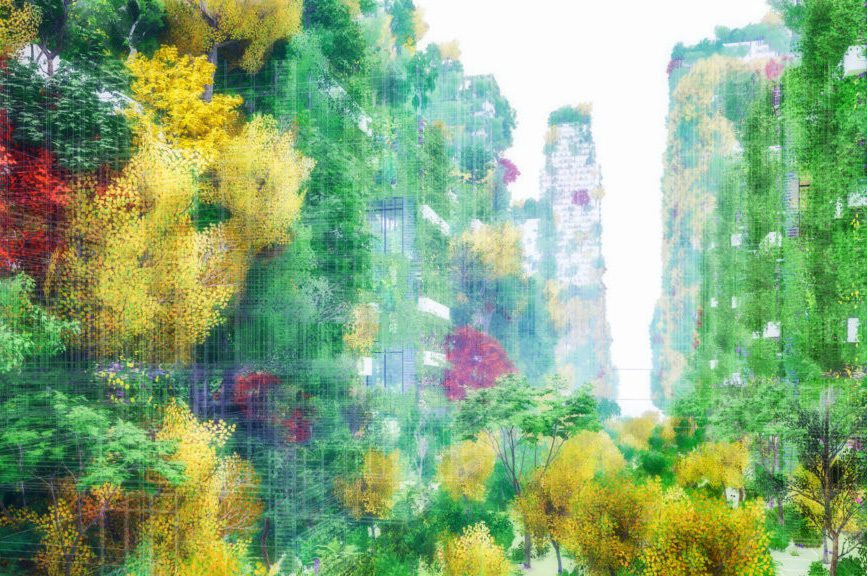
What if vegetation proliferated in our cities, transforming them into veritable forests rich in flora? What would the resulting urban ecosystems be? The Green Dip, an ongoing research project led by The Why Factory at Delft University of Technology, is a visual manifesto that speculates on greening solutions for cities and imagines architectural strategies for incorporating vegetation into buildings.
Green Dip envisions a global urban forest—from Beijing to Singapore, Dubai, Moscow, Kinshasa, Paris, New York, and São Paulo. It proposes a database of plant species for designers to easily incorporate into their buildings and envisions software to aid this process.
Green Dip takes a global perspective, understanding that different climates provide specific environments for native species to thrive. It presents a method for calculating environmental benefits and estimating the planetary impacts of greening our cities.
Amid the climate emergency, The Green Dip is a manifesto for reintroducing nature into our homes and transforming our relationship with the environment. It demonstrates that agriculture, forestry, and organic production can catalyze alternative approaches to urbanization.
Green Dip is the first part of a trilogy of publications focused on the integration of nature and the city. It will be followed by BiodiverCity, which examines the integration of wildlife into the built environment, and Biotopia, dedicated to designing entirely with nature.
Like all previous publications by The Why Factory, The Green Dip is based on student work—not scientific work. This book is the result of design speculation for educational purposes.
We're running out of time. Regardless of the prepositions we choose, it's time to design with, for, and like nature.
About the authors
Winy Maas
Winy Maas is the Director of The Why Factory and Founding Partner and Principal Architect of MVRDV. He has received international acclaim for his wide range of urban planning and construction projects, across all typologies and scales. At The Why Factory at TU Delft,
Maas pushes the boundaries of established standards to produce solutions that reimagine how we live, work, and play. In addition to his dedicated leadership role at MVRDV and professorships at TU Delft and elsewhere, Maas is widely published, actively engaged in advancing the design profession, and serves on numerous boards and juries.
“I advocate for denser, greener, more attractive and livable cities, with a design approach that focuses on innovative and sustainable user-defined ideas for the built environment, regardless of typology or scale.” – Maas
Javier Arpa Fernández
Javier Arpa Fernández is a professor, researcher, author, and curator of architecture and urbanism. Having completed a Master of Science in Architecture at Delft University of Technology, Javier specializes in the dissemination of architectural and urbanism practice. Javier was the Research and Education Coordinator for The Why Factory and the Curator of Public Programs at the Faculty of Architecture at TU Delft. Javier gives public lectures and participates in colloquia worldwide. Javier has been a professor at the University of Pennsylvania, a Design Critic at Harvard GSD, an Adjunct Professor at Columbia GSAPP, and a Visiting Professor at ENSA-Belleville and ENSA-Versailles. He was Deputy Editor of Domus Magazine and Senior Editor of the a+t research group. He is a co-author of the a+t series “Density,” “Hybrids,” “Civilities,” “In Common,” and “Strategy,” and the volume “The Public Chance.”
He was curator of the exhibition Paris Habitat, about a century of social housing in Paris, held in 2015 at the Pavillon de l'Arsenal in Paris, and author of the monograph “Paris Habitat: One Hundred Years of City, One Hundred Years of Life”.
Adrien Ravon
Adrien Ravon is an architect and academic. In September 2011, he joined The Why Factory at the Faculty of Architecture and the Built Environment at TU Delft. He has participated in research and education projects, been responsible for the production of digital design tools, and actively collaborated in the public dissemination of ideas about the city of the future. He co-authored publications in The Why Factory's Future Cities Series: Barba, Life in a Fully Adaptable Environment (2015), Copy Paste, the Badass Copy Guide (2017), PoroCity, Opening up Solidity (2018), Le Grand Puzzle, Manifesta 13 Marseille (2020), (w)Ego, Dream Homes in Density (2022).
He has collaborated with numerous international institutions, including ETH (Zurich), KTH (Stockholm), GSAPP (New York), IAAC (Barcelona), Centre Pompidou (Paris), Dutch Design Week (Eindhoven), Manifesta 13 (Marseille) and Mori Art Museum (Tokyo).
Adrien has worked as an architect and consultant for companies in Argentina, France and the Netherlands.
Project implementation: Spain
Project development: Spain
Faced with advancing climate change, coastal communities face a crossroads: proactively protecting the coastline has become essential to safeguard lives, heritage, and ecosystems. Traditional solutions, such as dikes or breakwaters, while effective, entail significant environmental and social impacts, restricting community uses and altering the landscape. It is therefore necessary to explore more sustainable and integrated alternatives.
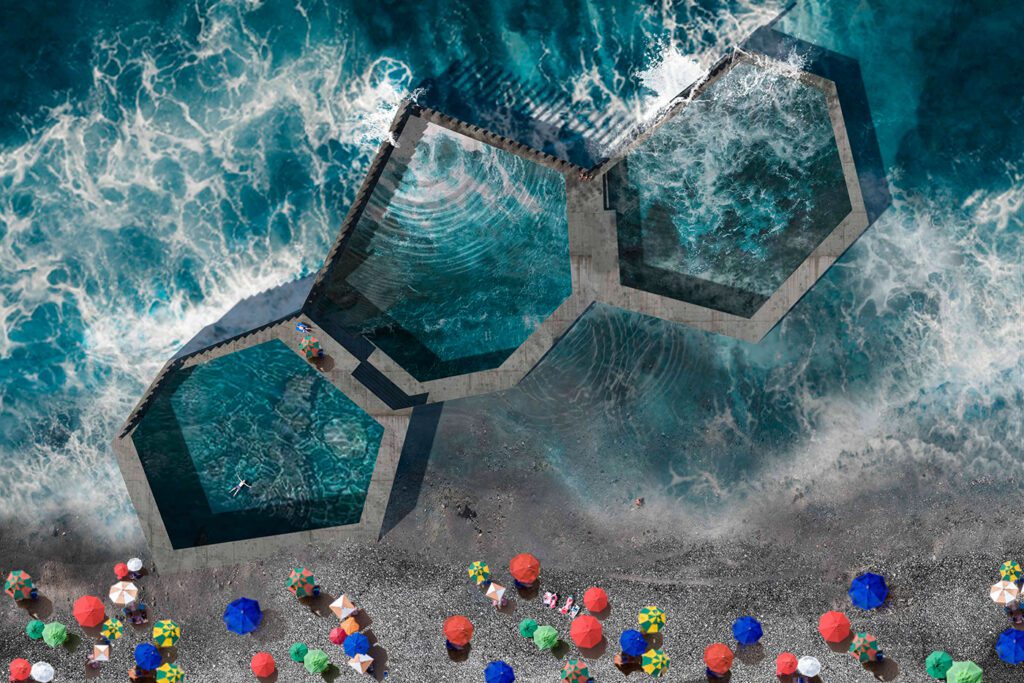
It is in this context that LIFE COSTAdapta emerges in the Canary Islands, a region deeply connected to the sea. The project proposes gentle and progressive solutions, less aggressive than rigid defenses, reinforcing natural coastal self-protection mechanisms. Inspired by medical immunotherapy, the project advocates a "coastal immunotherapy": working with nature and enhancing its resilience.
The central proposal is the creation of artificial tidal ponds, ecological concrete reefs with adaptive geometries, which function as a barrier against sea level rise and as a social space. They reduce wave energy, limit erosion, and provide habitat for marine species. With varying depths, they allow for swimming, environmental education, and scientific research.
The multidisciplinary team plans to build a full-scale prototype on the north coast of Gran Canaria, in San Felipe, where homes are at risk due to rising seas. The process included environmental analyses, landscape studies, and citizen participation, involving residents and surfers to ensure that the project respects local customs and wave dynamics.
The project also highlights the cultural role of tidal ponds, historically present as fishing grounds, salt flats, and recreational spaces. Today, they are symbols of collective identity and demonstrate how small interventions can coexist in harmony with nature. By reinterpreting them, LIFE COSTAdapta expands the role of architecture to environmental and social activism.
In short, the project seeks to prove that gentle interventions can be effective and sustainable, creating a hybrid ecosystem that is simultaneously a barrier, habitat, landscape, and community space. Thus, it contributes to a resilient coastline, prepared to face the effects of the climate crisis.
Project implementation: Brazil
Project development: Brazil
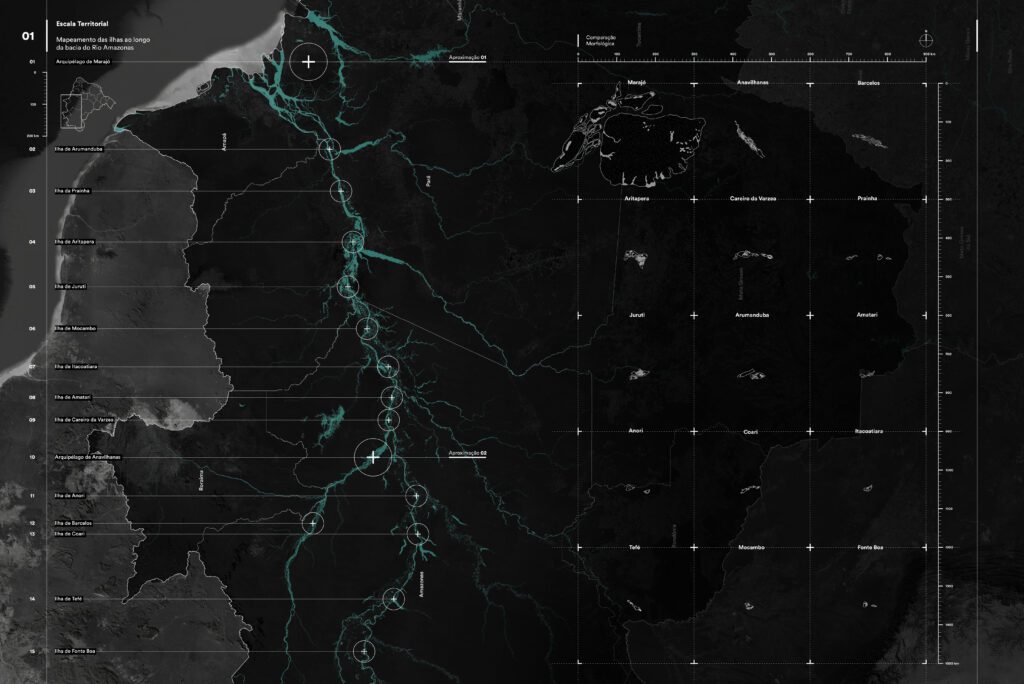
The Rio Mar Archipelagos study environmental changes in the Amazon River Basin in Brazil, focusing on documenting and analyzing river archipelagos threatened with extinction due to climate change. The research seeks to understand the dynamics of these islands, examining their specific processes and conditions as fluid elements within the tropical forest. The work organizes a graphic narrative divided into three scales of analysis, recording their transformations from the regional to the local level, based on two extreme case studies. These studies highlight the complex relationship between human settlements and the landscapes of the Amazon River, which are essential sources of food, transportation, and subsistence.
The first approach proposes a "territorial scale" analysis, locating the archipelagos within the Amazonian landscape as a whole through maps, reports, and news reports. The second offers a "local scale" analysis, addressing two case studies: the Anavilhanas Archipelago, threatened by drought, and the Marajó Archipelago, at risk of flooding due to rising sea levels, through approximate mapping and fieldwork. Finally, the third approach presents the "empirical scale," revealing the adaptations developed by local communities and documenting the physical signs of climate change through analytical drawings, images, and interviews.
The result is an atlas of transformation, creating visual records and representations that highlight the interdependence between communities and local landscapes—and how their sociopolitical dimensions will be affected by climate change. In this way, these scenarios introduce a reflection on the urgency of conserving and adapting social structures rooted in these territories, bringing to light notions of climate justice, preservation, and ecological transition, and understanding these remaining elements in the landscape as vestiges of a new extreme socioclimatic condition.
This work was made possible through funding from a Penny White Research Fund fellowship from the Department of Landscape Architecture at the Harvard Graduate School of Design.
Project implementation: Argentina
Project development: Argentina
MEMORY
"Every operation must be subordinated to the purpose of reintegrating and preserving the expressive value of the work, since the attempt to achieve this is the liberation of its true form. Restoration as a critical process and restoration as a creative act are, therefore, united by a dialectical relationship, in which the former defines the conditions that the latter must adopt as its own intimate premises, and where the critical action realizes the architectural understanding, which the creative action is called upon to pursue and integrate."
* Architectural restoration. R. Bonelli (1963)
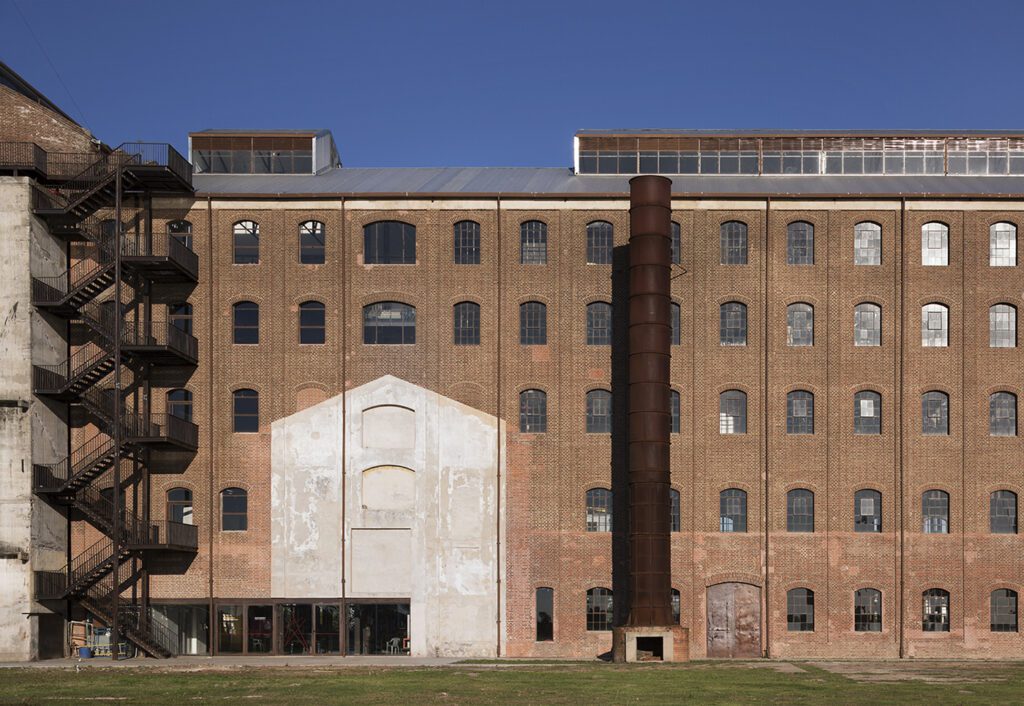
The building dates back to 1920 and 1921 and represents a clear example of the industrial architecture of the period and the region's economic and productive development model. It is located in the port area of the city of Santa Fe, Argentina, an area currently experiencing the greatest growth and development in the city, due to the obsolescence of the railway and port infrastructure.
The renovation project is based on the conception of the old mill as a space in which interventions are made in a balanced way, enhancing the original building and accommodating the new programmatic uses intended for the academic activities of the schools that make up the Municipal High School.
Taking on the hallmark that defines the building's structural metrics, the intervention is conceived as a succession of flexible spaces that overlap and advance over the central nave, according to the needs of each area, generating trays with double, triple and quadruple heights, which enhance the existing spatiality while maintaining the matrix of the original typology.
The intervention involves the recovery of the masonry of the envelope, the restoration of the external enclosures and the original metal structure, assuming the marks inherited from the past, highlighting the relationship between the old and the new and evidencing both the material and immaterial value of things.
Project implementation: Brazil
Project development: Brazil
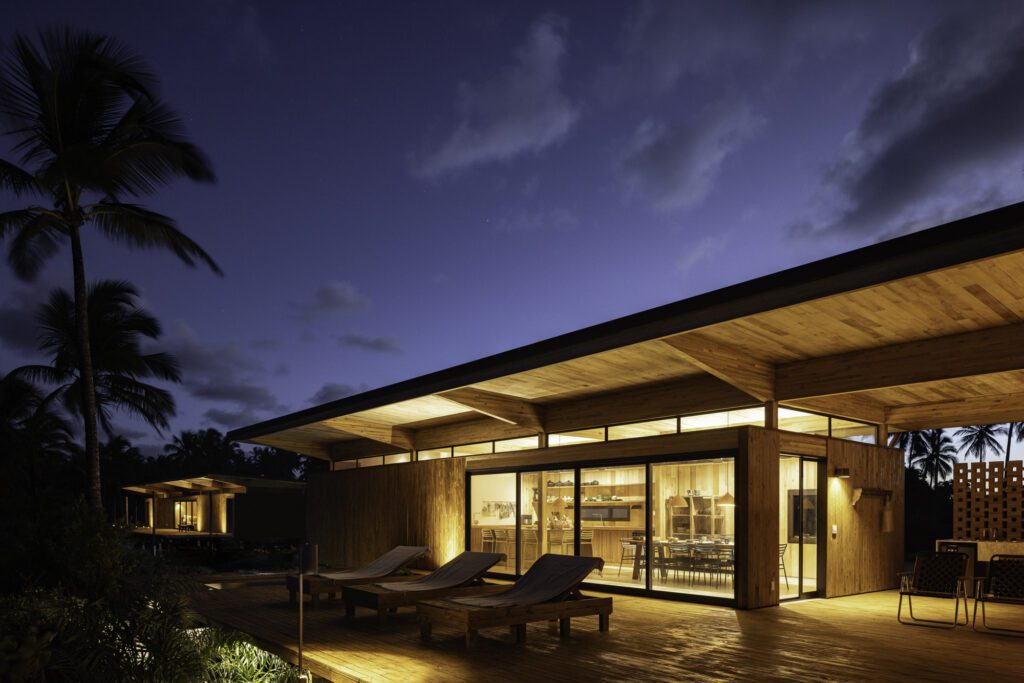
Located on the Cocoa Coast, Modular Bahia is nestled between the river and the sea, amidst a coconut grove, near a significant tropical forest reserve. The house utilizes the Modular 5.5 System, which was designed with the climate in mind for humid tropical regions.
In light of climate change and the impact of construction on carbon emissions, the system was developed to combine the advantages of an industrialized product with the use of renewable raw materials. The system uses glulam made from reforested wood, which is assembled on site – the most sustainable construction method for small and medium-sized buildings.
Wood has excellent thermal performance, allowing it to be used in both high and low temperatures. Modular 5.5 features large eaves that protect the spaces from both the sun and heavy rain, and a highly efficient upper frame (between the walls and roof) for permanent cross-ventilation. The modular system is based on modules for bedrooms, living rooms, kitchens, studios, laundry rooms, and balconies, which can be combined in countless configurations.
Four essential points of this system stand out:
1. modules adaptable to different topographical situations, climatic conditions and access and view conditions in each location.
2. control over deadlines and costs: modular is not a construction project, it is an assembly;
3. minimization of waste production on site;
4. Optimization of systems with the possibility of using solar panels, storing rainwater for reuse and treating sewage through a domestic biodigester.
The house is organized into three pavilions connected by a wooden deck. Two of them are independent, with bedrooms, a living room, and a kitchen; the third is a communal space, with a large kitchen, balcony, and living room. The independent, elevated pavilions blend into the local vegetation and landscape, giving the complex a delicate presence while maintaining the original appearance of the land.
The project also utilizes the balconies as shaded living spaces. The wide eaves of the front facade extend nearly two meters, providing wide openings for controlled sunlight, optimizing natural ventilation, and providing views to the exterior.
Outbuildings, such as the laundry room and water reservoir, adopt elements of traditional architecture with local colors and perforated brick walls, which provide ventilation and shade.
UNA barbara e valentim is an architecture studio based in São Paulo, founded in 2019 by Fernanda Barbara and Fabio Valentim. The studio dedicates its work to architecture projects of various scales and programs, as a way of enhancing natural and urban environments, as well as improving public and private spaces, designed for a better life, both collective and individual.
Project implementation: Brazil
Project development: Brazil
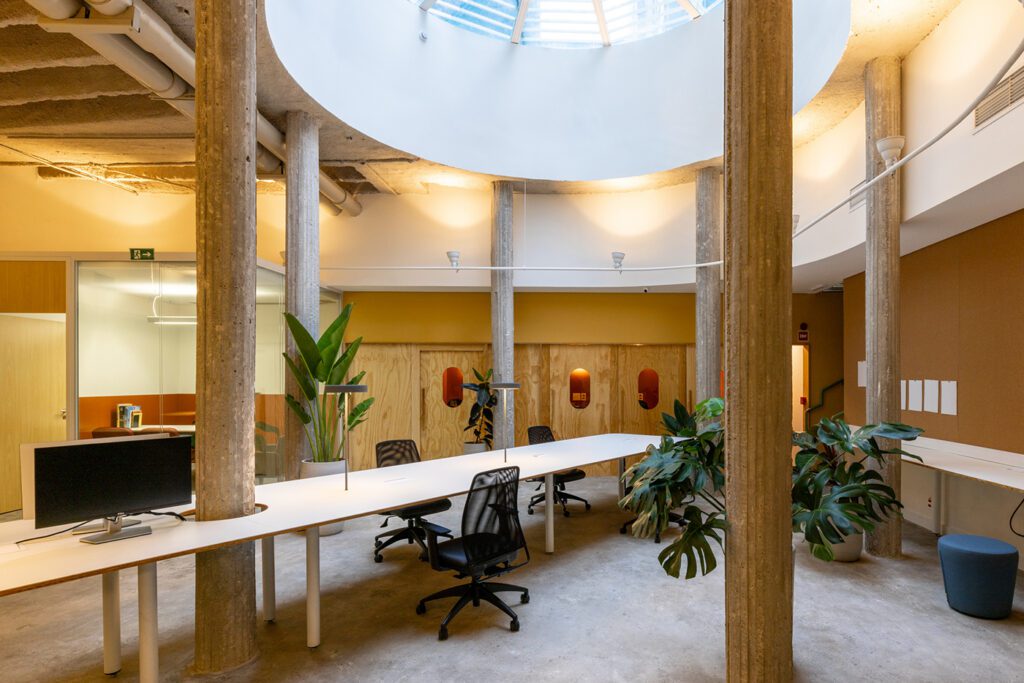
Bordered by the public balcony of the Copan Building — a suspended sidewalk in the Historic Center of São Paulo —, the project for the New Greenpeace Brazil Headquarters presents itself as a showcase for the institution in the largest city in Latin America.
The move to downtown São Paulo—in a historic and symbolic building—reflects the organization's sustainable approach. The new address takes advantage of the city center's abundant urban infrastructure, linked to urban mobility and service accessibility. Such initiatives contribute to resource conservation and better use of the time and energy of those involved in the Greenpeace ecosystem.
Its privileged location combines with the architecture to invite the city's inhabitants to enjoy a widely accessible space, featuring unique materials and unparalleled cultural relevance. Inviting furnishings allow for ample use of the veranda, which extends as a continuation of the sidewalk. From there, the program is graduated in privacy: from the Warehouse to the Multipurpose and Joker rooms, all the way to the Collective Office. Its access and operation are independent of the rest of the program, and it can be opened to the public whenever necessary.
The spacious spaces, permeated by movable dividers—such as curtains and sliding doors—allow for multiple uses through easy reconfiguration. This flexibility allows for adaptation to previously unforeseen uses, thereby extending the space's lifespan. Organizing flows around a central infrastructure axis provides greater freedom of appropriation, facilitating flexible integration between workspaces and reducing conflicts caused by simultaneous, divergent activities.
The space emphasizes the architectural history of the site. During construction, an imposing skylight, previously hidden by the ceiling and covered by concrete, was revealed. Niemeyer's original drawings confirmed his vision, intended to illuminate the deepest part of the space, devoid of windows. Its reopening flooded the office with natural light and guided the arrangement of the communal desks. Thus, the historical appreciation harmonizes with current demands, highlighting a consciously silent architecture, focused on infrastructural interventions that ensure robustness for a long-lasting and environmentally responsible occupation.
The project was conceived by two partner firms. Guaja.cc is an interdisciplinary creative studio, born from one of Brazil's first coworking spaces, with over a decade of experience in the design, implementation, branding, and management of corporate, cultural, and food and beverage spaces. Facury is a multidisciplinary firm that operates in two autonomous and complementary areas: architecture and process management. By combining these expertise, it develops projects that align sensitivity and technical rigor, attentive to the realities of the construction site and client demands.

Anthropogenic land-use changes, driven by rapid urban expansion and rising population pressures, have significantly exacerbated climate change, intensifying the urban heat island effect (UHI) and raising levels of airborne pollutants. Global forests, indispensable carbon sinks that sequester up to approximately 7.6 gigatons of CO₂ annually, play a vital role in moderating local microclimates through evapotranspiration, wind, and albedo modulation, enhancing thermal comfort, improving air quality, and supporting ecological and human well-being. However, their extensive decline throughout the Anthropocene has substantially heightened urban vulnerability to a spectrum of environmental and climatic stressors. This study employs a comparative framework utilizing Geographic Information Systems (GIS) and advanced computational fluid dynamics (CFD) modeling to assess the efficacy of reforestation and forest structural designs in reducing land surface temperature (LST), increasing evapotranspiration, and generating localized 'urban cool islands'. Supporting integrative climate adaptation strategies that alleviate climate-driven heat stress while fostering urban resilience and ecological integrity.
Presentations:
From point to network: designing Turin's future through its rivers
Jowita Aleksandra Tabak and Riccardo Ronzani
Cities, Infrastructure and Adaptation to Climate Change (CIAM Climate)
Renato Luiz Sobral Anelli and Ana Paula Koury
Revaluation of the industrial landscape for the urban regeneration of the city of Tumán, 2023
Aurora Isabel Marchena Tafur
Are biogardens a strategy to reduce heat stress in desert climates possible?: Case of Portada de Manchay II, Peru
Loyde Vieira de Abreu Harbich, Jose Pajuelo, Perola Felipette Brocaneli and Andre Luiz Nery Figueiredo
Urban microclimates: thermal constructions of socio-environmental imprints
Mariami Maghlakelidze
Free
Registration
Registrations must be made here.
Selection will be made in order of registration.
Registration will be open until the start of the activity, on site, as long as there are spaces available.

Urban mobility is an essential component of people's everyday activities, and is directly affected by the rapid increase in the urban population, unplanned urbanization, and the changing socioeconomic conditions. It is a major determinant of quality of life, public transit, employment, education and health care. Furthermore, having access to efficient urban mobility systems remains one of the fundamental issues for policy makers, especially in large cities and densely populated neighborhoods. To address some of these challenges, shared mobility – urban planning nexus offers opportunities for enabling spaces for collaborative urban planning and governance practices. Such nexus can serve as a vehicle to explore the changing dynamics of urban challenges during which experimentation is used to inform urban practice. Our session focuses on how the application of this approach in cities can contribute to the sustainable transitions of urban mobility systems while promoting active mobility and energy transition in public transport.
Presentations:
Toward inclusive transitions: gender-sensitive street design and public bike-sharing as drivers of shared mobility in Oaxaca
Luis Alfonso Barraza Cardenas
Social and urban regeneration Rua Rainha Ginga
Julio Abrantes
Urban disconnections and inequalities nexus: voices from the ground
Ana Paula Koury, Jessica Souza and Luciano Abbamonte da Silva
Urban sounds and mobility
Pedro Silva Marra
Shared mobility – Urban planning nexus for accelerating urban mobility system
Aksel Ersoy and Diego Hernando Florez Ayala
Free
Registration
Registrations must be made here.
Selection will be made in order of registration.
Registration will be open until the start of the activity, on site, as long as there are spaces available.

Cities worldwide are increasingly confronted with the obsolescence of office buildings, particularly those constructed between the 1960s and 1980s. Often functionally redundant and technically outdated, these structures—much like the abandoned factories of earlier decades—now represent a latent resource. This session explores adaptive reuse as a critical architectural and urban strategy, capable of transforming such buildings through minimal intervention and maximum retention. Positioned between heritage conservation and climate-conscious transformation, adaptive reuse offers a meaningful alternative to demolition by engaging with the embodied energy and material continuity of the existing fabric. We welcome contributions, including case studies, theoretical reflections, or interdisciplinary perspectives that address the architectural, environmental, and social dimensions of reusing vacant office stock. Of particular interest are projects that reimagine these buildings for housing, public infrastructure, or hybrid programs through design, policy, or technical innovation. The session aims to frame adaptive reuse as a proactive, low-carbon response to today's urban and ecological urgencies.
Presentations:
Rehabiting the gallery: Recovery of commercial galleries as urban activators of the microcenter of Rosario
Cecilia Carreño Serein
Beyond vacancy: adaptive reuse of office landmarks as a low-carbon urban housing strategy
Mariolina Affatato
Office buildings as hybrid factories
Nina Rappaport
The entangled histories of Belgrade's Western City Gate: a journey from public to private spatial capital
Dalia Dukanac
Office-to-residential conversion in NYC: a critical atlas of adaptive reuse of modernist skyscrapers
Elena Guidetti and Caterina Barioglio
Free
Registration
Registrations must be made here.
Selection will be made in order of registration.
Registration will be open until the start of the activity, on site, as long as there are spaces available.
The thematic session proposes to discuss experiences and methodological strategies in the development and implementation of popular planning instruments aimed at promoting socio-environmental and climate justice in popular territories, such as community plans for climate risk reduction and adaptation and neighborhood plans – instruments that operate at different scales, based on participatory processes. The session will address the urgency of integrated solutions to address climate challenges, which articulate technical knowledge and local knowledge, and which actively involve communities in all stages of the process to strengthen their autonomy and build collective response capacity in the face of extreme climate events. Advances and challenges of these initiatives will be presented, valuing both methodological lessons learned and practical impacts on the territories. The debate will bring together diverse experts (researchers, public managers, urban planners, representatives of social movements, universities and civil society organizations) combining structured presentations with open dialogues.
Presentations:
Community planning in Fortaleza, Ceará (Brazil): Vulnerable territories, local practices and resilience
André Araújo Almeida
Portraits of the floods, 2025
Laryssa Nunes dos Santos
Popular participation in the development of the Municipal Risk Reduction Plan: challenges and potential in Itaquaquecetuba, SP
Alexandra Martins Silva, Ana Paula Leal Pinheiro Cruz, Luiz Antonio Bongiovanni and Talita Gantus-Oliveira
Participatory community planning of evacuation routes: social mapping for risk reduction in hydrological and climatic disasters
Talita Gantus-Oliveira, Henrique Candido de Oliveira, Alexandra Martins Silva, Ana Paula Leal Pinheiro Cruz and Luiz Antonio Bongiovanni
Who envisions the future? Popular planning in international cooperation for climate adaptation on the islands of Porto Alegre
Raquel Hädrich Silva, Amanda Kovalczuk, Camila Kuhn and Julia Boff
Free
Registration
Registrations must be made here.
Selection will be made in order of registration.
Registration will be open until the start of the activity, on site, as long as there are spaces available.

In light of the climate and social emergencies of the Anthropocene, this session proposes rethinking the role of the architect as an agent of territorial transformation and incorporator of futures. More than designing buildings, it is about acting with political and ethical responsibility on urban land, articulating design, incorporation, spatial justice and regeneration. Based on practices that cross architecture, urbanism, activism and real estate development, we seek to bring together theoretical and practical works that express this action: social housing led by architects, regenerative occupations, sustainable retrofit, new methodologies of social impact and approaches that integrate aesthetics, ecology and viability. In this way, it seeks to stimulate critical reflection on professional autonomy in the face of concentrating models, the possibilities of mediating conflicts, acting with innovation and regenerating urban ecosystems. An invitation to think and discuss new imaginaries and horizons, with responsibility and creative power to regenerate what (and for whom) is possible (and beyond the possible).
Presentations:
Katahirine: new Oikos to reforest the imagination
Luciana de Paula Santos
Landscapes of transition: urban regeneration and new ecologies in deactivated areas
Karla Cavallari, Alessandro Tessari and Alessandro Massarente
Every territory is an invention: memory, heritage and the imaginary of the forest
Laura Benevides
Hybrid economies / ecologies: countering territorial violence in the Bekaa
Carla Aramouny and Sandra Frem
A blank sheet of paper: architects as developers of futures
Evelyne da Nobrega Albuquerque, Paulo Almeida and Ricardo Avelino Dantas Filho
Free
Registration
Registrations must be made here.
Selection will be made in order of registration.
Registration will be open until the start of the activity, on site, as long as there are spaces available.
The session invites papers that critically analyze how urban, territorial and housing planning instruments have (or have not) contributed to addressing the challenges of the climate crisis in vulnerable territories. We are interested in exploring the articulation — or lack thereof — between master plans, housing policies and adaptation strategies, especially in contexts marked by socio-spatial inequalities, occupations in environmentally sensitive areas and lack of infrastructure. We start from the recognition that these territories are the most exposed to the impacts of extreme events and, at the same time, the least covered by effective public policies.
Based on the concept of urban resilience — understood as the capacity for adaptation, transformation, and reorganization in the face of ongoing crises — we seek contributions that question the limits of traditional planning and propose integrated, fair, and transformative alternatives. Experiences and analyses that articulate the right to housing, climate justice, and territorial restructuring will be valued, expanding the scope of public policies beyond risk mitigation.
Presentations:
Risks of risk measurement
Renata Maria Pinto Moreira
Geotechnical maps of risk susceptibility and urbanization suitability as tools for disaster risk prevention and management in the context of climate change
Nicole Pavaneli Oomura and Edson Quirino dos Santos
The master plan for territorial ordering and urban design as a motivator of communal visions, projects and specific financing. The case of the GEF Humedales Costeros Rocuant-Andalién pilot
Nelly Paulina
Urban policy and climate crisis in Fortaleza: a look at precarious settlements on riverbanks
José Almir Farias and Mariana Araújo de Oliveira
Risks and vulnerabilities associated with climate emergencies. Impacts and waterborne diseases
James Miyamoto
Free
Registration
Registrations must be made here.
Selection will be made in order of registration.
Registration will be open until the start of the activity, on site, as long as there are spaces available.

The impact of a warmer world on coastal cities will be even greater. It's inevitable that we'll learn to live with rising sea levels and obsolete infrastructure. This will be true for urbanized coastal regions, a cross-cutting theme of this thematic session, whose territories are desperate for innovative and radical architectural solutions. The five proposed themes will be covered in the session, which will address topics such as the need to expand port services while preserving forests and mangroves, the historical and contemporary approach to drainage infrastructure, real estate booms and the insistence on road-based solutions, and housing experiences from different political and ideological spheres.
Presentations:
An amphibious and poikilothermic territory: Baixada Santista as a study
Godoi
Green and blue infrastructure: nature-based solutions for mitigating heat islands in Baixada Santista
Janaina C. Botari, Poliana F. Cardoso and Adriana B. Alcantara
High water: climate adaptation and coastal resilience in Santos
Nathan Lavansdoski Menegon
Conflict management as a practice in urban planning: the experience of the Arquipélago Project in Porto Alegre/RS
Camila Mabel da Cunha Kuhn, Raquel Silva, Amanda Kovalczuk and Julia Boff
Adaptation in crisis: discourse dissociated from practice in João Pessoa – PB
Renato Régis Araújo and Ruth Maria da Costa Ataíde
Free
Registration
Registrations must be made here.
Selection will be made in order of registration.
Registration will be open until the start of the activity, on site, as long as there are spaces available.
This session proposes a decolonial shift in the debate on African heritage and climate emergency, focusing on the cosmologies and resistance practices of traditional communities. We question hegemonic models of adaptation, which empty their political potential for insurgency against environmental racism and the historical disorder that consolidates socio-spatial segregation.
Communities such as Aldeia Guató, the Mebengokré nation, Candomblé terreiros and quilombos, despite being exposed and vulnerable, demonstrate that resilience emerges from radically situated epistemologies, intrinsic to their memory and the way they build and inhabit. We seek approaches from a diversity of traditional sites and communities in Brazil and Latin America that reveal ways to map cultural values (cartographies, orality), assess risks (impacts and threats) and develop climate action plans (strategies, policies).
This session invites a radical transformation, regarding the role of (bio)cultural heritage in combating climate extremes (chaos) and the becoming of inhabiting the Cosmos (order). More than “including” traditional knowledge in current architectural or urban models, we aim for a complete reorganization of adaptation. What forms of spiritual climate governance emerge from the integration of ancestral knowledge and community practices? How can the cosmoperceptions of traditional peoples translate into more just, inclusive and resilient cities? How can climate action be reimagined based on the ethics of care, reciprocity and justice for permanence in the territory?
Presentations:
The memories of the water of Iquitos. Moronacocha case
Moses Porras
Community space for the Huarpe de Aguas Verdes community: Fragmented territory, knowledge in resistance and climate action from community architecture
Mauricio Vellio and Martín Ezequiel López
Who pays the climate bill? Afro-Brazilian spiritual governance between worlds – Morro da Pedra de Oxóssi and Highway BR 030
Maria Alice Pereira da Silva, Fernanda Viegas Reichardt, Sandra Akemi Shimada Kishi, Bruno Amaral de Andrade and Celso Almeida da Silva Cunha
In search of the Land without Evils: a proposal for design intervention based on the Guarani Mbyá indigenous cultural heritage
Ana Helena Leichtweis
Tide of struggle: the re-existence of quilombola heritage for climate adaptation
Liane Monteiro dos Santos and Thiago Assuncao dos Santos
Free
Registration
Registrations must be made here.
Selection will be made in order of registration.
Registration will be open until the start of the activity, on site, as long as there are spaces available.
In the Brazilian federal system, the successful implementation of climate action at the frontline depends on coordination between actors at different levels. This involves setting climate goals, strengthening capacities and creating instruments that are aligned with the variety of regional, municipal and territorial contexts and that consider the impact of climate on historical situations of inequalities and socio-spatial vulnerabilities that are evident in the challenges of transportation, housing, waste management, among other issues.
This exercise requires bringing together different interlocutors. The proposal is to organize a debate and a workshop over a period of time, bringing together: (i) representatives of the federal government (cities and environment department), (ii) organizations that have worked on the theme of Brazilian climate federalism, such as FNP, ABM, GIZ, C40, ICLEI, WRI and the ZeroCem Institute itself, (iii) members of academia that have developed research on the theme, such as FGV, and (iv) socio-environmental movements with local perspectives.
Presentations:
Land use and occupation management in the Guarapiranga Basin: conflicts, monitoring and challenges in the face of climate change
Carlos Alberto Pinheiro de Souza
Challenges and innovations in Brazilian city planning in the context of the climate emergency
Renata Maria Pinto Moreira, Angélica Benatti Alvim, Andresa Ledo Marques and Luciana Varanda
Environmental urban planning: the articulation between the Mananciais Program, the São Paulo Strategic Master Plan (PDE) and the Growth Acceleration Program (PAC)
Viviane Manzione Rubio, Thiago Ferraz do Amaral, Caio Albuquerque Escaleira and Luana Siqueira Bernardes
Disputed Field: The Advancement of Wind Power Projects and the Right to Housing in the Quilombo de Macambira (RN)
Rani Priscila Sousa, Jessica Bittencourt Bezerra, Maria Dulce Picanço Bentes Sobrinha and João Marcos de Almeida Lopes
Let's put culture on the agenda in the territories and technical assistance on construction sites.
Claudia Teresa Pereira Pires
Free
Registration
Registrations must be made here.
Selection will be made in order of registration.
Registration will be open until the start of the activity, on site, as long as there are spaces available.
The climate emergency imposes new paradigms on architecture, which must reconcile sustainability, innovation, and social impact. The panel "Contemporary Architecture and Climate Emergency" is based on the premise that public and private sectors intertwine in environmental responsibility. KAAN Architecten's work seeks to create buildings that positively impact people and nature, integrating sustainable materials, climate adaptation, and cultural appreciation. We reuse existing structures, promote urban densification with active pavements, and build spaces valued by the community. During the session, Renata Gilio, Vincent Panhujsen, and Marco Peixe will present concrete examples organized into five themes: low carbon, community integration, structural reuse, urban densification, and reflection on regulatory changes. The examples presented will be: Lagoa do Sino Library of UFSCar in Buri/SP, Strijp S – Matchbox in Eindhoven (Netherlands), Court of Nancy (France), Utopia – Library and Academy of Arts in Aalst (Belgium), Court of Amsterdam (Netherlands), Ecomuseum of Parque Orla Piratininga in Niterói/RJ, NBB National Bank (Belgium), FAMA – Fábrica de Arte Marcos Amaro in Itu/SP and Lumière in Rotterdam (Netherlands).
Presentations:
Building with stabilized earth: the importance of the global south for land use in construction
Rodrigo Amaral
Solar neighborhoods and climate architecture: integrated urban strategies for a warming world
Ricardo Calabrese
What can a museum be at the edge of?
Maria Eugenia Cordero
Climate Change and the ESG Agenda: Public Policies as Drivers of Resilience and Vulnerability Reduction?
Marcio Valerio Effgen
Between thunder and earth: architecture for climate justice in Pedra de Xangô Park – Salvador, Bahia
Fernanda Viegas Reichardt, Sandra Akemi Shimada Kishi, Bruno Amaral de Andrade, Celso Almeida da Silva Cunha and Maria Alice Pereira da Silva
Free
Registration
Registrations must be made here.
Selection will be made in order of registration.
Registration will be open until the start of the activity, on site, as long as there are spaces available.

How can we intervene in cities so that nature plays a leading role in urban well-being? Preserving forests and reforesting cities requires radically incorporating carbon flow and biodiversity into cities as a strategy for creating resilient microclimates. This session proposes reflections on how to configure multifunctional and multi-scale urban forests, constituting green infrastructure networks capable of intensifying essential ecosystem services – such as primary production, nutrient cycling and soil formation. The absence of these services in cities results in heat islands, floods and disasters, the result of the gap between urban planning and ecology. Bringing these two fields together is essential, considering perspectives on planning and managing urban vegetation and soil throughout the open space system. The goal is to inspire new paradigms of urban afforestation that promote well-being and strengthen climate resilience by integrating the forest above and the forest below.
Presentations:
Views and reflections for the renaturalization of the territory and landscapes of Iquitos
Moses Porras
Tree planting in climate mitigation and adaptation in cities: new paradigms
Rubens do Amaral
Manifesto-Shelter: Microarchitecture for Major Disruptions
Clarisse Jacobi Brahim do Vale, Giulia Teixeira da Silva Botelho, João Victor Mello Mansur Moreira and Pedro Barbosa de Souza
Urban permaculture: an essay on city transformation
Sabrina Hennemann
Urban forest acupuncture: housing as climate and community repair
Luciana Varkulja and Nastassja Lafontant
Free
Registration
Registrations must be made here.
Selection will be made in order of registration.
Registration will be open until the start of the activity, on site, as long as there are spaces available.
This session proposes a reflection on the transformative role of Nature-Based Solutions (NbS) in the ecological, symbolic and social reconfiguration of urban public spaces. Inserted in the second thematic axis of the 14th BIAsp – Living with waters –, the proposal is based on experiences that combine architecture, urbanism and landscaping with the regeneration of ecosystems, valuing strategies that strengthen territorial resilience and climate justice.
Initiatives ranging from the renaturalization of water bodies and slope stabilization to urban redesign and community co-creation of public spaces will be presented, discussing the application of NBS as a strategy for climate resilience, environmental justice, and reconnecting the city with its water systems.
Among the highlights will be project experiences related to the proposed topic, developed by the firm Ecomimesis Soluções Ecológicas, represented by its partners Amanda Saboya, Caroline Fernandes, and Pierre-André Martin. In particular, the Realengo Susana Naspolini Park in Rio de Janeiro will be presented, a project that encompasses a wide range of Nature-Based Solutions aimed at managing rainwater and mitigating the effects of climate change.
The session also invites participation from other national and international experiences – urban, peripheral, or natural – that address coexistence with water as a tool for urban restructuring, environmental regeneration, and social inclusion, contributing to a broad agenda of innovation in territorially sensitive ecological infrastructure.
Presentations:
Urban Sustainability: Mapping Green and Blue Connections Around Realengo Park, RJ
Pierre-André Martin, Amanda Saboya and Caroline Fernandes
Wetland Living Lab: water as a generator of a post-carbon landscape
Oriana Alessandra Durán del Valle, Mariela Martínez Álvarez and Andrea Reyna Aguilar
Bamboo containment experiences for slopes in the municipality of Franco da Rocha – SP
Nathalia da Mata Mazzonetto Pinto and Marcos Paulo Ladeia
From the Jaguaribe River Basin to Climate Justice: Public Spaces Supporting Nature-Based Solutions and Water Compensation in João Pessoa
Bruna Ramos Tejo and Ruth Maria da Costa Ataíde
Nature-based community solutions in the Uberaba Stream Basin, São Paulo/SP
Elisa Ramalho Rocha, Lara Cristina Batista Freitas and Luis Octavio PL de Faria e Silva
Free
Registration
Registrations must be made here.
Selection will be made in order of registration.
Registration will be open until the start of the activity, on site, as long as there are spaces available.

The session proposes to discuss the multiple forms of production and transformation of social housing in popular territories, with a focus on socio-environmental inequalities and the impacts of climate change. Studies will be brought together that analyze both the actions of the State — whose large-scale housing production has often generated unsustainable and vulnerable spaces — and the autonomous initiatives of the population. The proposal includes research on public policies, territorial conflicts, adaptation strategies and social participation, with special attention to the experiences of socially and politically marginalized groups, such as women, the elderly and racialized populations. By promoting the exchange of diverse perspectives, the session seeks to contribute to the critical debate on climate justice and the right to housing, emphasizing the strategic role that the housing fabric plays in the discussion by aggravating or mitigating the climate crisis.
Presentations:
Popular territories, administrative innovation and climate justice: lessons from Democratic and Popular City Halls in Brazilian urban planning
Pedro Freire de Oliveira Rossi
Carnival and the climate emergency: everything that glitters wants to circulate
Juliana Lisboa Santana
Microplanning as spatial critique: possibilities and limits in peripheral territories of São Paulo
Leonardo Pires Luiz and Mariana Wilderom
Socio-spatial justice in participatory urban planning: strategies and challenges in the Arquipélago Project (Porto Alegre/RS)
Amanda Kovalczuk, Julia Boff, Camila Mabel Kuhn and Raquel Hädrich Silva
Precarious housing and the precariousness of housing policy
Maria Isabel Imbrunito and Patricia Rodrigues Samora
Free
Registration
Registrations must be made here.
Selection will be made in order of registration.
Registration will be open until the start of the activity, on site, as long as there are spaces available.

Climate change research is based on observations of environmental phenomena and is fundamentally based on scientific data measured at specific sites, indicated in previous mappings as points of special interest. This information is transformed into scientific content in the most diverse areas of knowledge, including architecture and urban planning. Our proposal is to highlight the importance of fieldwork, such as monitoring the climate situation. We consider monitoring based on cross-methodologies. Consequently, as an unfolding of this specific knowledge, we highlight the steps involved in these research processes: the development of devices and sensors; data collection; subsequent analyses; data models and proposals based on previous monitoring. Thinking about sustainable development encompasses transdisciplinarity and collective work, without which urban planners would not approach the environmental complexity faced today. We invite you to debate monitoring as part of a consistent and transversal contribution to planetary emergencies.
Presentations:
The contribution of monitoring Alameda de Talca to the Río Claro Basin Study
Silvia Maciel Sávio Chataignier, Carlos Esse and Rodrigo Santander
The Christmas Real World Experiment (RME)
Jean Leite Tavares
Microclimate monitoring from open data: a case study in the Maré Complex (RJ)
Carolina Hartmann Galeazzi
Climate variability and trends in temperature, precipitation, and solar radiation in the states of São Paulo and Rio Grande do Norte: temporal analysis and regional implications
Camila Fernanda Aparecida Silva and Marcia Akemi Yamasoe
Climate change research starts from observations of environmental phenomena
Rodrigo Mendes de Souza
Possibilities and contradictions of urban and environmental instruments to face the climate crisis in Natal-RN
Sarah de Andrade e Andrade, Ruth Maria da Costa Ataíde, Venerando Eustáquio Amaro and Larissa Nóbrega Sousa
Free
Registration
Registrations must be made here.
Selection will be made in order of registration.
Registration will be open until the start of the activity, on site, as long as there are spaces available.

This session will examine how different scientific disciplines – urban and regional planning, urban design, sociology, geography, interdisciplinary projects – can support, accompany or even initiate the transformation of former industrial and infrastructure areas into sustainable use. Case studies as well as theoretical and methodological studies are needed. The focus of the presentation will be on the question of the interaction between scientific analysis and practical implementation by non-scientific partners. The methodological and theoretical context should also be clearly highlighted in the case studies. The session will not only be interdisciplinary, but will also provide intercultural insights. Therefore, special attention will be paid to the transferability of solutions between different countries or even continents.
Presentations:
Floodplain ecologies for planetary health: collective learnings in conversion areas in the city of São Paulo
Laura Kemmer
How can science support the sustainable reuse of conversion areas in metropolises? The example of the EUREF Campus in Berlin
Jonas Fahlbusch and Martin Gegner
Real-World Laboratory for Water Security in the Pitimbu River Basin: Participatory Science and Adaptive Governance
Karinne Reis Deusdará-Leal, Jonathan da Silva Mota, Judith Johanna Hoelzemann, Osmar de Araújo Coelho Filho, Andrea Leme da Silva, Zoraide Souza Pessoa, Jose Luiz Attayde, Joana Darc Freire de Medeiros, Ana Paula Koury
Recognize and rehabit the iron port heritage of the city of Rosario
Celeste Garaffa
The Science of Planning and the Art of Negotiation: How to Support the Sustainable Reuse of Conversion Areas in Metropolises?
Ana Paula Koury, Luciano Abbamonte da Silva and Jessica Souza Fernandes
Free
Registration
Registrations must be made here.
Selection will be made in order of registration.
Registration will be open until the start of the activity, on site, as long as there are spaces available.
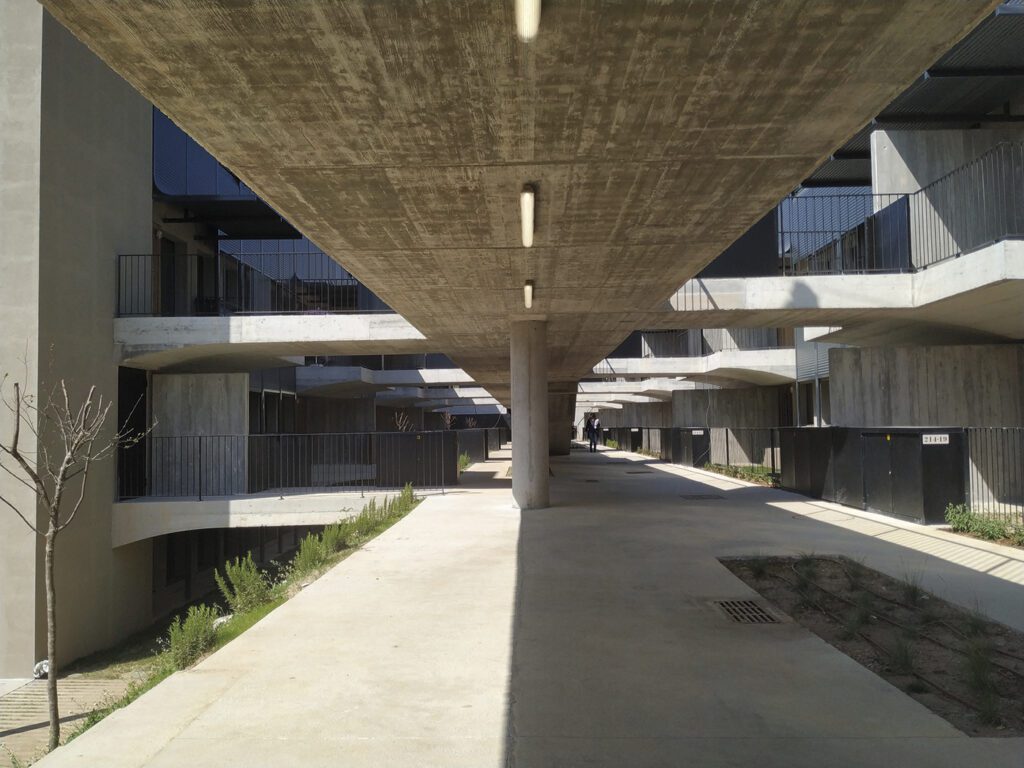
Project implementation: Portugal
Project development: Portugal
The proposal to replace the collective housing blocks in the Bairro D. Leonor neighborhood (1951/1953) represents a turning point in the way we think about and design collective housing in the city of Porto. Housing is essentially "shelter" as a functional possibility, but it cannot neglect its dimension as an open and universal communicational "work." It is necessary to focus on architecture as use and function while simultaneously understanding its grammatical representation as connotation and topology.
The construction of the New D. Leonor Neighborhood (2015-2019) was also an opportunity to deepen and validate participatory methodologies implemented during the rehabilitation operation on Ilha da Bela Vista (2013-2017).
Residents, architects, and social scientists, working together in a collaborative convergence strategy and supported by a determined and motivated developer, were the effective formula for bringing this project to fruition. It should be noted that the project arose from a public tender for a public/private partnership to build a municipal neighborhood, granting construction rights on surplus land to one of the parties. It is within this unique context that the project was organized in the former Bairro D. Leonor neighborhood. The team, organized around the community and the developer, secured the right to land and decent housing for each of the families resisting the political will that imposed relocation on them.
This new operation ensured all residents and families the right to decent housing in the same location and community. Housing was designed with families' needs and expectations in mind.
The proposed model contradicts the morphological models and the hygienist and bureaucratic relocation processes, based on inquiries and rational and bureaucratic regulations, applied by public entities in the housing sector. The only exception is related to the SAAL operations during the revolutionary process that took place in 1974 and 1975.
The program developed and implemented was extensively discussed with the community and the developer, taking into account a minimum housing program defined in regulations by the municipal entity. The flexible nature of the program allowed for considerable freedom of conception and collaborative design with this community. The result was a new neighborhood with a territory connected to the street space, with vertical and horizontal relationships of great visual and social interaction. Residents were housed in homes designed and allocated specifically for them through a participatory process, and public infrastructure is at the service of the community and the city: gardens, sidewalks, free parking areas, and open, welcoming streets for street dwellers. With this architectural and urban solution, we avoided segregation, the duality between insiders and outsiders, and negative or positive gentrification.
Rodrigues, Fernando Matos; Fontes, António Cerejeira; Fontes, André Cerejeira – Magazine “Supernova nº 3” – Dona Leonor Neighborhood Community with Participating Project, pg. 49-51, April 2024
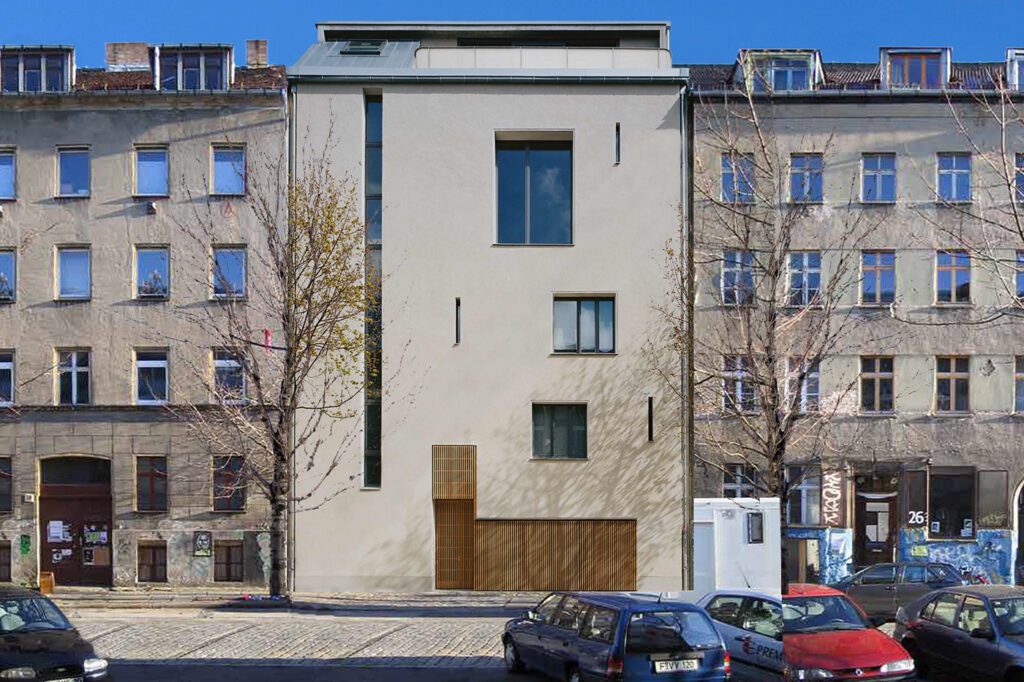
Project implementation: Germany
Project development: Germany
Firmitas, Utilitas and Venustas in Our Times
BY PHILIPP VON MATT, ARCHITECT
Firmitas:
Is it presumptuous, in a place like this, which has witnessed so much destruction, obstruction, and devastation, to dream of the old Vitruvian creed of Firmitas (solidity), Utilitas (usefulness), and Venustas (beauty), that is, the very opposite of what has happened to this city?
With this in mind, we envisioned a home that would serve as a natural place for art and life and their symbiotic experience, much in the spirit of Remy Zaugg's "The Art Museum I Dream of." Dreams are stronger than destruction because they survive in lived memory. Therefore, in this place, we are manifesting a home for our dreams, a lived dream, and a place to preserve our dreams.
Located on the Berlin Wall, in the former East Zone, at the point of tension between West and East, we found a plot of land in the middle of life. Surrounded by prefabricated buildings with residents who belonged to the GDR cadre, Kreuzberg on the other side of the former wall with a predominantly Turkish population, and right between two occupied houses with residents who call themselves autonomous anti-fascists, we, artist Leiko Ikemura and I, decided to build an artist's house.
The location called for a resilient and robust building that could not only withstand the environment but also challenge it. Integrated into this social fabric, we realized our universe by coexisting with a wide variety of cultural circles that can be found daily in the nearby supermarket. East German political figures with captain's caps in their shopping carts share the space with punks with mohawk haircuts, and Islamic women in hijabs and bearded men coexist in a multilayered population diversity.
It is the base for our activities worldwide and offers inspiration, contemplation and security in the bustling city of Berlin.
Utilitas
Oikonomos, the "house rule," is what we now call sustainability—implementing what is economically necessary in an environmentally sound way. Our benchmark was to achieve this not only within the realm of possibility, but in a way that would inspire others.
To avoid disproportionate costs and effort, we decided not to build a basement on the water table. The building's mass, made of mineral building materials and brick, is inexpensive, durable, recyclable, and stores energy.
The room temperature is maintained warm in winter by natural influences, such as solar radiation—passive solar energy—and by actively utilizing the sun through rooftop collectors for heating and hot water. In summer, the building is cooled by the stone mass of the structure, providing ideal conditions for quiet work in the cool rooms.
Venustas
All materials are left in their natural state, allowing the material to communicate with the space and the people within it. Siberian larch wood is used for the windows and frames, filling the atmosphere with warmth.
Plaster, or untreated plaster surfaces, give the rooms character, while concrete floors and ceilings create an archaic sense of space. Visitors are welcomed into a stone hall above which a spiral stone staircase rises elastically upward.
The encounter between the observer and the architectural soul of the house creates Venustas, the perception of beauty, in the mind and memory.
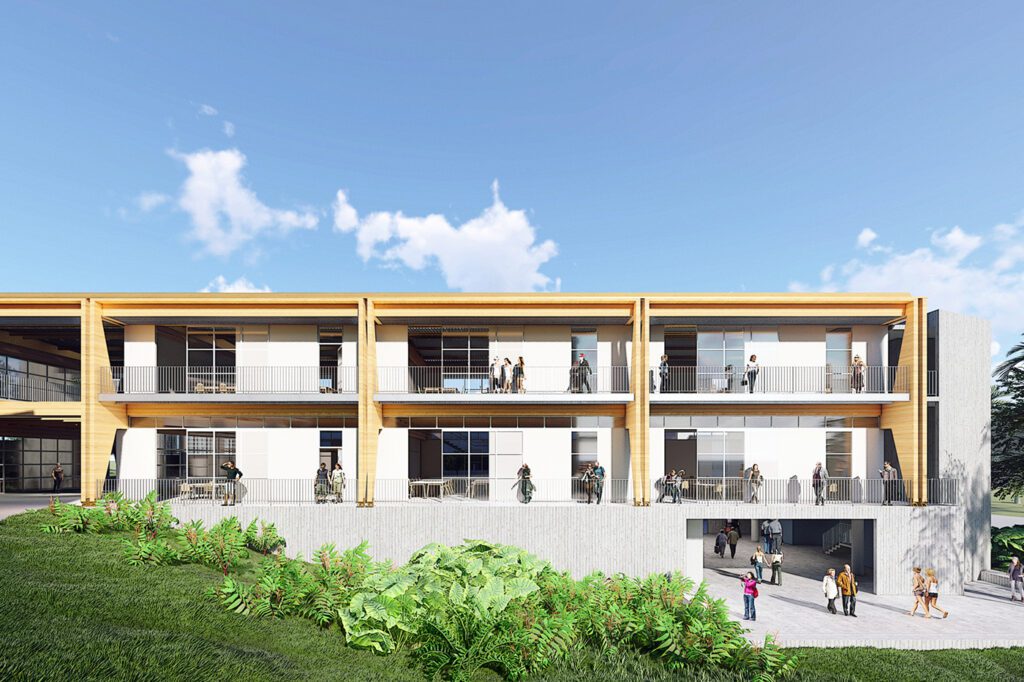
Project implementation: Brazil
Project development: Brazil
BUILDING AS A CONNECTION – WOODEN STRUCTURE AS AN ARCHITECTURAL EXPRESSION
Currently, the IAU is housed in a two-story building constructed in 2008. The first, consisting of three floors, houses administrative functions, research and faculty offices, and support spaces (we will call it the Administrative Block); and another ground-floor building, which currently houses the five teaching studios. There is also a metal-framed roof connecting the two buildings, known by the nickname "postão."
The Renovation and Expansion project includes a series of partial interventions in the existing buildings and the construction of a new building (Teaching Block), which will house the design studios, classrooms, auditorium and support spaces.
During the project development process, we were aware that we were designing spaces for a School of Architecture. Therefore, the design choices, the development of structural systems, the selection of materials, and their technical performance are part of the architectural discourse and are presented to provide students with a living experience of construction. Therefore, the building itself is envisioned as a support for concepts developed in the classrooms and studios. Throughout the process, presentations were given to IAU students, faculty, and staff, and discussions with the community also informed the choices presented here.
To accommodate the IAU's program, the complex will consist of three independent buildings, connected by walkways and stairs. The idea is that the existing buildings and the new construction, while formally and aesthetically distinct, form a single, integrated ensemble, in which the spaces between them also acquire program and meaning, such as garden areas, communal areas, or contemplation areas.
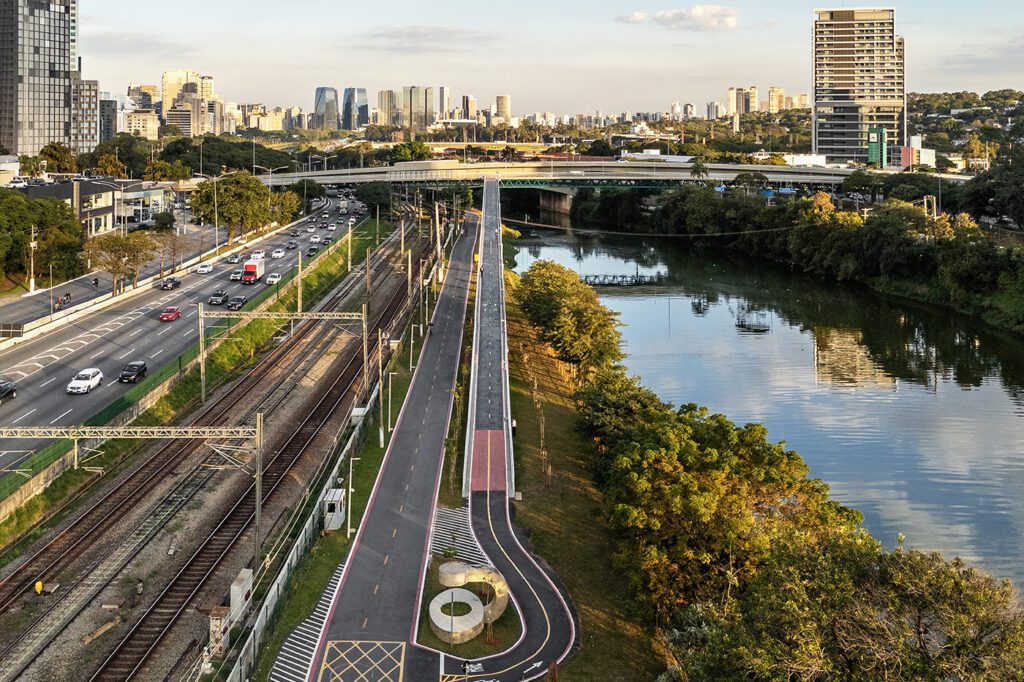
Project implementation: Brazil
Project development: Brazil
(RE)PROGRAM AND (RE)CONSTRUCT THE CROSSINGS OVER THE RIVERS OF SÃO PAULO
The Erika Sallum Footbridge project began with a proposal submitted in 2014, responding to a call from the São Paulo City Hall within the Arco Tietê Urban Perimeter. We chose to study urban crossings over rivers and identified striking social, economic, and cultural inequalities between the riverbanks. This situation is exacerbated by the scarcity of well-located bridges that prioritize private vehicles and neglect pedestrians and cyclists. At the time, of the 62 crossings over the Pinheiros and Tietê rivers, none were dedicated to active mobility—a worrying situation in a city where a third of the population commutes on foot.
Our proposal was selected, creating São Paulo's first cycle walkway, connecting the dense and popular neighborhoods of Butantã and Pinheiros. From the outset, we sought to ensure that the bridge's headlands would act as activating elements of public space, connecting public transportation, sidewalks, and cycle paths. We prioritized safe and comfortable access that would encourage daily use of the crossing. The walkway was designed as a wide, pleasant, and contemplative walkway, offering privileged views of the city, the mountains, and Jaraguá Peak.
The structure features a central access point that connects directly to the Marginal Pinheiros bike path, extending its use on weekends and for leisure activities. Because it's located in a high-traffic area, the construction used prefabricated elements: a main metal truss and a concrete platform. The initial sections were cast in situ on the flowerbeds, while the sections over the river and avenues were divided into nine metal sections, hoisted overnight, and precisely positioned on concrete pillars.
The rapid appropriation of the footbridge by the population demonstrates the transformative potential of well-planned urban infrastructure. More than just a crossing, it has become a symbol of the importance of public investment in active mobility and the improvement of urban spaces, promoting more sustainable modes of transportation and strengthening collective life in cities.
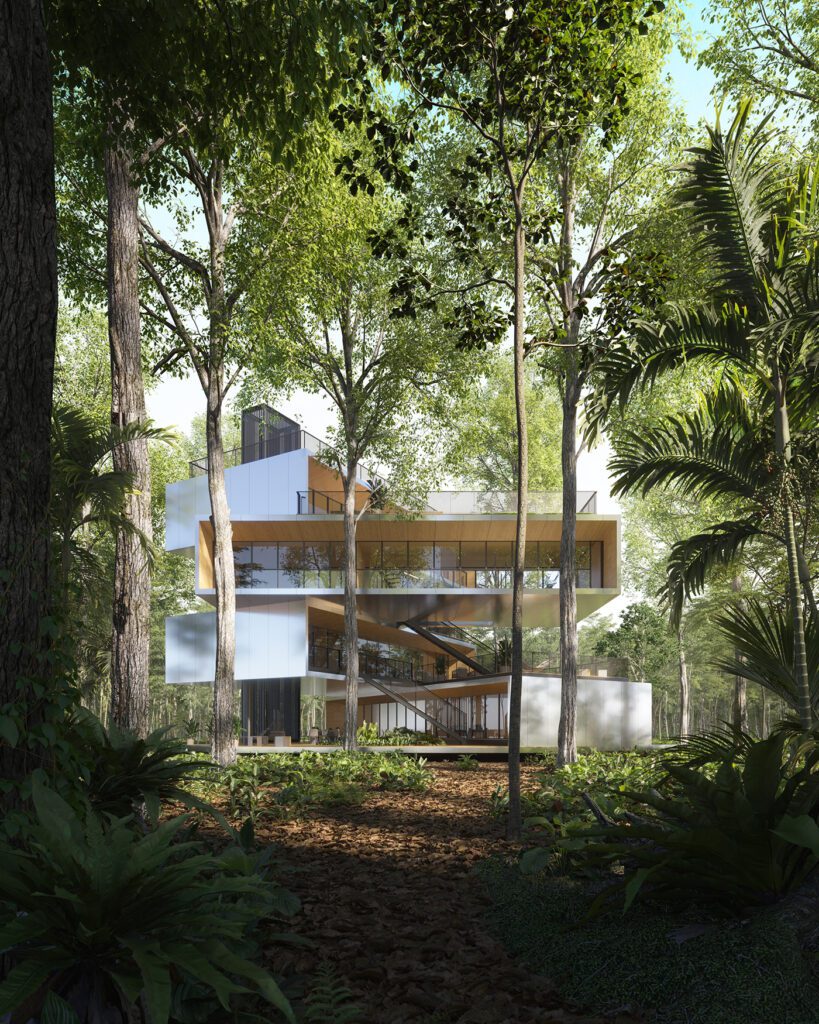
Project implementation: Brazil
Project development: Brazil
AMAZON FACE SCIENTIFIC RESEARCH BASE – Amazonas, Brazil
Located 80 km from Manaus, this vertically designed scientific research base adopts concepts of passive sustainability. The living areas, with varying heights, minimize deforestation and respect the surrounding forest, providing connections with the forest at various heights.
With a prefabricated structure produced in Manaus, the clean construction will generate little waste. The minimal foundation minimized impact on the soil and tree roots, preserving the integrity of the forest.
The brushed and polished aluminum reflects the vegetation, subtly blending the house into the trees. The project's rotation allows for an alternation between indoor and outdoor spaces, fostering social interaction and a unique experience with nature.
—
AMAZON FACE RESEARCH STATION – Amazonas, Brazil
Located 80 km from Manaus, this vertically designed scientific base embraces passive sustainability concepts. The communal areas, with varying heights, minimize deforestation and respect the surrounding forest.
With a prefabricated structure produced in Manaus, the construction will be clean and generate minimal waste. The minimal foundation impacts the soil and tree roots, preserving the integrity of the untouched forest.
The brushed and polished aluminum reflects the vegetation, subtly blending the house among the trees. The rotation of the design allows for an alternation between internal and external spaces, fostering social interaction and a unique experience with nature.
—
Client: AMAZON FACE Project (INPA (National Institute of Amazon Research) + UNICAMP)
Scale: 825 m2
Year: 2023 – now
Architecture:
TROOST + PESSOA Architects – Laurent Troost, Victor Pessoa, Mitzi Sa Motta, Roney Holanda
Images: FlywithMob
Status: In development
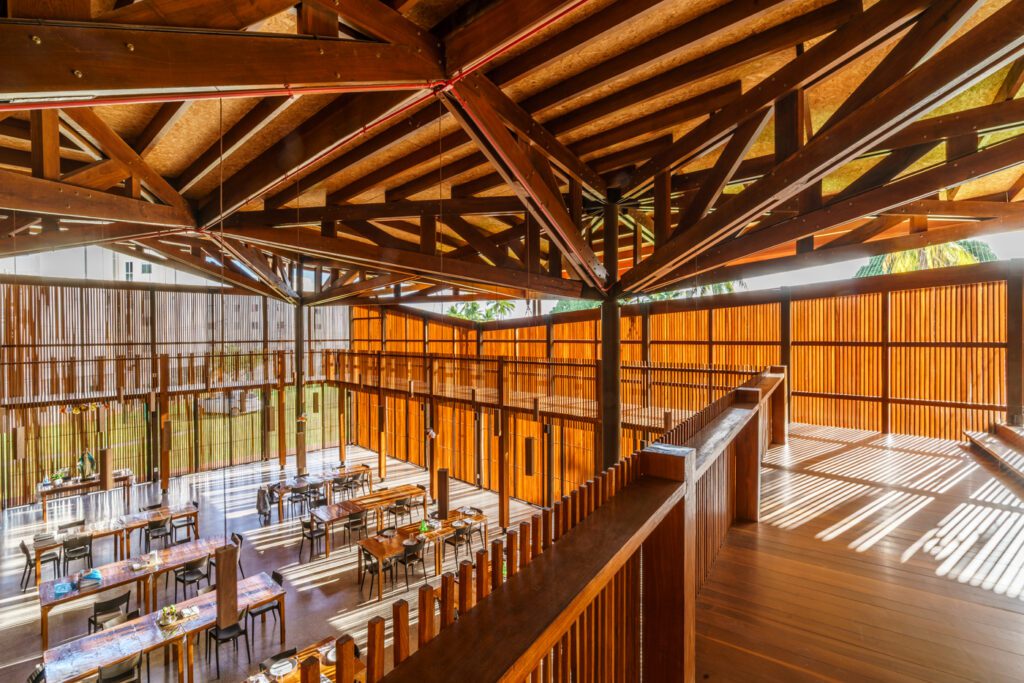
Project implementation: Brazil
Project development: Brazil, Italy
The project is the result of a design process closely shared between the client and architects, aimed at creating an architectural structure capable of embodying the Franciscan charisma, founded on prayer and hospitality, while simultaneously responding to the challenges posed by Salvador's tropical climate. The project stems from the rules that characterize monastic life—prayer, work, and sharing—and reinterprets the classic convent typology, traditionally introverted and organized around a single cloister, fragmenting the buildings and articulating the complex into five green courtyards. Thus, each building establishes a direct relationship with the open space, taking advantage of the natural ventilation generated by the wind constantly blowing off the ocean.
The autonomous and functionally distinct buildings are united under large roofs that perform a dual symbolic and bioclimatic function. Elevated above the building envelope, they facilitate the flow of hot air and contribute to the comfort of the spaces. Sunshades, permeable walls, and openable pivoting panels allow cross-ventilation, reducing the need for mechanical cooling systems.
The tectonics of the material becomes a central element of the project. The wood weaves are sometimes used as a load-bearing structure, sometimes as a closure or bioclimatic element, giving the complex a unified character while simultaneously differentiating the buildings. The wood filters, protects, and structures the space, alternating transparency and opacity according to function and location.
Each building preserves its own identity within a unitary structure. The church is conceived as a large three-dimensional latticework that creates a natural cross on the back wall: a symbol and fulcrum of the liturgical space. The refectory, permeable and flexible, is open to the community and can also host collective events. The library, suspended on wooden pillars and clad in translucent polycarbonate, transforms into a luminous lantern at night. The barracks, made of prefabricated reinforced concrete and surrounded by a wooden exoskeleton, house the cells and ensure shade and cross-ventilation.
The entire complex combines constructive simplicity, passive strategies, and low-tech solutions with contemporary technologies such as photovoltaic panels and rainwater harvesting, achieving a high degree of energy autonomy. The result is a resilient architecture, rooted in the context, that doesn't pursue innovation as an end in itself, but rather draws on established knowledge capable of responding to the climate, resources, and rhythms of the community. An architecture that looks to the vernacular, not to imitate it, but to understand its profound logic and project it into the present with conscious design choices.
Mixture
Mixtura is a Rome-based architecture studio founded by architects Maria Grazia Prencipe and Cesare Querci. The studio explores contemporary space in its formal, social, and aesthetic dimensions, adopting an approach grounded in an understanding of the specificities of the contexts in which it operates.
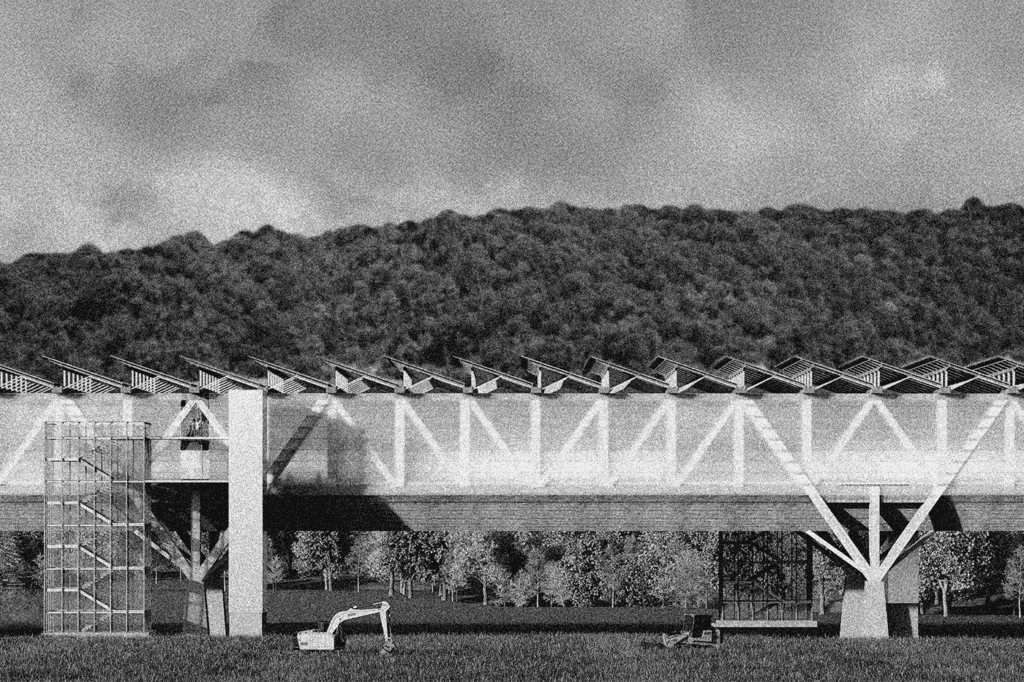
Project implementation: Brazil
Project development: Brazil
On the eve of its centennial, the Federal University of Minas Gerais (UFMG) embarks on a new phase of university expansion, guided by planning guidelines and perspectives aligned with contemporary challenges. The plan for a new campus on a farm that represents a green oasis for the city of Pedro Leopoldo, in the Belo Horizonte Metropolitan Region, is being developed. The Pedro Leopoldo Model Farm Master Plan is guided by the principle of minimal intervention and conscious use of the land and its resources, articulated around the duality of urbanity and sustainability.
This new campus, proposed as an inter- and transdisciplinary platform to address major contemporary issues, is based on an analysis of the territory's physical, environmental, landscape, historical, and cultural structures, recognizing and valuing three notable landscapes: the remaining large trees, the agro-pastoral structures connected to watercourses, and the architectural remains of historical and cultural significance, given that it is a farm with approximately 100 years of occupation. To ensure maximum preservation while simultaneously establishing an initial structure to support university activities, conventional urbanization is avoided and a linear, elevated building is proposed that articulates and integrates the farm's fragments into a spatial design of condensed urbanity that combines architecture, infrastructure, and landscape. Recognizing the multi-scale complexity of the territory and engaging with the urban-rural interface in which the site is located, the Plan, more than defining uses, seeks to establish favorable conditions for a still unpredictable future occupation. In its symbolic and practical dimensions, this project seeks to represent the embodiment of a new paradigm for teaching, research, and outreach spaces: an open, green, and transdisciplinary campus, whose occupation supports practices of coexistence and production based on reconciliation with nature. Pedro Leopoldo's sustainable and advanced Green Campus, therefore, reaffirms the University's role as an agent of transformation, illuminating new modes of occupation that are kinder, more inclusive, qualified, articulate, and conscious.
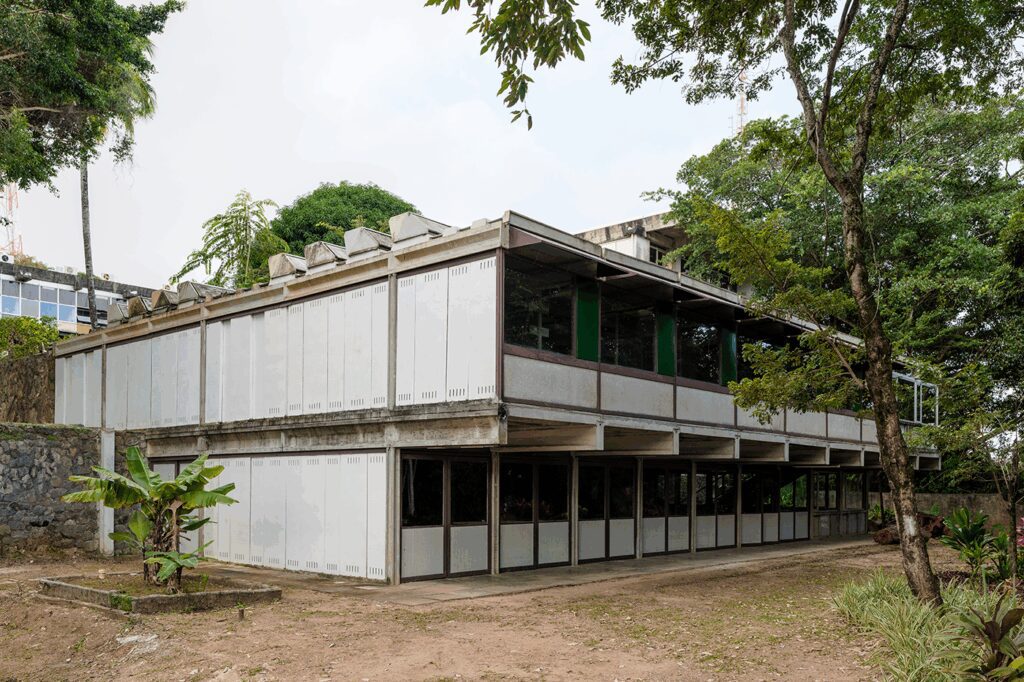
Project implementation: Brazil
Project development: Brazil
Built in 1988 to house the activities of the Postgraduate Program in Architecture and Urbanism at UFBA (PPG-AU), the Iansã Module of the Faculty of Architecture at UFBA (FAUFBA) followed the model of the two-story schools in reinforced mortar designed by the architect João Filgueiras Lima, Lelé, for Salvador, within the scope of the Community Equipment Factory (FAEC).
In addition to the characteristic structure of reinforced mortar beams and pillars, it has special frames and other unique values.
In the early 2010s, it faced more acute difficulties in carrying out its maintenance, expansion and renovation, due to the construction system outside the production line, suffering a gradual emptying.
Maintenance and research actions on the building have been carried out since 2019, together with the recognition of the original FAEC forms carried out with DESAL, a process that involved the mobilization of the technical staff of FAUFBA and the Superintendence of Environment and Infrastructure of UFBA (SUMAI) and the Pro-Rectory of Research and Postgraduate Studies (PRPPG/UFBA).
Along with maintenance actions, damage and pathological diagnosis activities were carried out, as well as studies of construction systems, through research projects by professors and students (FABER and Project, City and Memory groups).
The project aimed to transform the Iansã Module into the Construction Laboratory and Experimental Site of the Faculty of Architecture of UFBA, an experimental space with a multi-user character to meet the demands of undergraduate and postgraduate courses.
Its reuse included adaptations for the installation of the School's carpentry and metalwork shop, and was made possible by the resumption of the manufacture of reinforced mortar parts for the building's roofing system by DESAL, based on the recovery of the original metal forms, found after a joint effort by its technical team and FAUFBA professors.
The intervention replaced roof beams, tiles, and sheds, restoring the building's rainwater drainage capacity, as well as improving airflow and ventilation by increasing the number of sheds and removing partitions. Other spatial and construction interventions were carried out to repair defective reinforced mortar elements, modernize general facilities, and rearrange the previously subdivided spaces into rooms capable of housing educational activities involving constructive experimentation.
The expectation for the future is that the construction laboratory and experimental site can contribute to strengthening teaching in the field of construction within the new architecture and urban planning course, being a bridge for extension interactions at FAUFBA and serving as an example of recovery and conservation of the work of João Filgueiras Lima, Lelé.
Project: Faculty of Architecture of UFBA and SUMAI/UFBA
New reinforced mortar pieces: DESAL – Salvador
Build: PC Best
images 01 and 02 - Paula Mussi, 03 - Sergio Ekerman
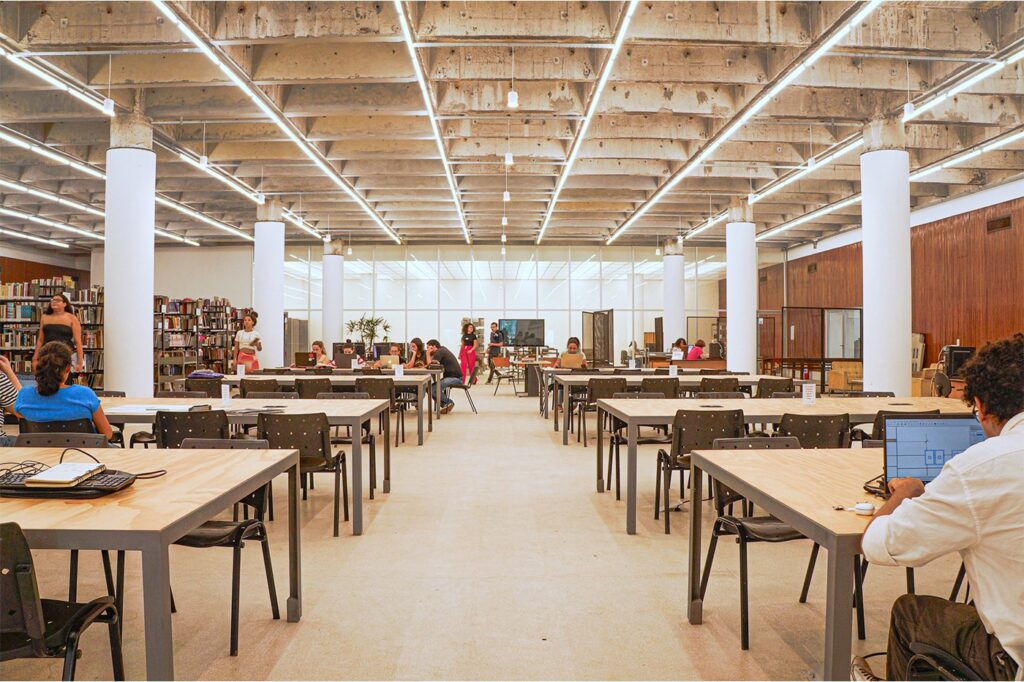
Project implementation: Brazil
Project development: Brazil
The Jorge Machado Moreira Building (JMM), designed in 1957 and inaugurated in 1961 as the headquarters of the then National Faculty of Architecture, is one of the most important examples of modern Brazilian architecture, having won an award at the 4th São Paulo International Biennial that same year. Throughout its history, the building has undergone several transformations resulting from successive occupations and lack of adequate maintenance, compromising both its architectural integrity and its functional performance. The 2016 fire, which occurred on the eighth floor, intensified this process of degradation, causing structural damage and the isolation of significant areas of the building.
Given this situation, the JMM's recovery has been slow and gradual, marked by initiatives that combine institutional resilience and low-cost solutions. One example is the reoccupation of the 8th floor by the School of Fine Arts, following the closure of the Pamplonao studio, in a collaborative effort with the FAU. The proposal, considered a pilot project, is based on the reuse of existing materials, the reversibility of interventions, and the pursuit of low-cost renovations.
In April 2022, renovations began on the hall located in Block B of the building. The space, which had served as a ceremony room and the headquarters of the Dom João VI Museum throughout its history, had been closed for almost two decades until it was designated as the EBA-FAU-IPPUR Integrated Library, in line with Jorge Machado Moreira's original program, which was never fully implemented.
The initial inspection revealed its dilapidated state, but the original design's sectoral clarity, open floor plan, and structural modulation supported the decision to convert it into a library. The renovation, conducted under severe budget constraints, adopted austerity criteria, maintaining existing elements whenever possible and reinterpreting others in more accessible materials, such as granite for the floor and alveolar polycarbonate for the ceiling.
The result preserves the compositional simplicity and modern character of the hall, now equipped to house collections, consultation, and study. In July 2024, for the first time since the JMM's inauguration, a full library began operating on site, housing one of the largest collections in Latin America in Architecture, Urbanism, Visual Arts, and Design.
These recent initiatives are part of the FAU Project, which treats the building itself as a field of research and practice, articulating heritage conservation, sustainability, and teaching. In this context, the Reuse Laboratory, a subject in the FAU UFRJ advanced cycle, explores the reuse of materials and the disassembly and adaptation of components as a pedagogical exercise, connecting with the FAU Project. Thus, the JMM not only regains its institutional function but also reaffirms its role as a teaching instrument, a laboratory for modern architecture, and a space for experimentation in sustainability.
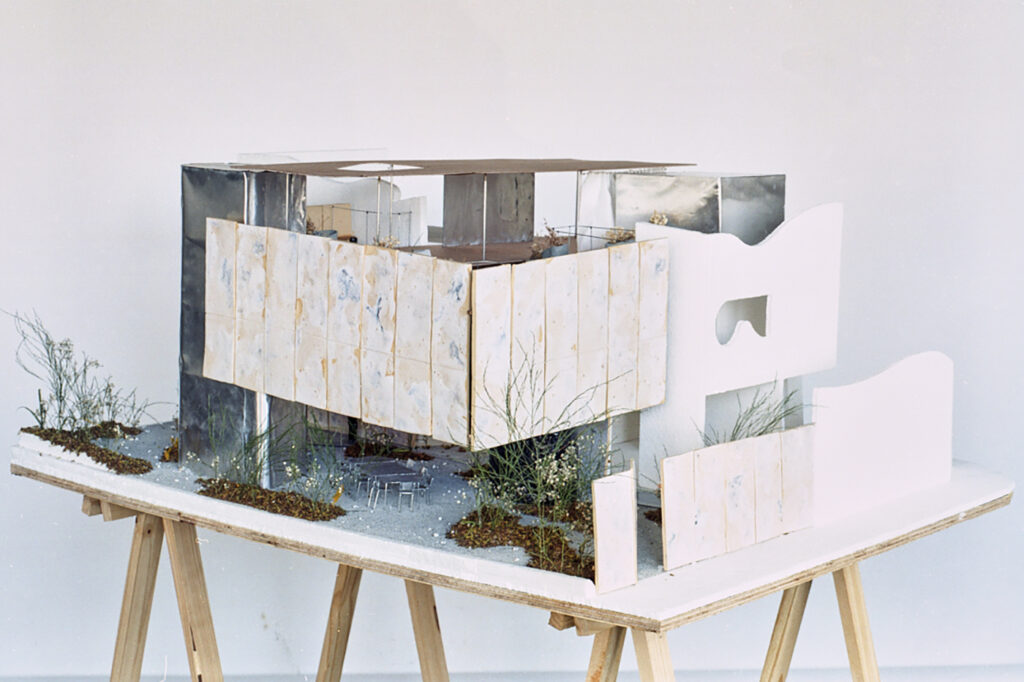
Project implementation: Brazil
Project development: Brazil
As in a collection, where objects are selected and preserved, the fragments of an existing construction—concrete, steel, aluminum, glass—are preserved and reassembled. The ordered form is dissolved to be reworked from its rubble. In this rearrangement, the collected fractions of matter leap from what was once merely opacity, becoming sparks revealed by light—by its reflections and its openings.
The collection of fragments is stacked on white concrete slabs, delimiting the garden like a microcosm. Within it, a suspended enclosure of the same fragments forms another space, housing the office, gallery, and suite.
A staircase, a wooden pillar, and a work of art support the structure that suspends the enclosure amidst the garden. Wooden and steel slabs and beams form the floors and serve as support for the façade elements. The balance of the complex is achieved by a precise interplay of irregularly distributed weights and traction. Above this, two horizontal planes form a small pavilion, which straddles the virtual boundary between the new and the existing.
Organic forms interact with the amorphous nature of the light, creating diaphanous volumes that pierce the floors and organize the internal space of the new proposal.
Transparent and atmospheric, these bodies of light bring the presence of the outdoors inside, with the full oscillating spectrum of their hues. Singularly, they seem to disorient the perception of interior and exterior, confusing built and unbuilt, and rendering the experience of inhabiting a garden latent. An essential counterpoint to the house next door—a 2000s renovation by Ruy Ohtake.
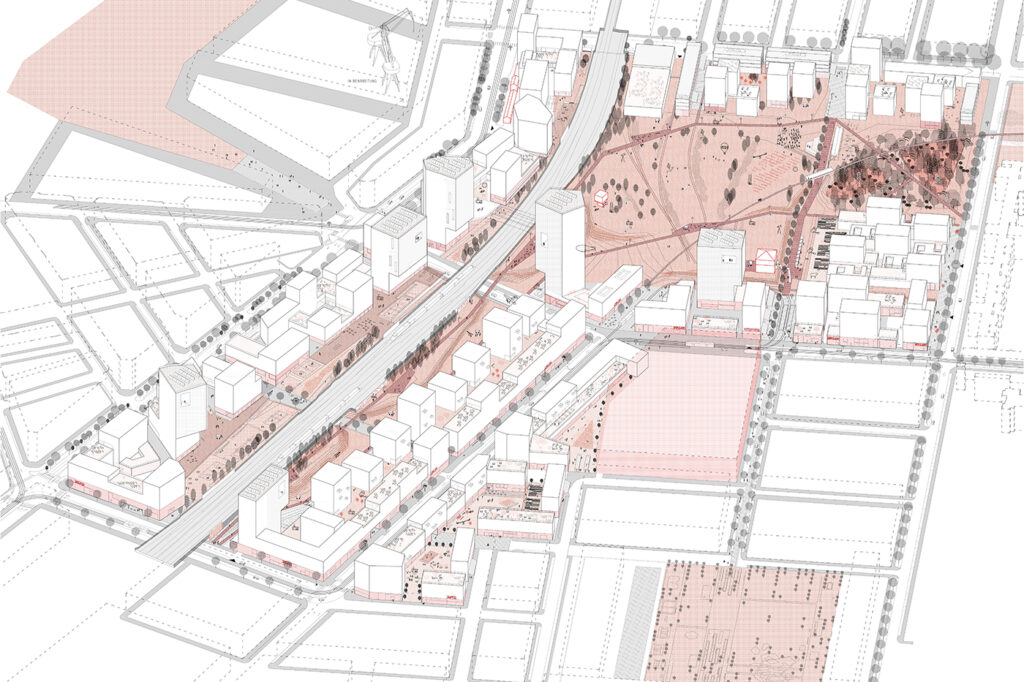
Project implementation: Austria
Project development: Austria
"The atmosphere of Freie Mitte, with its extraordinary relationships between people, animals, and plants, resembled what happens in a forest, where respect and freedom are in a delicate balance, and where people greet each other as they pass by, even if they don't know them."
2012-2025
Over the past 20 years, the process of natural succession has gradually transformed the 30 hectares of vacant land of the former Nordbahnhof freight station into a seductive post-industrial landscape, an urban wilderness with fascinating flora and fauna, right in the city center. Over time, people have fallen in love with this fantastic "otherness," appropriating it as their unofficial public space—a wonderful gap in the city.
In 2012, the city launched an international competition to fill this gap with half a million square meters of new buildings, primarily housing. Our winning proposal "discovers" Freie Mitte, pushing all built mass to the area's perimeter, protecting the wilderness, allowing it to continue to grow, and revitalizing what already exists: a challenging public habitat with ample opportunities for people, animals, and plants.
In the years following the competition, Freie Mitte served as a projective public space for intermediate uses, a raw testing ground for new forms of public culture. The "Nordbahnhalle," a former industrial warehouse, became a sociocultural center hosting local and international exhibitions, workshops, workplaces, and diverse programs for residents and visitors. In parallel, a large team of developers, city officials, architects, landscape architects, and ecologists worked on the design of the buildings surrounding Freie Mitte and in Freie Mitte itself.
In 2021, city politicians ceremonially inaugurated the first part of Freie Mitte. After 20 years of experimenting with existing resources, Freie Mitte allows for the surprising return of public space as a genuine promise, as originally envisioned by the neighborhood's pioneers. For the first time in Vienna, a space like Freie Mitte—with its transhuman ecology, its wild appearance, and its provocative scale—is recognized as an acceptable, even desirable, urban public space.
Ahead of its time, the original idea for Freie Mitte proved to meet the requirements of climate-resilient urban design, promoting the right to otherness in the city. The harsh realities of our time transform Freie Mitte's otherness into a potential value, a possible response to a profound crisis. The fact that striving for a more humble way of interacting with nature—even on a much larger scale—is still an exception demonstrates the need for ambitious and visionary projects that pave the way for the development of our future neighborhoods and urban environments.
Urban Development Plan »Free Middle, Vielseitiger Rand«
Urban Planning: StudioVlayStreeruwitz, Vienna
Landscape Architecture: Agence Ter, Paris/Karlsruhe
Traffic Planning: Traffix, Vienna
Client: City of Vienna, ÖBB-Immobilien (Real Estate Agency of the Austrian Railways)
Landscape Design/Implementation of Freie Mitte
Agence Ter in partnership with Land in Sicht
Research Projects »Mischung: Possible!« and »Mischung: Nordbahnhof«
Funded by Klima+Energiefonds Österreich, in cooperation with TU Wien, Institut für Wohnbau (Christian Peer, Peter Fattinger) / Institut für Soziologie (Silvia Forlati), DI Andrea Mann, StudioVlayStreeruwitz, Architekturzentrum Wien, morgenjungs, Erste gemeinnützige Wohnungsgesellschaft
Photograph of Freie Mitte
Davide Curatola Soprana
Magic Drawings
Marta de las Heras Martinez
Magazine Graphic Design
Beton.studio
Thanks to everyone who provided us with valuable information, sources and material, especially: Thomas Proksch, land in sicht, Agence Ter, Peter Rippl, Martin Riesing, Mara Reinsberger, Mirjam Mieschendahl, Angelika Fitz / AzW, Alexandra Madreiter / MA 21, IG Lebenswerter Nordbahnhof, GB*Stadtteilmanagment Nordbahnhof, Nordbahnhofviertel Service, Team Nordbahnhalle and all the people who are part of Freie Mitte.
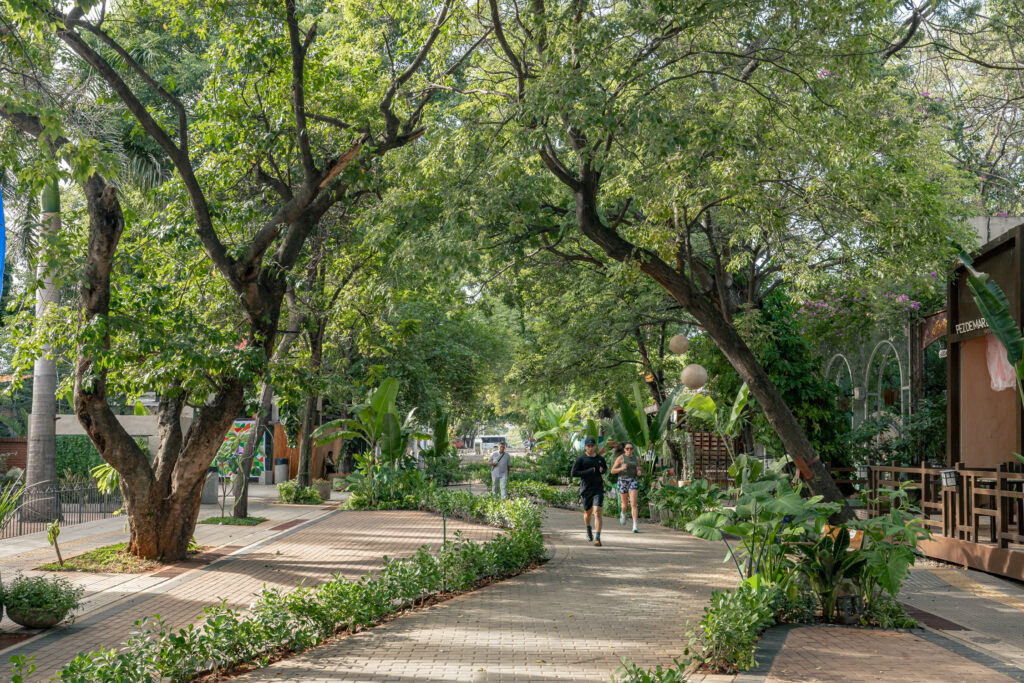
Project implementation: Paraguay
Project development: Paraguay
“Being original consists of returning to the origin.” Antonio Gaudí
Technical Memory – Descriptive
The section in question represents a unique case in the city of Asunción, due to the intersection generated between two situations that currently favor the democratic appropriation of public space:
High pedestrian flow – There is a large number of people on foot, as the block is home to shops and services that remain open for most of the day, every day.
Presence of cycle path – Located on one of the main roads of the AMA (Metropolitan Area of Asunción) cycle path network.
Based on this condition, criteria are established for the design of public spaces in this part of the city, aiming to serve as a reference for similar cases. These criteria encompass road, environmental, and infrastructure concepts, to improve public spaces for the benefit of all users.
Considering that the street in question has municipal approval for use “exclusively for pedestrian and cyclist traffic” (Res. 948/2023), the objective is to serve the following functions:
Integrate the cycle path into the pedestrian space.
Mitigate the presence of rainwater.
Improve environmental quality with vegetation.
Ensure universal accessibility.
Ensure access to emergency vehicles.
To achieve these objectives, the elements that make up the public space are described: single platform, cycle path section/speed reducer and urban green infrastructure system.
Single Platform
The main objective is to return public space to people, prioritizing pedestrians so they can exercise their rights in a dignified, inclusive, and safe manner.
A single, continuous, integrated level of sidewalk and roadway is defined, unifying the corners with ramps with a minimum slope of 20%. This surface allows the passage of emergency vehicles, as there are no fixed obstacles to impede it.
The street, which normally dedicates 65% of its width to vehicle traffic and only 35% to pedestrians, is now almost entirely dedicated to human use, incorporating:
Podotactile surface (guides and alerts) and accessibility ramps.
Informative and precautionary signs on street corners.
Linear grates for rainwater drainage, replacing gutters.
Spaces for use by gas station attendants.
Draining gardens for vegetation and rainwater control.
Tree cradles.
Children's playgrounds.
Banks.
Trash cans.
Bicycle parking.
Water station.
Public lighting.
12% is reserved for the cycle path route, the implementation of which is justified below.
Cycle path speed reducer
Due to the high traffic volume and the “square” or “urban garden” nature of the block, cyclists must reduce their speed from around 20 km/h to a maximum of 10 km/h, and may dismount when necessary.
In this section of Alberto de Souza Street, the bike path switches sides: from Cruz del Chaco Street to the West, it's on the North side; from Defensores del Chaco Street onwards, it's on the South side. To reduce speed and smooth the transition, a winding route is proposed, with pre-signaling, encouraging cyclists to pedal cautiously and masking the change of sides.
This sinuosity breaks the directionality and transforms the place into a “natural passage”, where haste gives way to rest, without impeding the crossing.
Urban Green Infrastructure – SUDS ASU1
(Sustainable Urban Drainage Systems)
In addition to returning space to pedestrians, as proposed by the "single platform," the goal is to restore the land's capacity for harmony with people. Strategies include:
Reduction of ambient temperature by reducing the number of asphalted or cemented surfaces and increasing green or less reflective areas.
Highly permeable surfaces, allowing water infiltration and vegetation development.
Installation of draining gardens distributed throughout the block, each measuring approximately 10 m², by removing the asphalt and excavating 1.50 m, filled with stone material for controlled infiltration, protected by a drainage blanket and crimped walls (infiltration well type).
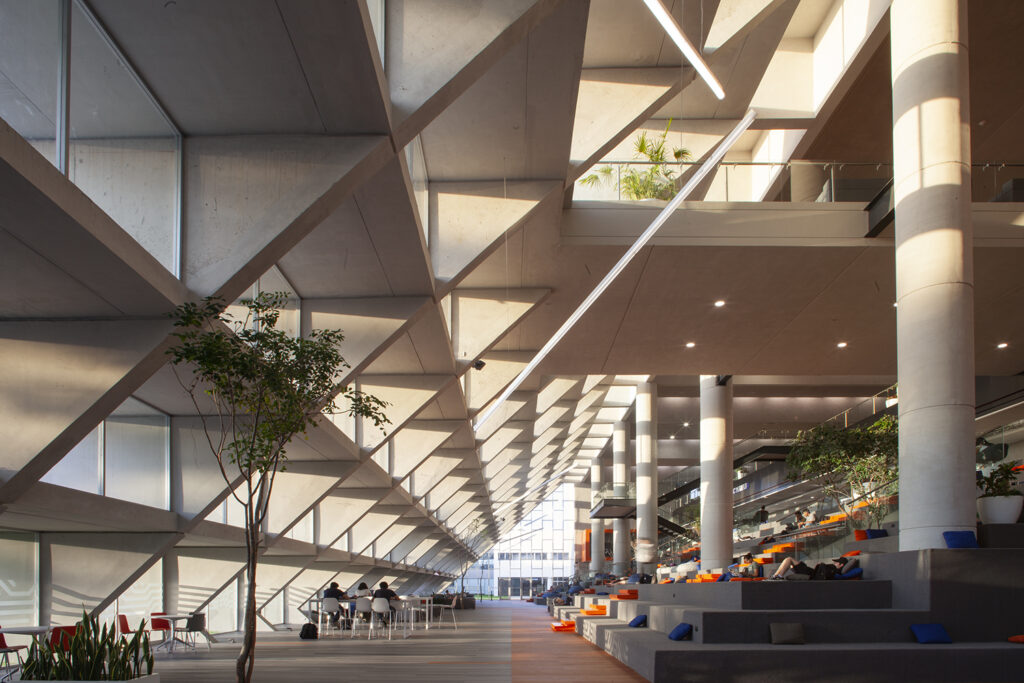
Project implementation: Mexico
Project development: Mexico
Within the Anáhuac Mayab University Campus, as part of the educational and technological growth and updating, the Innovation Laboratory and the expansion of the classroom building of the School of Architecture and Design were created.
These spaces are created as an extension of the Engineering and Design Division, integrating with existing classrooms, which will become more open and dynamic rooms.
The extension of the Innovation Laboratory is planned parallel to the existing building, generating a new facade that continues the existing route marked by the walkways of the campus buildings.
The expansion project follows this same principle of correctly oriented linear buildings, which seek to capture uniform light from the north and block and protect against sunlight from the south.
A large space generates and articulates this extension. The extension is this new, open, and spacious space. A space where common activities and study are carried out freely. A system of co-work, co-study, and co-learn, where the space flows freely, activities intertwine, and actions within the space are suggested. These are actions within the space that can be planned, but can also be proposed, or allow others to produce diverse activities and even different exhibitions, events, and celebrations. A dynamic, innovative space.
This large space is structured through the management of light. A series of prefabricated pieces allow light to pass through and create a scale and ascending rhythmic treatment. It assumes the scale of the existing building and unfolds toward the access garden. This is a gesture of continuity with the existing buildings on the Campus, all of which are allusions to pre-Columbian architecture.
The School of Architecture Expansion is designed over the existing two-story building, creating a third floor for open-plan workshops and creating a new envelope for the entire existing building. It generates and articulates the entire envelope, culminating in a large truss sloping westward. It is a space where communal and study activities can take place freely, where the space flows, allowing for diverse activities.
Currently, the concept of classrooms has changed, and even more so in terms of design teaching, with greater participation and interaction between students, teachers and consultants.
The large space is structured through inclined consoles crossed by sunshades that allow light to pass through and block the sun. It redefines the scale of the existing building and envelops it, creating an open, free, and flexible third floor. A continuous space with multiple uses, from drawing workshops to exhibition spaces.
The formal treatment is a response to the language that has been generated for 40 years in the Campus buildings.
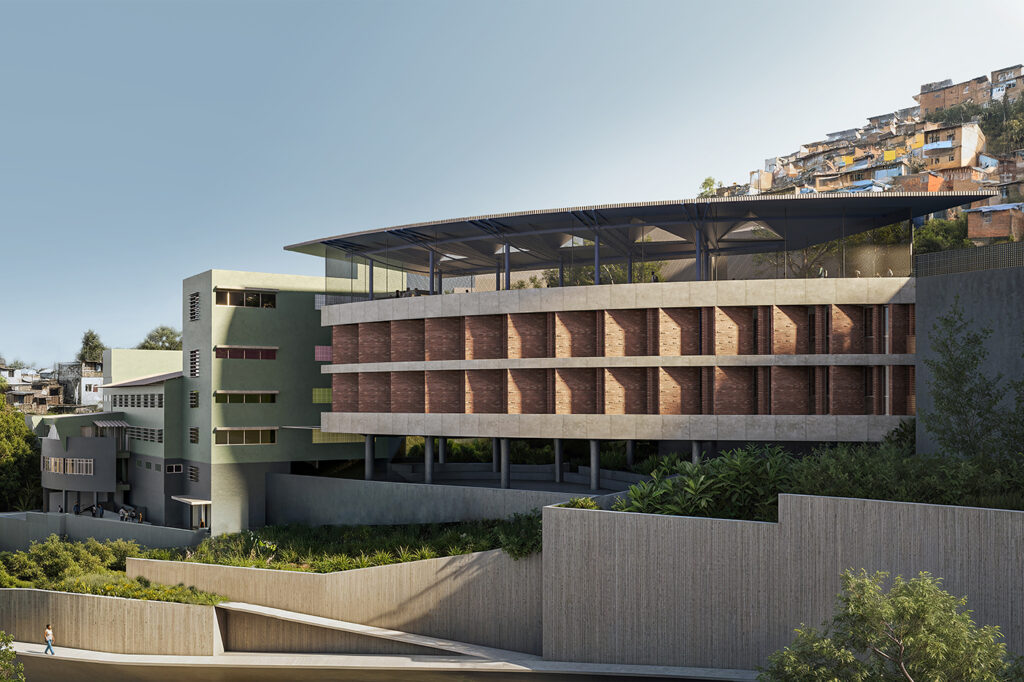
Project implementation: Brazil
Project development: Brazil
Coming soon.
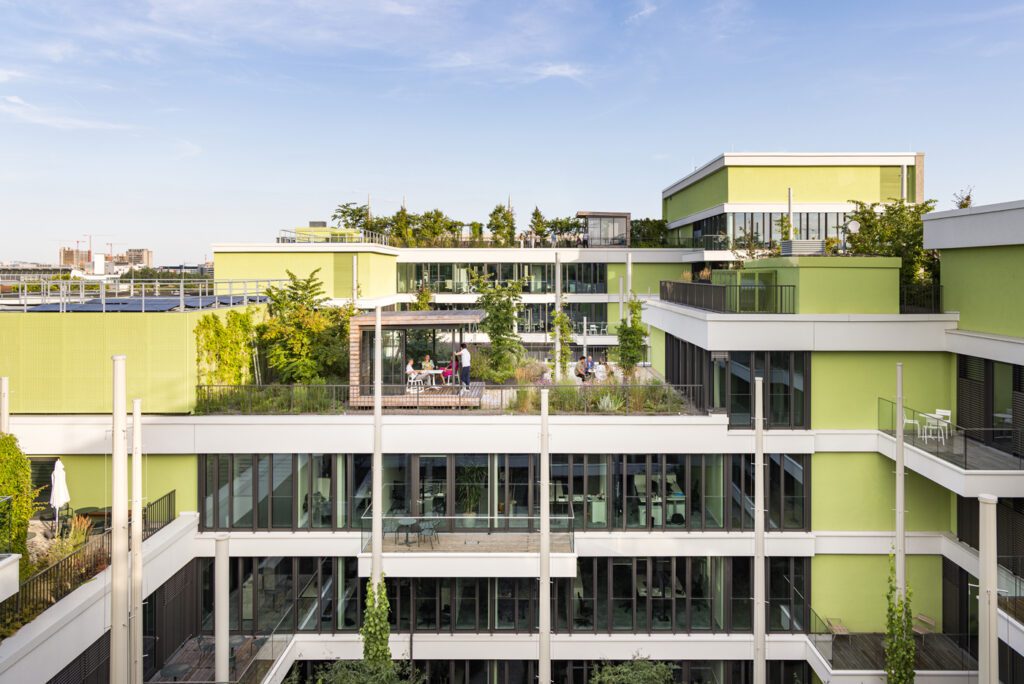
Project implementation: Germany
Project development: Germany
ATREEUM Office Building – A work oasis in Frankfurt's Ostend district
The Atreeum office building on Hanauer Landstrasse in Frankfurt is located in a historic commercial area with a perimeter block density typical of exposed brick buildings. The goal is for the new office building to emerge from its surroundings, integrating contextually while simultaneously creating a sustainable and future-proof work environment through a new structure that integrates nature into the living and working space.
The varying heights of the surrounding buildings are incorporated through differentiated stepped heights. This gives the sculptural structure a stepped height development that creates urban high points at the corners and simultaneously allows for optimized lighting of the courtyards. These courtyards are connected to the urban space by large two-story passageways.
The Atreeum's outer skin consists of a clinker facade with a minimalist slatted structure that envelops and protects the building. Inside, the volume dissolves into horizontal layers. The facade is glazed, and numerous balconies and terraces face the interior green spaces, allowing for the use of these landscaped areas.
In this sense, these internal green courtyards, balconies, and terraces form the building's significant heart. The terraces offer special recreation areas with pavilions and workspaces surrounded by greenery.
Using nature as a building material transforms even an ordinary construction project (in this case, an office building) in a primarily industrial and commercial location into a green oasis where people can work. Atreeum blends a dense urban setting with an innovative interpretation of traditional typologies.
The thrilling tension between the compact protective envelope and the green world within, which brings to mind associations with the atrium houses of Ancient Rome and Moroccan riads, crucially links the two poles of civilization and the environment.
Green courtyards, balconies, and terraces create an optimized microclimate within the building and offer significant potential for water retention and storage. At the same time, this spatial structure provides countless opportunities for social gatherings and new worlds of work.
In this way, this building can make a contribution to sustainable architecture. The result is a green workplace oasis in an urban context.
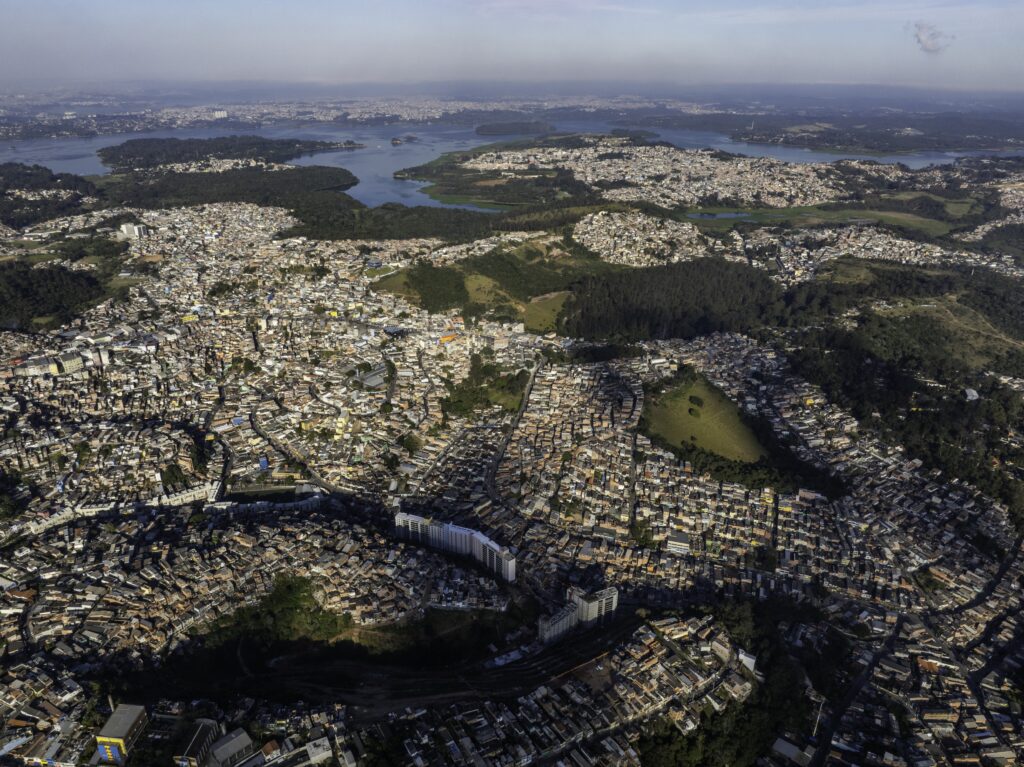
Project implementation: Brazil
Project development: Brazil
The Mananciais Program is a public policy for integrated urbanization aimed at São Paulo's watershed areas, focusing on the Guarapiranga and Billings river basins. Its origins date back to the 1990s, when the Guarapiranga Program was created, a pioneering landmark of socio-environmental intervention in the city. Over three decades, the initiative has evolved to encompass new territories and methodologies, consolidating its position as a benchmark in the reconciliation of urbanization and environmental preservation.
Conceived by Elisabete França, an architect and urban planner recognized for her work in housing policies and urban renewal, the Program gained a new institutional structure in 2021 with the creation of the Mananciais Program Executive Secretariat. Elisabete served as the first executive secretary (2021–2024), leading the resumption of Phase 3 and structuring integrated action across different areas of the City Hall. Beginning in 2024, the program was led by Maria Teresa Fedeli, who maintains the program's intersectoral strategy and reinforces its social and community dimension.
The Executive Secretariat has a multidisciplinary team, mostly composed of young women, who work directly on planning, coordinating, and monitoring the projects. This composition gives the Program an innovative perspective, sensitive to issues of gender, social inclusion, and territorial equity.
The Phase 3 strategy combines sanitation, drainage, containment, paving, and housing projects with social, cultural, and environmental initiatives that strengthen urban resilience and climate justice. One of the distinguishing features is the adoption of Nature-Based Solutions such as rain gardens, bioswales, retention ponds, and river parks, which integrate urban drainage and environmental preservation into the city's design.
The Program also promotes the implementation of public facilities—Basic Health Units, Early Childhood Education Centers, TEIA Spaces, libraries, sports and cultural centers—by establishing intersectoral partnerships with various departments. These facilities serve as social anchors, bringing essential services closer to the population and strengthening community ties.
Social participation is a structuring axis: workshops, listening sessions, collective plantings, and cultural activities bring residents closer to the urban transformation process, fostering a sense of belonging and shared responsibility for the territory. Emblematic experiences, such as the urbanization of Jardim da União, demonstrate how a set of interventions can promote dignity, integration, and new opportunities for historically vulnerable communities.
More than just construction projects, Phase 3 represents an urban and environmental pact that recognizes the interdependence between cities and nature. By promoting integrated and sustainable interventions, the Program reinforces that quality urbanization is also a strategy for protecting water sources, reducing inequalities, and strengthening climate resilience.
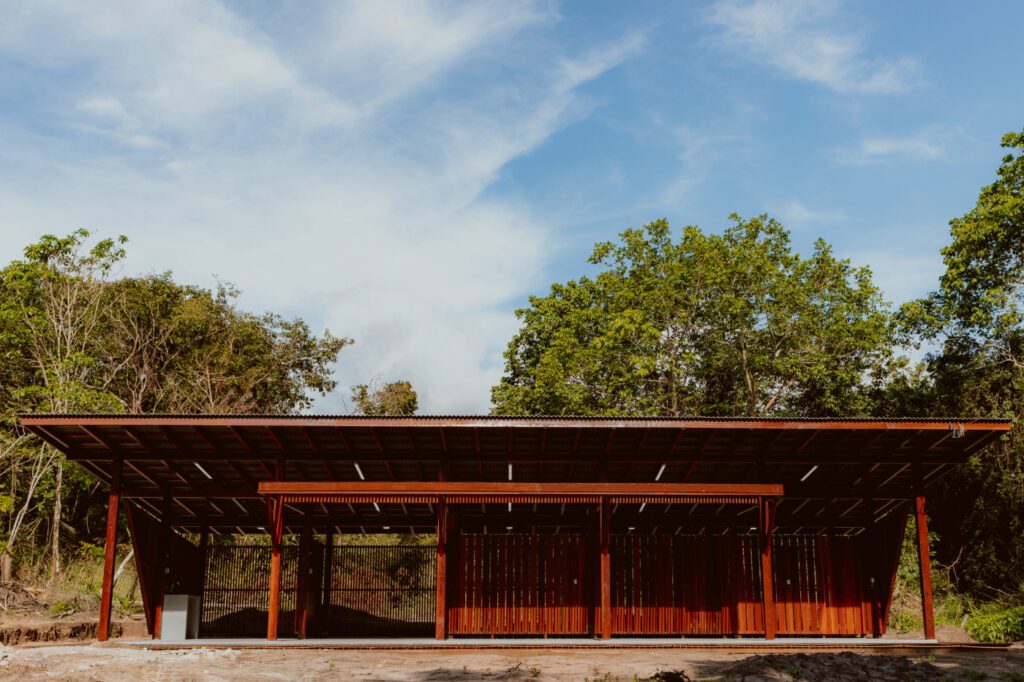
Project implementation: Brazil
Project development: Brazil
This project was developed for the Amélias of the Amazon. This community, which extracts andiroba and Amazonian spices, is located in the Tapajós National Forest (FLONA) in the state of Pará. Its name was intended to redefine "the Amélia women," which in the last century was the name given to women who dedicated themselves exclusively to caring for the home. Thus, the Amélias of the Amazon represent the entrepreneurship and protagonism of Amazonian women. Developed in partnership by architects Tales and Taís Kamel, from the Kamel Arquitetura firm, and architect Matheus Vieira. Located in the Tapajós National Forest, in the heart of the Amazon, it combines contemporary architecture, sustainability, and innovation, creating a laboratory in harmony with the forest. The idea stemmed from a contemporary Amazonian architecture project, using wood as a guiding material, readily available in the region. We could use traditional forest labor and construction methods to translate vernacular architecture with low-carbon construction, adapted to the local, hot, and humid Amazon climate. Through the use of shading elements, rich in details characteristic of local architecture, the project highlights the importance of traditional peoples' knowledge. The project strengthens local communities, promoting the development of a sustainable bioeconomy, and extolling the richness of contemporary Amazonian architecture, in harmony with and respect for nature. The forest resists, the forest pulses, the forest lives.
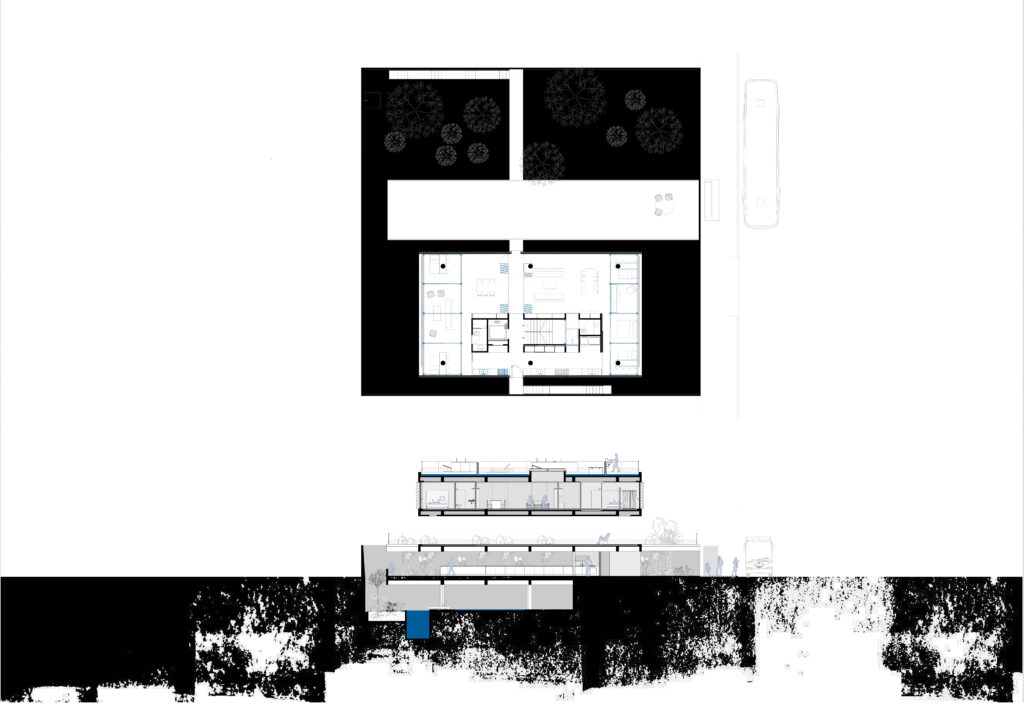
Project implementation: Brazil
Project development: Brazil
The collaboration between Metro Arquitetos and Paulo Mendes da Rocha on the design of a 900m² single-family home, used as the basis for this proposal, marks the first year of the 21st century. The climate emergency that the population will collectively face in the next century is an economic fact, and the intervention carried out at Casa AP, located in Jardim Europa, São Paulo, envisions alternatives for collective housing and social justice, under the reversal of a centuries-old logic.
The desire of the century is inversion. To build less, to inhabit what is already built better. Workers can be close to work. The drive becomes a walking route. Approximately 900m² of land occupied by a single family can be used by several.
The workplace becomes a leisure space. Mobilize energy, construction, and design resources that are less burdensome to the planet. Collectivize goods and spaces.
A century can transform social constructs regarding the dynamics of housing and domestic use. Given the changes in perceptions of morality, the division of labor, and the relationship between public, private, and intimate that a hundred years encompass, themes such as the overlapping of spaces, their collectivization, and forms of maintenance are addressed in architectural plans.
On a 900m² lot in Jardim Europa, measuring thirty meters by thirty meters, a single family of four lives in a perfectly square layout. Also square is the layout of the social housing unit designed for CECAP Guarulhos by architects João Batista Villanova Artigas, Fábio Penteado, and Paulo Mendes da Rocha in 1972. It is more than nine times smaller in square footage than CASA AP, for the same number of residents. On a lot in an upscale neighborhood, the elite housing system uses large square footage and low-density occupancy.
A project is a wish.
The desire to reverse how things are now.
In this sense, the project proposal, which is an essay that envisions alternative futures on a planet and in a country marked by income inequality and, consequently, discrepancies in access to the right to the city, social and climate justice.
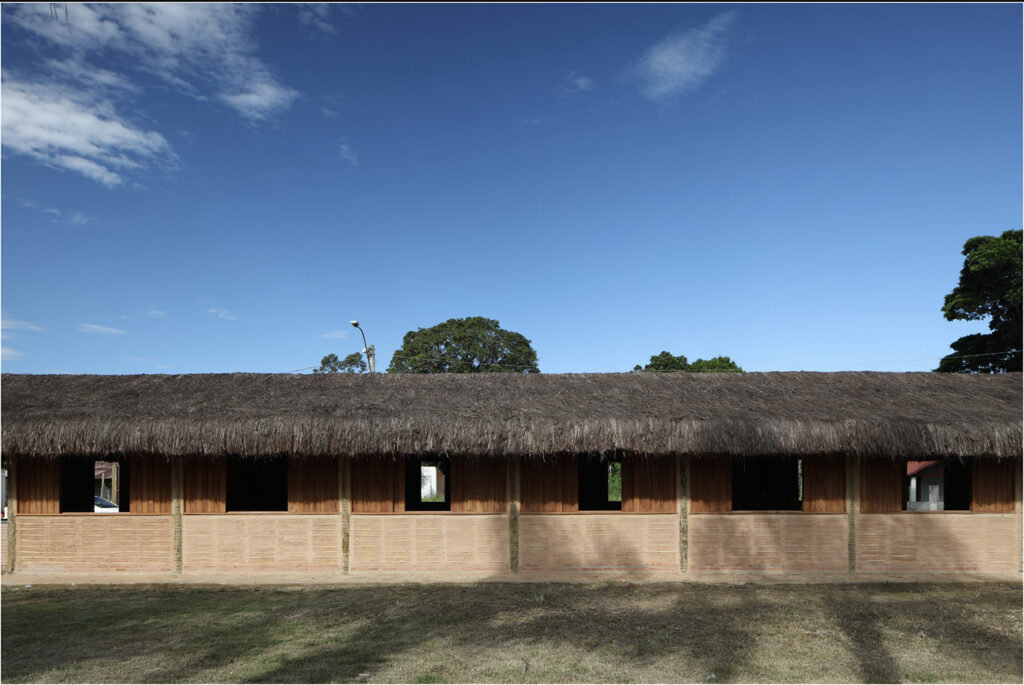
Project implementation: Brazil
Project development: Brazil
Formed in 2008, the Fresta Group is comprised of four architects and a sociologist [Anita Freire, Carolina Sacconi, Luan Carone, Otávio Sasseron, and Tais Freire], working on architectural and sociocultural projects. The final product is architecture, and for this to materialize, there is always interdisciplinary research and engagement through participatory processes with the local community for which the project will be intended. Just like in the projects developed for the communities of Heliópolis (SP), Rio Pequeno (SP), the Guarani and Tupi peoples of the Tenondé Porã Indigenous Land (SP), the Tupiniquim Guarani Indigenous Land (ES), the fishing communities of the Canavieiras RESEX (BA), Novo Airão (AM) or Marujá, Ilha do Cardoso (SP), the Fresta Group seeks a new perspective on the existing, seeks to channel the potential of its context to then materialize in architecture that initial raw material: the identity of its place and its inhabitants, and thus reveal and formalize its culture in buildings.
The projects in the Tupiniquim Guarani Indigenous Land, in the municipality of Aracruz, in the north of the state of Espírito Santo, were developed based on technical consultancy work and architectural projects, drawn up within the scope of a Basic Environmental Plan.
Through participatory processes conducted in seven Indigenous villages—three of the Tupiniquim and four of the Guarani Mbya—programs for developing architectural projects were agreed upon. The goal was to better understand the architecture and culture of each community, seeking to gain a field-based understanding of their housing styles, uses, needs, and overall social and environmental context.
Thus, through participatory workshops, four projects were developed for the Guarani people: housing in the Piraqueaçu village, a community kitchen in the Olho D'Água village, a community center in the Três Palmeiras village, a natural pharmacy in the Boa Esperança village, and four projects for the Tupiniquim people: an industrial kitchen in the Areal village, an industrial kitchen in the Irajá village, and finally, a women's house and an agricultural shed in the Pau Brasil village. It is important to emphasize that in these projects, the materials, uses, needs, and eventually the forms and spatial distributions were discussed and decided by the Indigenous people themselves.
The goal of the projects was to design buildings that met the proposed uses and respected the culture of each community. The use of traditional techniques and materials, as well as low construction and maintenance costs, were also a constant concern throughout the development of the projects. All buildings adopted sustainable construction systems with low environmental impact and were based on the premise of using ecological sewage treatment systems (banana circles for graywater and evapotranspiration basins for blackwater).
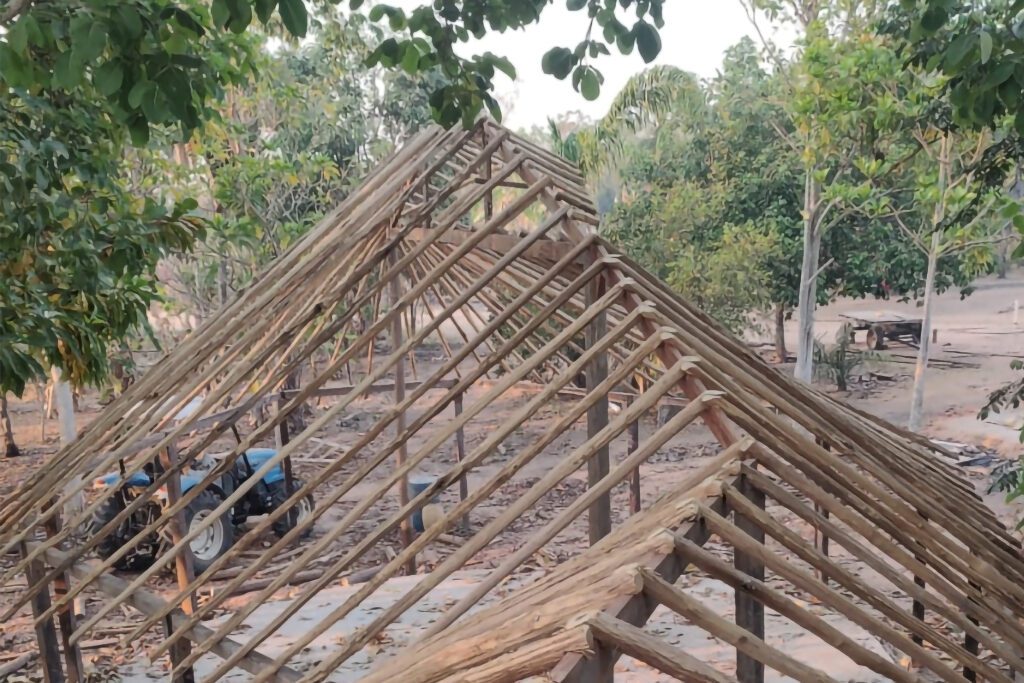
Project implementation: Brazil
Project development: Brazil
The landscapes of Mẽbêngôkre villages are undergoing transformation, as anthropologists have recorded over the last century. In 2015, the architects at Estúdio Guanabara were invited to address this dynamic in response to the demand for new non-indigenous homes in 21 Mẽbêngôkre villages. The development of these new kikré—houses, in the language of the Mẽbêngôkre—continued until 2018. During this process, an extensive survey of several villages was conducted, revealing not only the different layouts of the settlements but also the diversity of their constructions: walls of wattle and daub, wood, or masonry, and roofs of straw, zinc, or ceramic.
In the years following the Kikré Project, other initiatives were developed: the Casa do Pajé (Shaman's House), a new building for an ancestral practice, shamanism; and the Casa de Turismo (Tourism House), an ancestral form reinterpreted for a new practice. These experiences have raised questions about the preservation of building traditions, environmental impact, and the adoption of techniques external to Mẽbêngôkre culture. They also prompt reflections on architectural design methodologies in indigenous contexts and, above all, on the autonomy of these people in the construction of their own spaces. By displacing ideas of tradition and cultural identity as something fixed in the past, the Mẽbêngôkre reveal the dynamic dimension of their culture, updating, inventing, and reinventing their living spaces.
This presentation is part of an ongoing doctoral research project at PROURB-FAU/UFRJ, carried out by Luísa Bogossian.
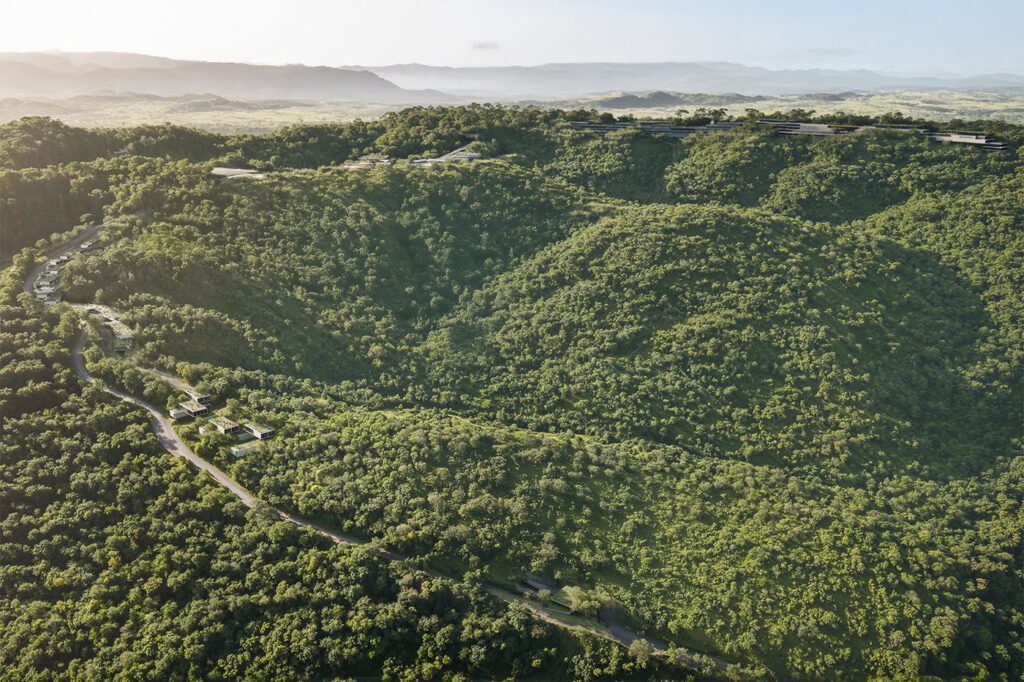
Project implementation: Brazil
Project development: Brazil
The Itaqui Innovation District is a project that combines innovation, education, and entrepreneurship with environmental preservation. Unlike a traditional urban district, the project is anchored in the region's lush natural environment: rivers, forests, and wildlife are protagonists, more than just scenery. Approximately 90% of the total area will be preserved, creating a space where the natural landscape not only shapes the environment but also underpins the ethics of teaching, research, and business.
Located on the edge of the site, the architectural complex was designed to minimize impacts and allow for the regeneration of native forest. This strategy simultaneously ensures integration with the urban environment and functional access to neighboring cities, without compromising the preservation area. Circulation between the blocks occurs via external roads, reducing pressure on internal ecosystems.
The district's program is organized into three main areas: the Academic and Business Center, focused on academic training, research, and student housing; the Hospitality Center, with training, lodging, and community spaces; and the Leadership and Business Center, dedicated to entrepreneurship, technological innovation, and new business incubation. In addition to these centers, the project includes common support areas such as a library, laboratories, restaurants, and community spaces.
The buildings were designed with respect for the topography and adopting sustainable solutions. The volumes are laid out horizontally, taking advantage of existing clearings and avoiding complex vertical constructions. Terraces, overhangs, and open areas ensure thermal comfort, integration with the landscape, and spaces for socializing. The strategically distributed homes directly connect with the forest, creating an immersive experience for students, researchers, and entrepreneurs.
Mobility between blocks prioritizes sustainable and low-impact modes: bike paths, shaded walkways, electric scooters, and slope-adapted routes. This infrastructure ensures accessibility, safety, and efficiency in daily commuting.
More than just a physical space, Itaqui aims to be a model for the future. The masterplan reflects an ethical commitment to social inclusion and environmental responsibility, fostering an environment where innovation, education, and sustainability go hand in hand. The district was created as a hub capable of generating knowledge, leadership, and solutions to contemporary challenges, planting the seed of a world more integrated between nature, society, and technology.
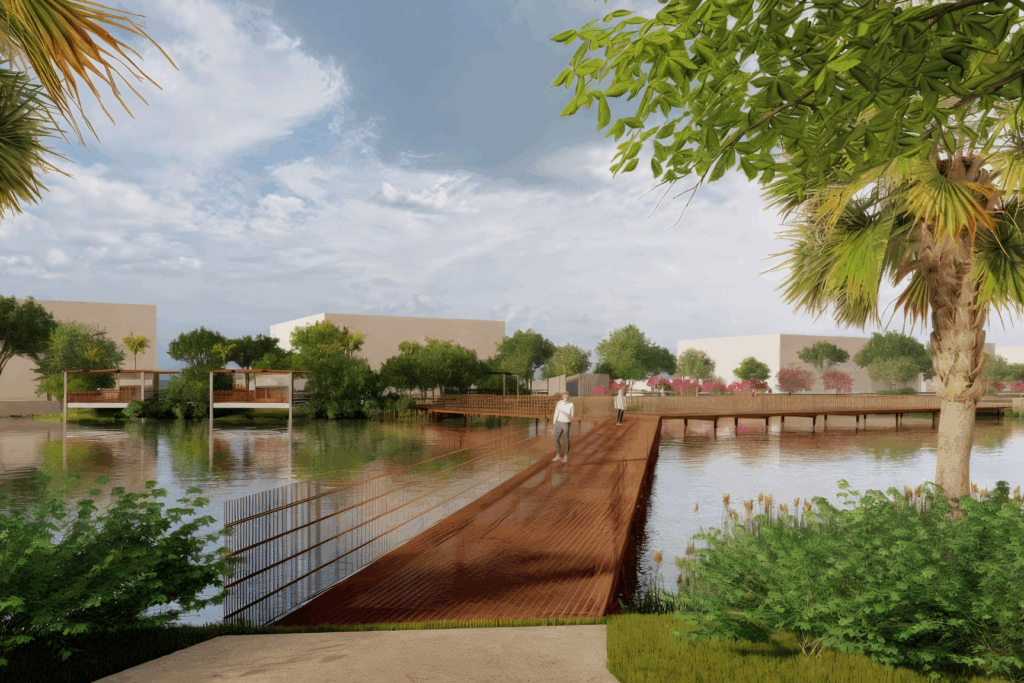
Project implementation: Brazil
Project development: Brazil
Nova Eldorado is located in a unique area, located in a wetland area between the Lower Jacuí and Lake Guaíba basins, at the transition point between the Pampa and Atlantic Forest biomes. The flat terrain, historically cultivated for rice farming, requires intelligent solutions for drainage and stormwater management. In this context, water management becomes a structuring element, guiding development and occupation guidelines.
More than an urban development, this is a planned neighborhood focused on sustainability, quality of life, and integration between city and nature. Through nature-based solutions, infrastructure, communities, and natural cycles are connected in a way that enhances the local ecosystem and enhances its resilience.
The urban design project, developed by Area Urbanismo, and the urban drainage solutions, designed by Geasa Engenharia, translate this vision into an integrated plan, in which the landscaping and urban design project, designed by PLANTAR, plays a central role: it organizes public spaces, weaves together green areas and ecological corridors, makes water the protagonist and creates environments that encourage active mobility, collective use and coexistence.
The large central park, located on the banks of the buffer lakes in the heart of the neighborhood, combines environmental function with appreciation of the natural landscape, becoming a structuring hub for flows, activities, and encounters. With programs that enliven daily life—fairs, community events, sports facilities, and community areas—the park has established itself as a meeting point and urban pulse of Nova Eldorado, promoting well-being, social interaction, and contact with nature.
The villas, arranged perpendicular to the park, create smooth transitions in the landscape, accommodate specific uses, and reinforce the urban presence. Their color palettes, inspired by local flora, and urban furniture contribute to creating emotional landmarks, strengthening the bond between residents and the land.
An ABC & Embralot project, Nova Eldorado features landscaping and urban design by PLANTAR, a studio specializing in designing and enhancing territories, working at the intersection of landscape, urban planning, architecture, and design. Founded in 2016 by architects Luciana Pitombo and Felipe Stracci, PLANTAR combines sensitive perception, multidisciplinary vision, and technical rigor to connect stakeholders, systems, and knowledge, proposing solutions that strengthen relationships, enhance spaces, and transform realities.
With expertise across multiple scales—from furniture and gardens to neighborhoods, parks, and complex urban areas—the studio offers full-service delivery for outdoor spaces, including feasibility studies, business plans, and operational management, with end-to-end expertise, from consulting and structuring to implementation and operation.
Its purpose is to create places that connect people to nature, others, and themselves, generating social, environmental, economic, and cultural value. Across Brazil, PLANTAR has structured more than 60 concession and PPP projects for parks and public-use assets, as well as private ventures across various typologies and segments, always focusing on sustainability, innovation, and the connection between nature and urbanity.
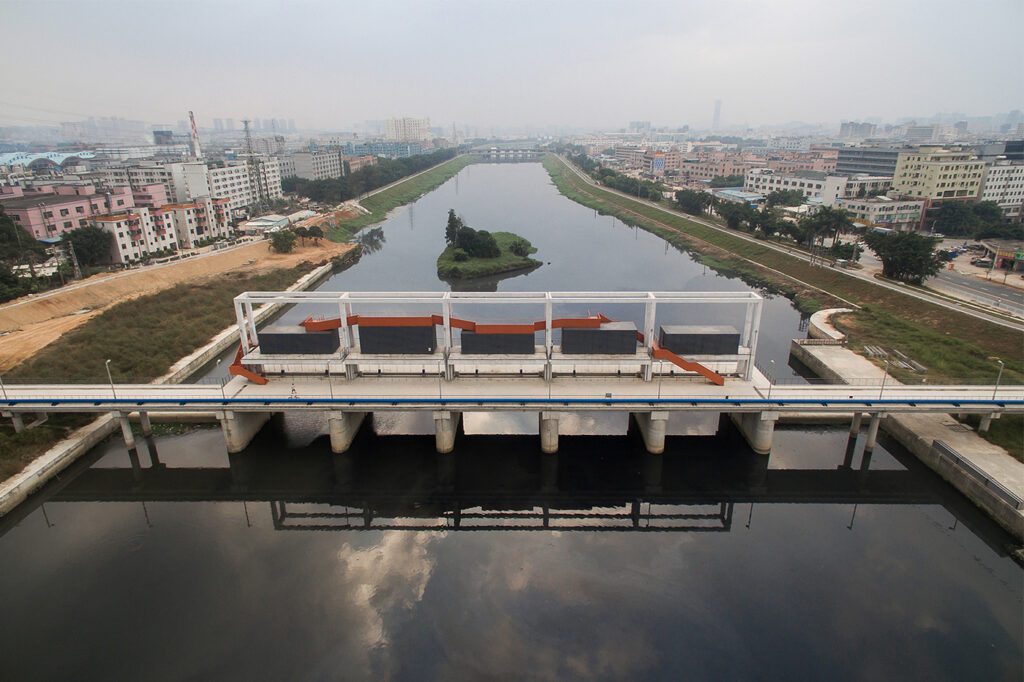
Project implementation: China
Project development: China
Rapid urbanization is undoubtedly a double-edged sword. While it brings economic and demographic dividends, the excessive pace of spatial development and population growth has led to severe land shortages. Population growth has overwhelmed public infrastructure and support systems, creating significant imbalances. Issues such as energy and water shortages, coupled with overburdened environmental capacity, directly impact the quality of public life and the city's sustainable future.
This exhibition presents five representative, research-driven design projects by NODE Architecture & Urbanism over the past few years in Shenzhen. The aim is to provide a comprehensive overview of NODE's "non-typical" creative practice in urban renewal and infrastructure publicization, emphasizing the ontological exploration of architecture. Additionally, the exhibition includes a research project by the Greater Bay Area Innovation Design Lab titled "Water and Urbanization: The Case of Shenzhen," which addresses issues related to land, water infrastructure, and the interconnection of public spaces. This project offers both a systematic reflection on water environments at regional and urban scales and design perspectives for future solutions to related crises.
Doreen Heng LIU, Founder and Principal of NODE Architecture & Urbanism (NODE), holds a Chartered Architectural Diploma from the Royal Institute of British Architects (RIBA); a Doctor of Design from Harvard University; and is a Fellow of the Architectural Society of China. LIU and her studio NODE are based in Shenzhen and Hong Kong, and have been pursuing diverse architectural and urban design practices in the PRD and the wider region for years. Since September 2020, she has been appointed a Full Professor at the School of Architecture and Urban Planning at Shenzhen University and Director of the Greater Bay Area Innovation Design Lab.
NODE Architecture & Urbanism was established in 2004. As one of the most influential independent architectural practices in southern China, it has received widespread attention at home and abroad. Focusing on urban space and public life, it insists on ontological research and practice, pursues innovation based on rigorous pragmatism, and explores the inherent logic of architectural concepts regarding openness and compatibility. Through interdisciplinary interaction and stimulation, the studio maintains its forward-looking and experimental nature in architectural design practice.
Shenzhen University The Greater Bay Area Innovation Design Lab was officially established in 2021. Founded by Doreen Heng Liu, the lab is a pioneer in research and design in the current GBA and global urbanization. Through design-oriented research methods and an interdisciplinary approach, combining teaching, exhibitions, publications, academic conferences, experimental design practice, and research and development, the GBA Lab is dedicated to cross-disciplinary integration and the exploration of innovative, human-centered solutions to contemporary urban and rural spatial problems.
Project Team: NODE Architecture & Urbanism
1 Yong-chong River Lock: Doreen Heng Liu, Jiebin Huang, Youzhi Wang
2 KU Landscape: Memories on the Ground: Doreen Heng Liu, Yijuan Wu, Liu Yang, Zanning Huang, Zhang Shihan, Xu Jingyue, Ruan Yiling, Ni Xiaoyi, Peng Ziqi (Intern)
3 Shenzhen Lotus Water Culture Base: Doreen Heng Liu, Jiebin Huang, Zanning Huang, Liu Yang, Xu Jingyue, Lin Xiaohong, Huang Junhao, Yang Jiahui, Xu Zhibo, Lu Qingsong, Zhou Yupeng
Interns: Lu Weimin, Zeng Shuya, Wang Manzhi, Tang Yueyu, Li Xin, Tian Haoyuan
4 Pingshan High School Pedestrian Bridge: Doreen Heng Liu, Jiebin Huang, Yijuan Wu, Zhang Shihan
5 Pingshan Terrace: Doreen Heng Liu, Jiebin Huang, Zhang Shihan, Lian Chen, Lu Qingsong, Chang Xueshi (Intern)
Research Team: GBA Lab – The Greater Bay Area Innovation Design Lab, Shenzhen University
Director: Doreen Heng Liu
Si Liu, Yu Yan, Haoyang Wu
Research and Scenario Team: Fanrui Cheng, Weixin Chen, Junhao Zhang, Juncheng Zou, Yongkang Peng
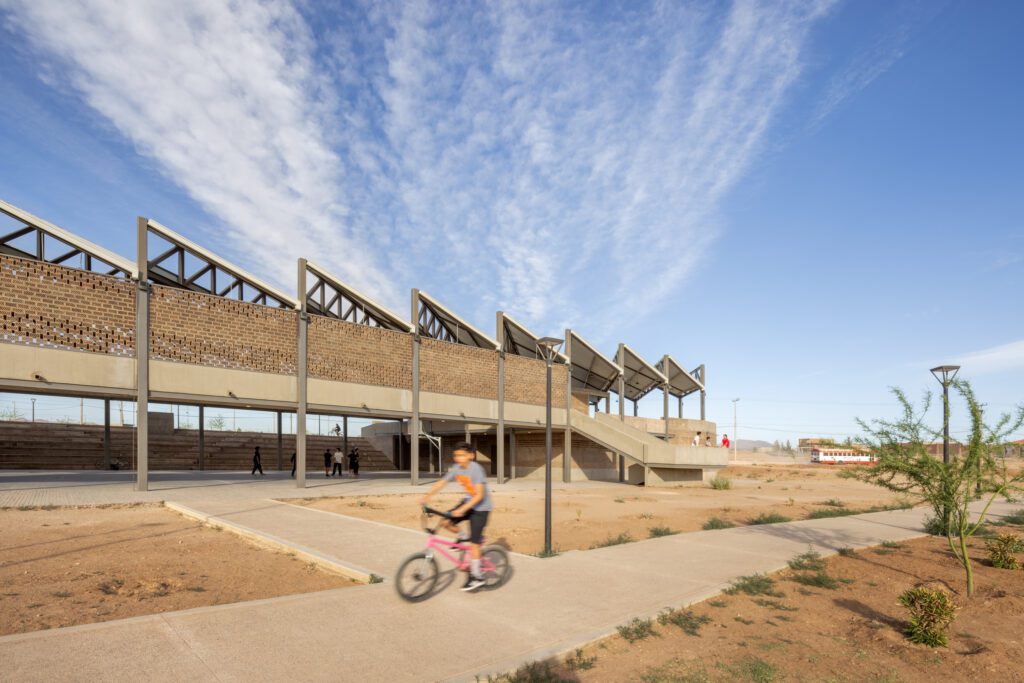
Project implementation: Mexico
Project development: Mexico
The project consists of a large sawtooth roof that houses a court, gymnasium, and communal services, becoming the centerpiece of the sports complex. Outside, a series of soccer fields and basketball courts, as well as a running track, skate park, and playgrounds, create a quality infrastructure that allows residents to expand their opportunities and thus reduce commuting. The building consists of two parts: a lightweight metal roof that allows natural light and air to enter, and a ground floor with concrete stairs, walkways, and brick walls that house communal services. Designed with considerations for an extreme climate in a desert area, it creates open spaces that, in addition to allowing natural light and ventilation throughout, provide a safe place for users to engage in various physical activities. The use of simple materials emphasizes low maintenance and high durability, while generating various textures and giving a sense of identity. The building remains open at all times and encourages various ways of connecting sports facilities, surrounding leisure areas, and community services. As part of the Federal Government's Urban Improvement Program (SEDATU), along with the other six projects Fernanda has built in Sonora's border towns, this project strengthens the sense of belonging among residents. The exposed brick walls and materials establish a dialogue between architecture and landscape, providing the local community with fertile ground for an ongoing project, open to continuous transformation and collective participation.
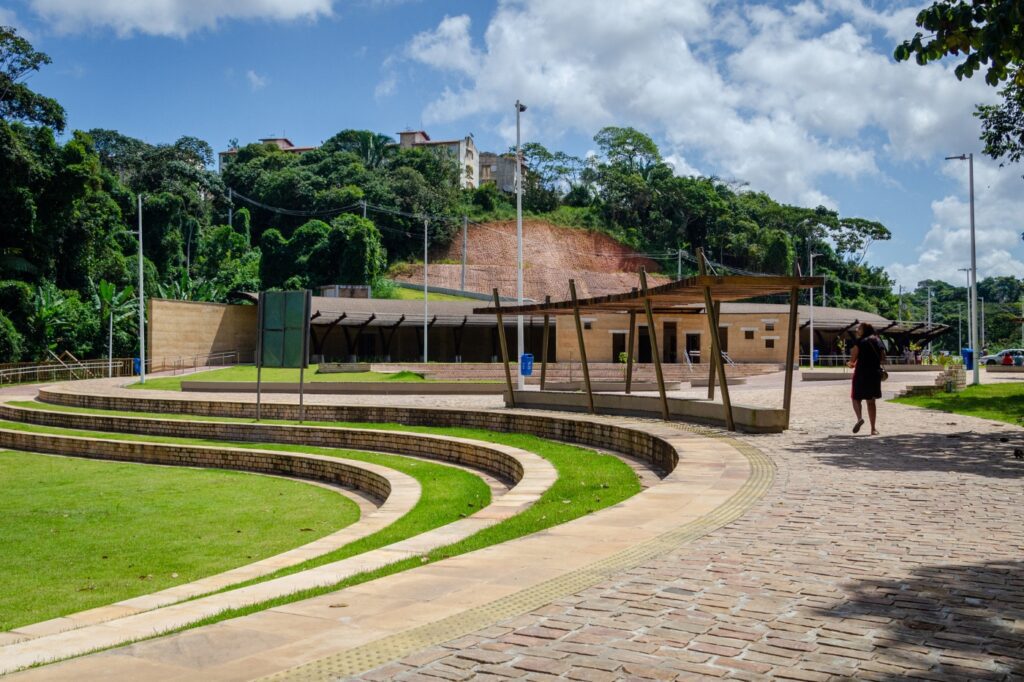
Project implementation: Brazil
Project development: Brazil
Xangô Stone, a rock formation 27 m in diameter and 15 m high located on the outskirts of Salvador, Bahia, Brazil, has a strong mythical and historical character. According to oral histories, enslaved Black people, fleeing, would pass through its crevice and disappear. A symbol of resistance recognized as the "Altar of Xangô," the stone is a sacred monument for African-based religions and was declared a national heritage site by the municipality in 2017 following a social mobilization. Located in an environmentally protected area, it constitutes a central element of the Assis Valente Environmental Protection Area (APA) and led to the creation of the Xangô Stone Park, covering 4.46 hectares, the first in Brazil to be named after an Orisha.
Designed in 2018 by FFA Arquitetura e Urbanismo for the Mário Leal Ferreira Foundation (Salvador City Hall), through a participatory process involving public agencies, communities, and surrounding religious temples, the project reaffirms the cultural and religious symbolism of the site, integrating nature and built space. Among the identified threats were the impact of Assis Valente Avenue and the pressure of occupation on the forest. In response, a road detour was proposed, creating a buffer zone and a retention basin associated with local legends, as well as an environmental monitoring route to protect the vegetation.
The urban design was structured in three layers: experience (paths and spaces for the convergence of Afro-Brazilian culture), memory (support for Afro-Brazilian memory, integrating stone, water, and vegetation), and intimacy (narrow forest trails for more secluded experiences). The program included a support building with an auditorium, a space for a memorial for Candomblé nations, and administrative and maintenance spaces, articulated by a rammed earth wall that revives traditional techniques.
The implementation respected the topography, occupying a previously deforested area, and fostered a symbiosis between the building and the natural environment. The building features a landscaped green roof, cross-ventilation, and rainwater and solar energy harvesting. The materials used—stabilized earth, ecological brick, wood, natural stone, and Corten steel—ensure low environmental impact and high thermoacoustic performance. The landscaping highlighted sacred species, reinforcing the integration with nature and the religious character of the park.
The project's implementation, particularly due to the adoption of bioconstruction techniques in a public project, required the support of the management and technical teams of the Mário Leal Ferreira Foundation and specialized academic consultancy. The intense participation of African-Brazilian communities ensured the expression of the symbolism of stone, raw earth, and vegetation as a primordial framework. Inaugurated in May 2022, Pedra de Xangô Park thus represents an emblematic space of cultural resistance and environmental integration, contributing to the fight against climate change and strengthening Afro-Brazilian identity in Salvador.
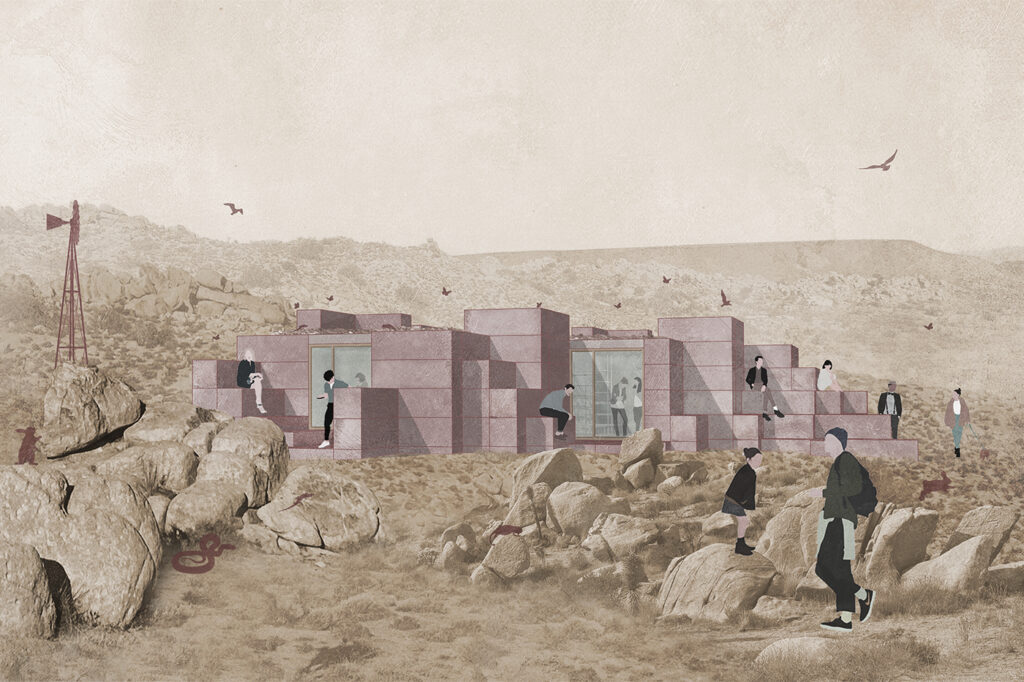
Project implementation: USA
Project development: USA
“Wasted No More” is a self-sustaining desert residence in Pioneertown, California, that prioritizes the recovery of construction waste through the use of “Waste” Blocks—commonly known as bin blocks or concrete retaining blocks. These 6 x 2 x 2 feet blocks are formed from conventional construction surplus, utilizing concrete left over from trucks after pouring concrete for other buildings. This approach offers an economically viable and ecologically conscious prototype that finds lasting value in neglected building remnants. The thermal mass of the massive blocks buffers the desert’s temperature extremes, while the building’s orientation and stepped form naturally mitigate solar heat gain, inviting natural light and cross-ventilation. Powered by solar energy and drawing water from an existing well, “Wasted No More” minimizes its environmental footprint in California’s high desert landscape.
The project is the result of a partnership between the award-winning architecture and research firms Mutuo and There There, both based in Los Angeles. The collaboration stemmed from a shared passion for projects made from waste. During a visit to a recycling plant, the studios discovered the "Waste" Blocks, which became the basis for a repurposed architecture, seeking to give new meaning to neglected materials and methods.
Mutuo, an award-winning design and research firm in Los Angeles, was founded in 2014 by immigrants Fernanda Oppermann and Jose Herrasti. From the outset, they have explored the extraordinary in the use of ordinary materials and methods, striving to create meaningful impact through architecture. To expand Mutuo's reach, their research develops affordable-by-design building systems that aim to simplify the construction process with faster, more cost-effective housing solutions. Their design is rooted in listening to people's stories, seeking collaborations with communities who, like them, navigate identities of "here" and "there" every day.
There There is an award-winning architecture firm founded in Los Angeles in 2022 that challenges conventional ideas through design and research. Adopting a radical "tabula-NON-rasa" approach, the studio unearths layers of physical and intangible information, present and past, that give meaning to places. Their experimental work includes projects in California, Mexico, and Europe, as well as recognized urban design proposals. All of their projects aim to create meaningful experiences and materialize alternative imaginaries.
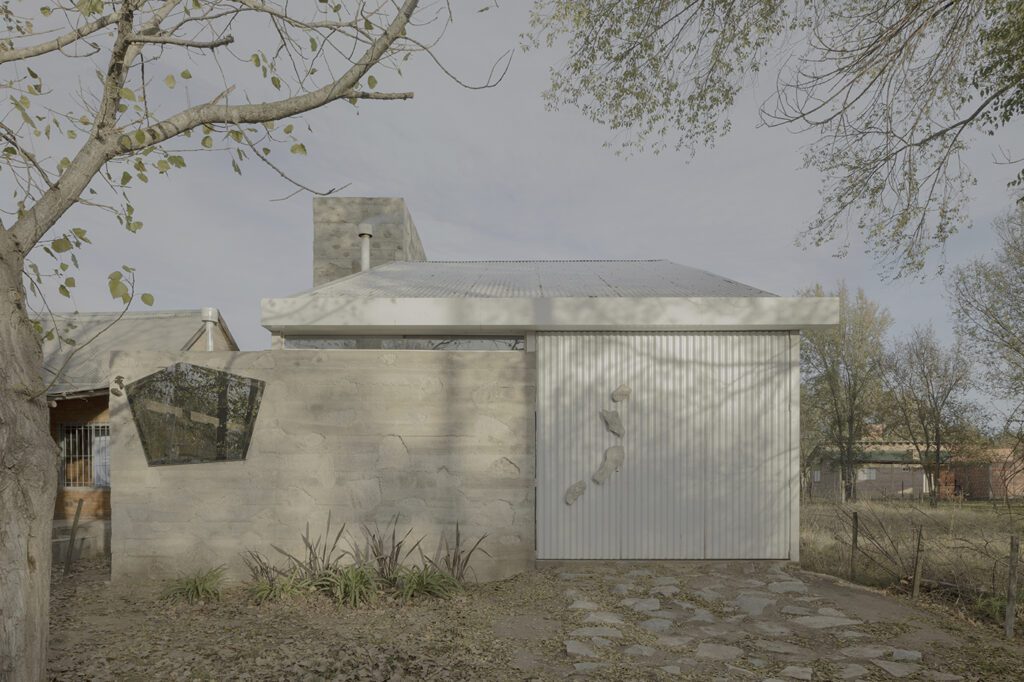
Project implementation: Argentina
Project development: Argentina
vbrügg is the firm of architect Valentín Brügger, a Córdoba native and graduate of FAUD-UNC. It is a personal space for architectural and artistic production, experimentation, learning, and communication, where he works individually and collectively.
Casa Lelis is located in Los Reartes, a community in the mountains of Córdoba, Argentina, where traditional architecture is characterized by stone walls and lightweight roofs made of twigs and metal sheets. In this context, the project respects local technology and synthesizes its materiality in concrete and white elements. On a 10 x 30 lot, the 8 x 12 house is organized in longitudinal strips that define the ground floor areas: service, living room, and gallery, on which the bedrooms on the upper floor are superimposed perpendicularly.
To the south is the service module, built in cyclopean concrete and of a contained scale. Its stone facade continues toward the interior in the warm areas, in front of the kitchen, in the center of the fireplace, and behind the barbecue. This solid volume has two irregular, faceted perforations, as if they were large quarried stones. One at the back creates a small balcony overlooking the garden, and the other is a mirror that reflects a portion of the mountainous landscape in the facade's composition, allowing observation of the city's hustle and bustle from the kitchen.
On the staircase, the concrete overflows toward the living room, with its first steps emerging from the ground and rising like a light structure of folded white sheet metal floating between the concrete walls. To the north are the other two modules intended for social spaces, featuring tectonic and industrial technology, and material unity through the white finish.
The structure consists of a metal frame arranged every four meters, supporting the roof. This, in turn, is constructed of round twigs, clad internally with wooden planks and externally with corrugated metal sheets. This lightness allows the interior space to flow, integrating the living room with the gallery. The upper floor overlooks both the courtyard and the dining room.
Finally, the house is enveloped by a system of movable enclosures that creates and defines an intermediate space. The various opening configurations regulate the entry of light, defining the interior atmosphere. Thus, the envelope becomes mutable, sensitive to the environment and use. As this is a weekend home, it remains closed most of the time, emphasizing its formal synthesis.
Details such as the entrance door handle made of four Micosa Branca stones, a suspended field stone step on the porch, the intentional changes in scale and a glazed line along the house, which separates the white from the concrete base, aim to reinforce the evident duality between solidity and lightness of the work.
With a carefully directed opening to the mountainous landscape, the house blends harmoniously into its surroundings. Furthermore, the overlapping of different construction techniques reinforces the dialogue between the essential, the lasting, and the ethereal.
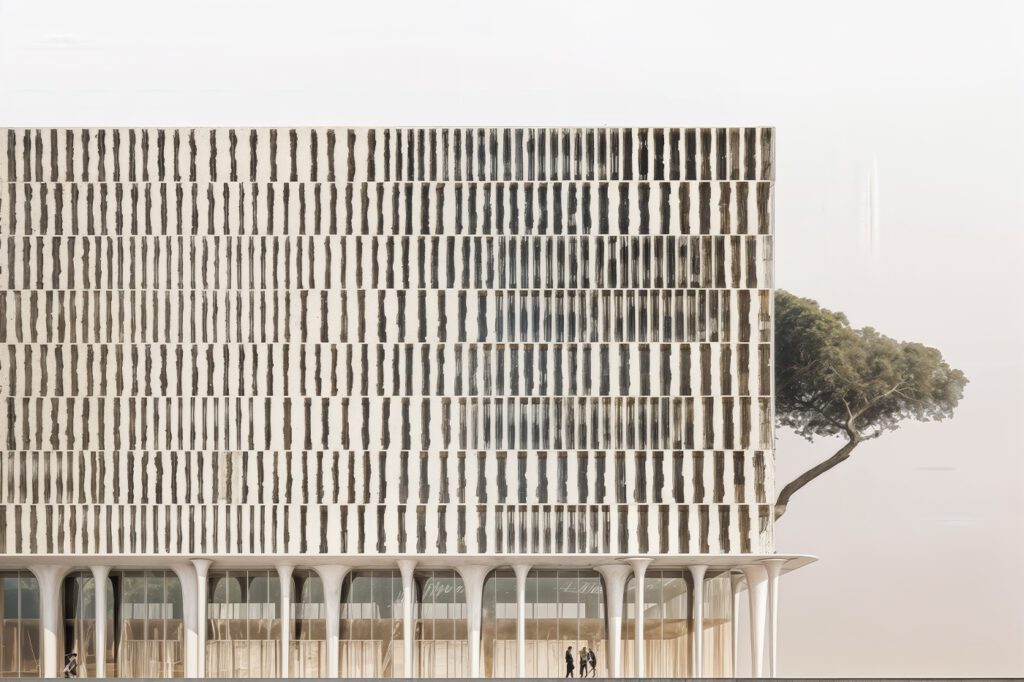
Project implementation: Italy
Project development: Italy, France
The ISTAT headquarters is a project based on ethical, strategic, economic, and functional choices, with a focus on space and resource efficiency. By optimizing the design, construction costs are reduced by approximately €6.5 million compared to the competition budget, while ensuring high performance, long-lasting durability, and a representative institutional image. The building is an L-shaped volume of 38,000 m² designed to accommodate 2,000 users, set within an 8,100 m² public park that includes a reflecting pool and sports trails. Local travertine, used as a brise-soleil on the south, east, and west facades and as a ventilated cladding on the north, interacts with natural light and evokes the collective memory of Rome. The building's optimized plan minimizes floor space and costs, allowing savings to be reinvested in advanced energy and environmental efficiency measures, including ventilated envelopes, photochromic and photovoltaic glazing, bioclimatic atriums, rainwater harvesting systems, and green roofs. The interiors are flexible, filled with natural light, and promote organizational well-being, offering unobstructed views of the vegetation and numerous common areas. Atriums and landscaped balconies create inviting breakout spaces, improving thermal comfort and indoor air quality. In addition to functional excellence, the project contributes to the city with a generous landscape: a public maritime pine forest set on a gently undulating, cool, and sheltered site, providing lasting environmental and social value to the urban context.
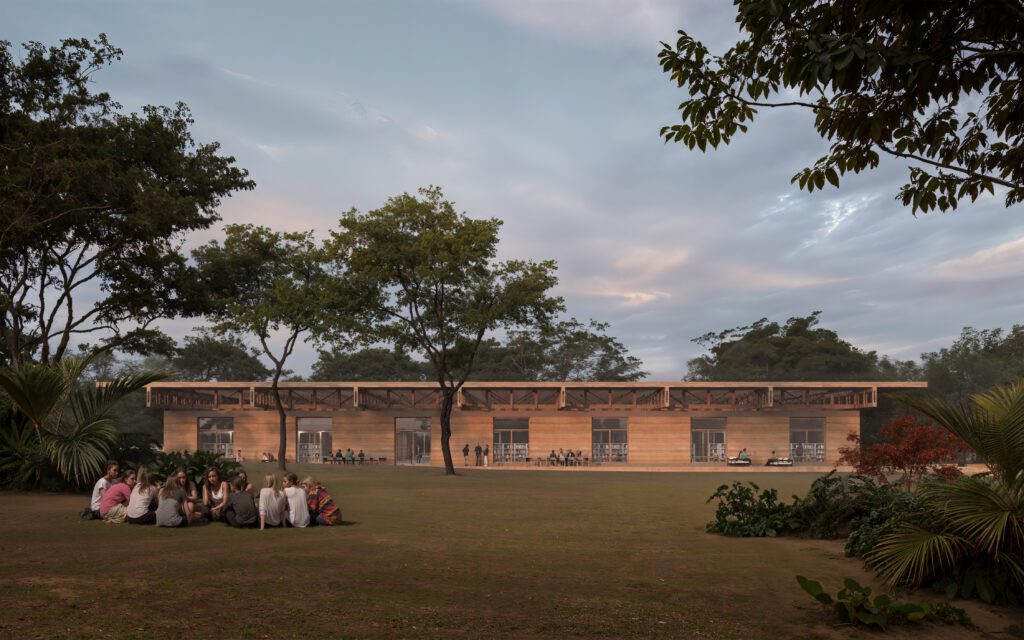
Project implementation: Brazil
Project development: Brazil
KAAN Architecten: Building for People, Nature and Future Generations
Our field is constantly evolving. Architecture is increasingly taking on a deeper social meaning and actively contributing to the well-being of people and nature. We don't just focus on building design, but recognize that each intervention directly impacts our planet's ecosystem and climate. In this way, we are building a future in which architecture makes a real difference to both society and the world around us.
A good building requires more than design skill; it requires awareness of sustainability, social value, and environmental impact. No architect can achieve this alone—it requires collaboration, openness to the community, and input from diverse experts. Advances in materials technology, climate adaptation, building systems, construction methods, and cultural history all play a vital role. Equally important is how a building is received by its residents and users, as valued and appreciated spaces are preserved and passed on, extending their intrinsic useful life and ultimately making them more sustainable.
In our projects, we seek to bring all these factors together and make informed choices. On the other hand, we seek value in obsolete buildings, which often serve as the foundation for their transformation into the future. For us, a good project always begins with a strong narrative, one in which everyone involved believes and in which each participant can offer valuable input.
At the 14th São Paulo Architecture Biennial, KAAN Architecten presents three projects that explore the relationship between architecture, landscape, and memory: the Eco-Museum and Orla Piratininga Park in Niterói; the Marcos Amaro Art Factory (FAMA) in Itu; and the Lagoa do Sino Library at UFSCar in Buri, São Paulo. Different in scale, program, and context, the projects reveal a common approach: understanding architecture as an ongoing process, attentive to the transformations of the territory, cultural heritage, and possibilities for social coexistence.
The Eco-Museum acts as a catalyst for environmental regeneration and social inclusion, serving as a community forum, educational space, and a landmark for valuing biodiversity. This structure is part of the Piratininga Waterfront Park, developed under the leadership of Phytorestore, the largest phytoremediation project in Latin America, restoring 720,000 m² of the lagoon through filter gardens and new public areas.
The renovation of the Marcos Amaro Art Factory revives the memory of an early 20th-century industrial heritage site, listed by CONDEPHAAT, and transforms it into a dynamic cultural hub. The masterplan embraces time: ruins and historical layers coexist with new structures, preserving authenticity and nurturing creative processes.
UFSCar's Lagoa do Sino Library, developed in partnership with Triptyque, establishes itself as the campus's core. Combining a plaza, auditorium, and offices, the building combines traditional construction techniques, such as rammed earth, with contemporary wood solutions. The result is a sustainable, permeable, and socially active space that values local knowledge and fosters community identity.
Together, the three projects highlight the diversity and coherence of KAAN Architecten's practice: from heritage restoration to sustainable innovation, from the territorial to the everyday. All reaffirm the conviction that architecture should foster encounters, strengthen bonds between people and landscapes, and design possible futures based on attentive listening to the present. In this way, together, we are building architecture that is not only functional and aesthetic, but also socially valued and resilient.
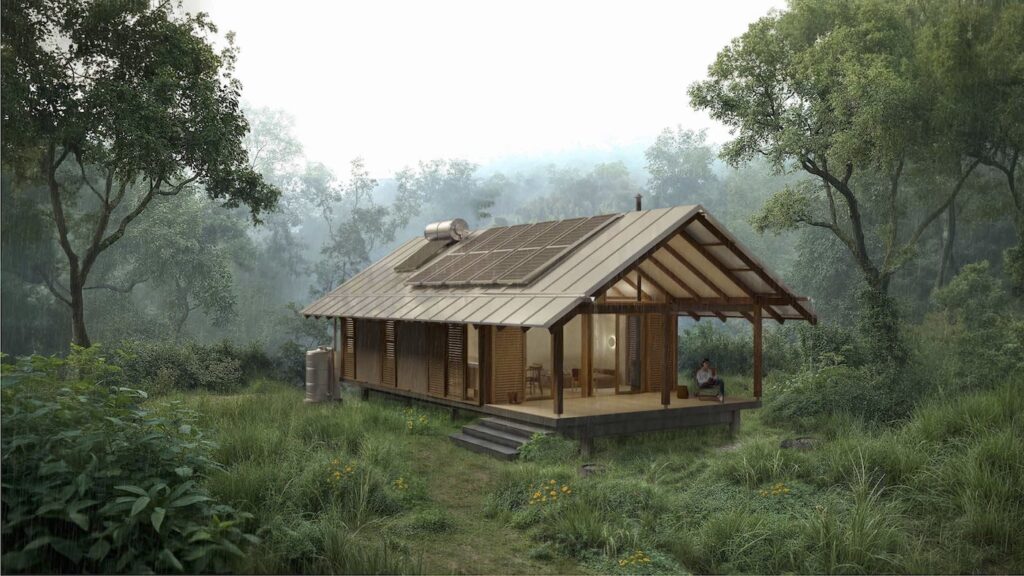
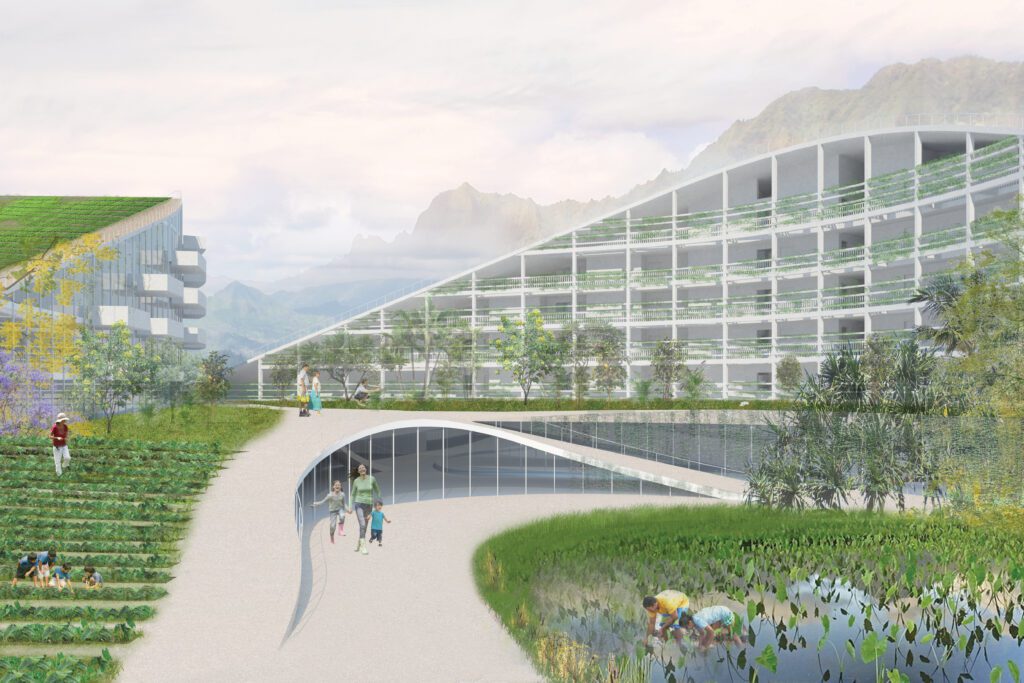
Project implementation: USA
Project development: USA
This project investigated the relationship between food, architectural, and urban systems within the context of sustainable and self-sufficient agricultural production in Hawaii. Despite being the only US state with a 12-month agricultural season, the island currently has only 10 days of food reserves if its air and/or sea connections with the mainland are compromised. In this same remote context, approximately 1,000 years ago, the Ahupua'a, a traditional natural resource management system, was created. In this system, ecological elements organize and feed back into each other in a vertical band extending from the ocean to the mountains. Within the geological section, through the coexistence of habitation and land cultivation, the system transforms the watershed into an intensive technological platform for food production. Before the European invasion (1778), several of these systems were fully functional and supported an estimated population of 800,000. Currently, only a few fragments such as lagoon fields (Lo'i), fishponds (loko) and dry land terraces (Kuaiwi) can still be found scattered throughout the islands.
To synchronize demands for urbanization and food production with vernacular strategies and management of environmental conditions in the river basin and ocean, the proposed master plan aims to optimize the existing production system, mediating the development of its urbanization, assuming the role of a support system. By introducing food production at the neighborhood scale through the manipulation of the existing relief, the architecture and landscape become an integrated system.
The new urban morphology enables water purification and retention for irrigating urban gardens. The proposed system also redesigns the river's course, responding to parameters such as topography, rock formation, and existing vegetation. By creating streams and retention/treatment ponds for irrigating crops integrated into the housing system, ecological buffer zones are established, thus promoting sustainable densification of the urban periphery adjacent to environmentally protected areas.
The challenges faced by Oahu with the growing pressure for urbanization in areas of environmental value are not unique: countries in the global South, such as Brazil, could benefit from a territorial organization system like Ahu'pua. Many islands and bays in Brazil also have conditions very similar to Oahu: a tropical climate, mountainous terrain, with freshwater streams, and sufficient river precipitation to support crops without mechanical irrigation. Some notable examples are the islands of Florianópolis, Fernando de Noronha, and the Ilha Grande region. The latter, in particular, has been experiencing significant pressure for urbanization, especially due to the tourism industry.
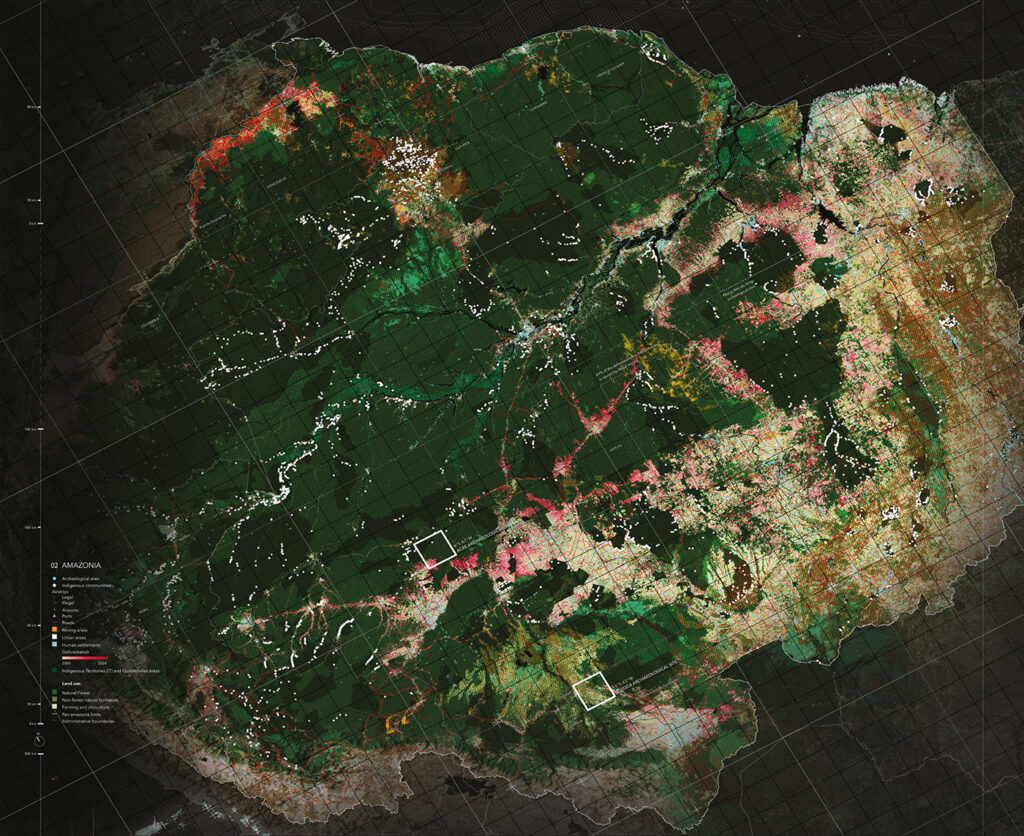
Project implementation: Brazil, Bolivia
Project development: Brazil, Bolivia
Forest Gens is a critical cartography project that reveals the extent of anthropogenic transformations in the Amazon. Using advanced mapping techniques in the Amazonian context, the project reveals the multiple layers that make up the region. From the footprint of current societies to territorial manipulations dating back centuries, the mapping presents the Amazon as a complex, human-shaped landscape, not as a homogeneous, untouched forest.
The work portrays the Amazon territory at multiple scales, highlighting how the interaction between geography and human interventions—past and present—allows for the development of hypotheses about the region's occupation. A focus on recent data obtained through remote sensing images in the Cotoca region of Bolivia reveals archaeological remains of ancient forms of low-density tropical urbanism. Similarly, a system of interconnected sites of indigenous black earth—organic residues of human occupation used to estimate the size and duration of ancient settlements—suggests prolonged manipulation of the Amazon environment by human societies.
Taken together, these visualizations contribute to raising awareness of the traces our ways of relating to this landscape have left throughout history, profoundly altering the boundaries between nature and society in this environment. The work is expected to contribute to the growing debate on how our societies can reinvent the relationship between urbanization and nature conservation, and imagine radically new—and less anthropocentric—futures for the Amazon.
Authorship
Concept: POLES | Political Ecology of Space
Collaboration: AO | Architects Office
Team:
Gabriel Kozlowski (Director)
Miguel Darcy
Carol Passos
Thiago Engers
Chiara Scotoni
Archaeological Research in Bolivia (Direction):
Heiko Prümers
Carla Jaimes Betancourt
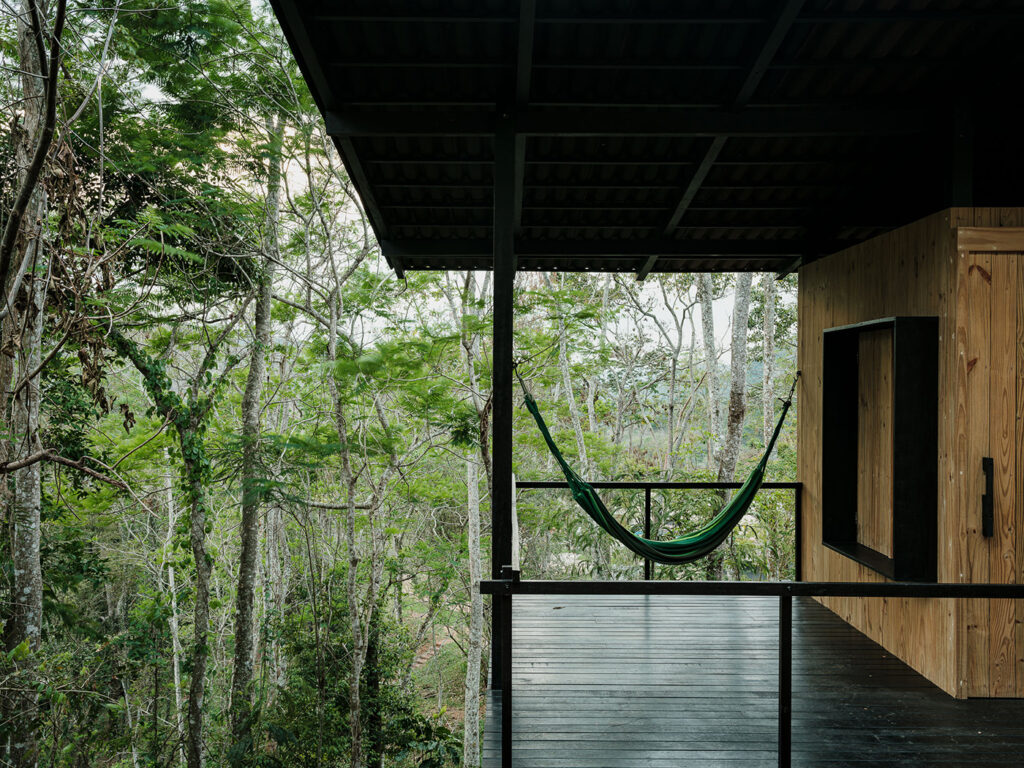
Project implementation: Brazil
Project development: Brazil
Inhabiting the Landscape – A modular system for low-impact construction in remote environments
Context and Concept
Cabana Zero is the prototype of a series of 11 shelters designed for a spiritual retreat inspired by the indigenous traditions of the Peruvian Amazon. The proposal seeks simplicity, low impact, and a direct connection between the built space and nature. Located in the mountainous region of Rio de Janeiro, it combines a compact interior space and a dry bathroom, both clad in natural wood, intended for individual seclusion. In contrast, the darkened wooden veranda frames the landscape and intensifies the immersion in the forest.
Design and Construction
The structure rests on six 10x10 cm wooden pillars, echoing the slenderness of the neighboring trunks. Longitudinal and transverse beams, spaced every 1.20 m, define the 2.40 m cubic module of the interior space. A significant portion of the wood was reused from a pre-existing building on the site, reducing environmental impact and connecting the project to the local history. The enclosure features PET fiber insulation, and a secondary roof creates an air layer that reduces the thermal load. Elevated off the ground, the structure uses bolted metal connections and concrete footings, facilitating assembly and disassembly, and minimal disturbance to the site.
Autonomy and Ecology
The cabin operates off-grid: it has no electricity; waste is treated by composting toilets, and graywater is treated by banana tree circles, enriching the soil. The absence of mirrors and glass reinforces the contemplative approach and the disconnection sought during the retreat.
System and Impact
As the first example of a replicable system, the project was designed for hard-to-reach areas, allowing transportation and assembly by small teams without heavy machinery. This approach enabled the construction of 11 additional units in more difficult-to-access areas on the same site, validating the system's adaptability to different logistical and geographic conditions.
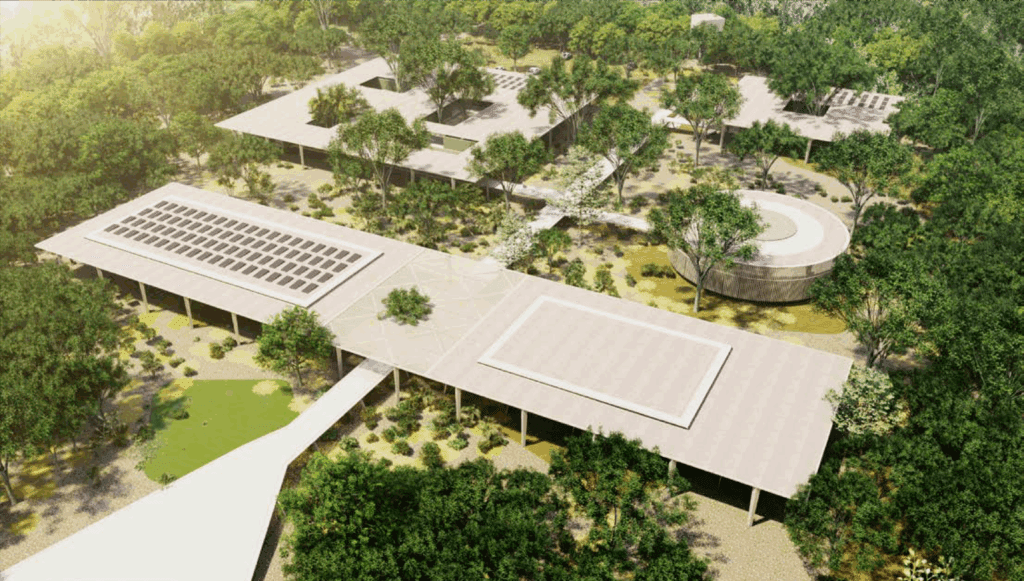
Project implementation: Italy, Brazil
Project development: Brazil
As part of the 14th Architecture Biennial, whose central theme is “Extremes,” Studio Arthur Casas, in collaboration with the Arthur Casas Institute of Architecture and Innovation (IACAI), presents a timeline that systematizes architectural and urban projects designed to address the challenges posed by climate change at different scales.
The projects selected for the exhibition span a diverse range of geographic and climatic contexts, from interventions in dense urban environments, such as the Ícaro Building in Curitiba, to initiatives in the Legal Amazon, such as the Moitará Exchange Center, located in the Xingu Indigenous Park, and the MuCA in Belterra, Pará. These works exemplify an architectural approach that prioritizes integration with the bioclimatic and cultural specificities of each location, promoting solutions that combine technological innovation and environmental responsibility.
Based on research into their own practice, Studio Arthur Casas and IACAI selected the following projects:
-Brazilian Pavilion (Milan, Italy, 2014-2015; Naples, Italy, 2025-2027);
-MuCA – Administrative Village (Belterra, Pará, 2018-2028);
-Icarus Building (Curitiba, Paraná, 2014-2019)
-Moitará Exchange Center (Xingu Park, 2024-2026)
The timeline outlined in the exhibition highlights the consolidation of sustainable thinking in Studio Arthur Casas' practice over the past two decades. This journey culminated in the creation of IACAI, a non-profit institution dedicated to research into technologies and innovations geared toward sustainability and industrialization in the construction industry. The institute seeks to identify and address gaps in the development of construction practices, examining the potential impacts of such advances in addressing environmental issues affecting Brazil.
Through the Biennial, Studio Arthur Casas and IACAI reaffirm their commitment to architecture that transcends aesthetic functionality, positioning themselves as agents of socio-environmental transformation. The Biennial exhibition offers an opportunity to discuss and inspire new approaches that integrate innovation, sustainability, and climate responsibility, contributing to the advancement of theoretical and practical discourse in the field of architecture.
The 14th São Paulo International Architecture Biennial, Extremes: Architectures for a hot world., It has expanded beyond physical space and can now be visited from anywhere!
The virtual tour offers a new perspective on the exhibition, which took place from September 18th to October 19th at the Oca in Ibirapuera Park, allowing for fluid, free, and intuitive navigation between the different spaces. During the visit, curatorial content, high-definition images, and details that deepen the spatial and conceptual understanding of the artworks are available.
The platform broadens access, preserves the memory of the Biennial, and creates new ways to experience architecture.
Explore at your own pace, revisit routes, and deepen your experiences.
The virtual tour will soon be available on the IABsp (Brazilian Institute of Architects – São Paulo branch) website.