Project development: Brazil

Soil
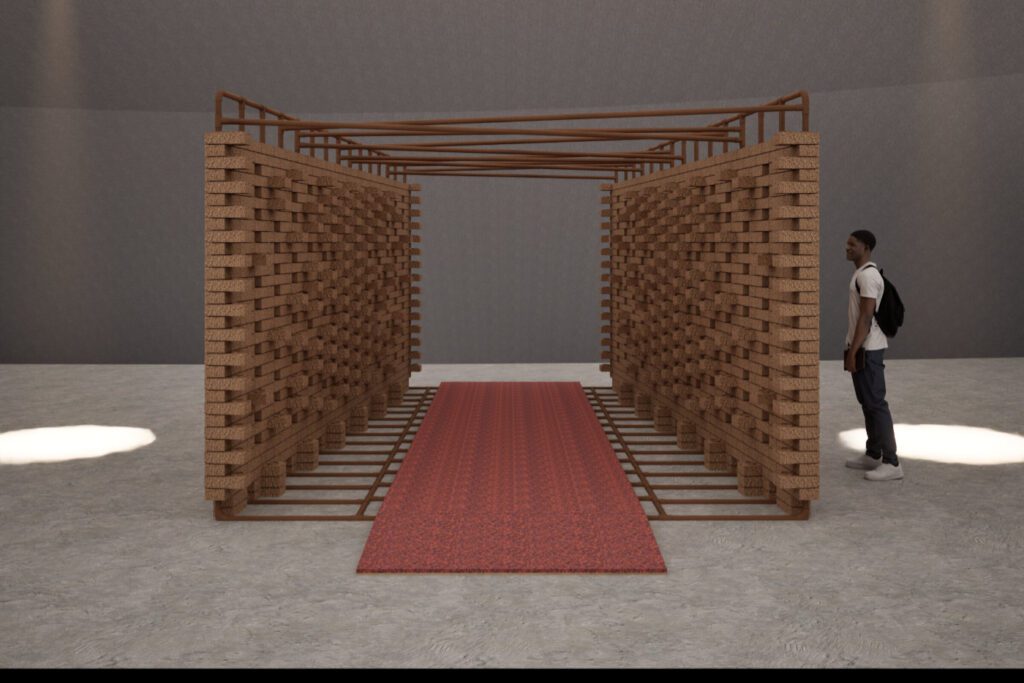
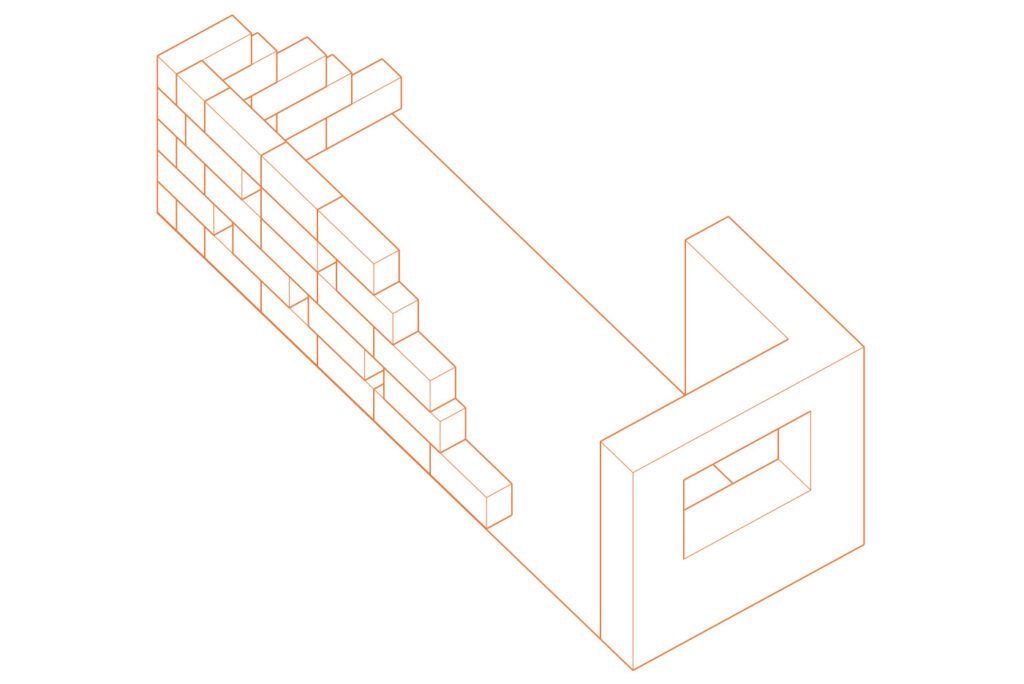
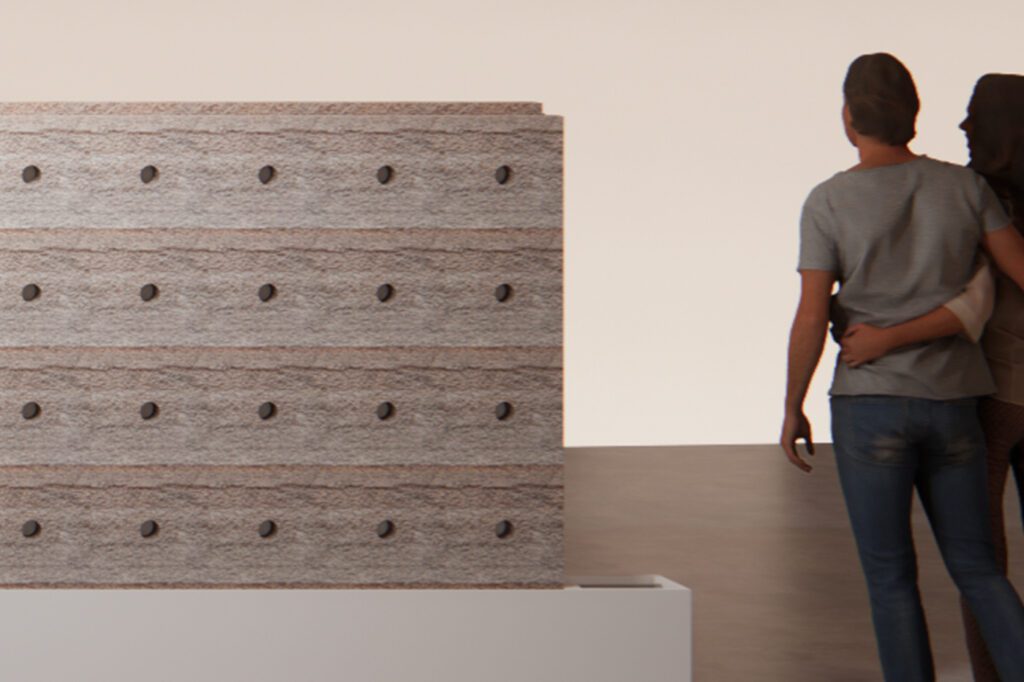
When addressing extremes, we begin by questioning how to live, adapt, and, above all, how to build in the extreme conditions we are heading toward. We therefore adopted the most common material, a hallmark of buildings and urban landscapes, both in the formal and informal city: brick. This experimental construction seeks to investigate ways to build better with brick, which, despite its small size, has a significant impact on a large scale. Eco-brick was chosen because it is made from soil, an element found throughout the territory, and because it requires no firing, only sand, cement, and water pressed together. These bricks are then assembled in the pavilion without mortar, using self-weight support devices and a tubular structural mesh. A dry, demountable, extreme structure.

Common
While demountable and adaptable to various configurations, the pavilion fits specifically into the site where it will be exhibited. Starting from the converging lines of the Oca ramp, it continues these invisible lines, completing the space's trajectory. The walls neither divide nor create enclosed spaces; they direct, inviting the gaze and the walk toward this open, suggested, communal space. The intervention also sparks discussions about temporary construction models in emergency situations, reinforcing that the new challenges we face increasingly require the practice of proposing new architectures.

Common Soil
Common Ground addresses what is inherent to our existence, our soil, while also addressing what is ordinary and everyday. It therefore reflects on what we share, how we live in community, how we share what is common to us.

Project implementation: Brazil
Project development: Brazil

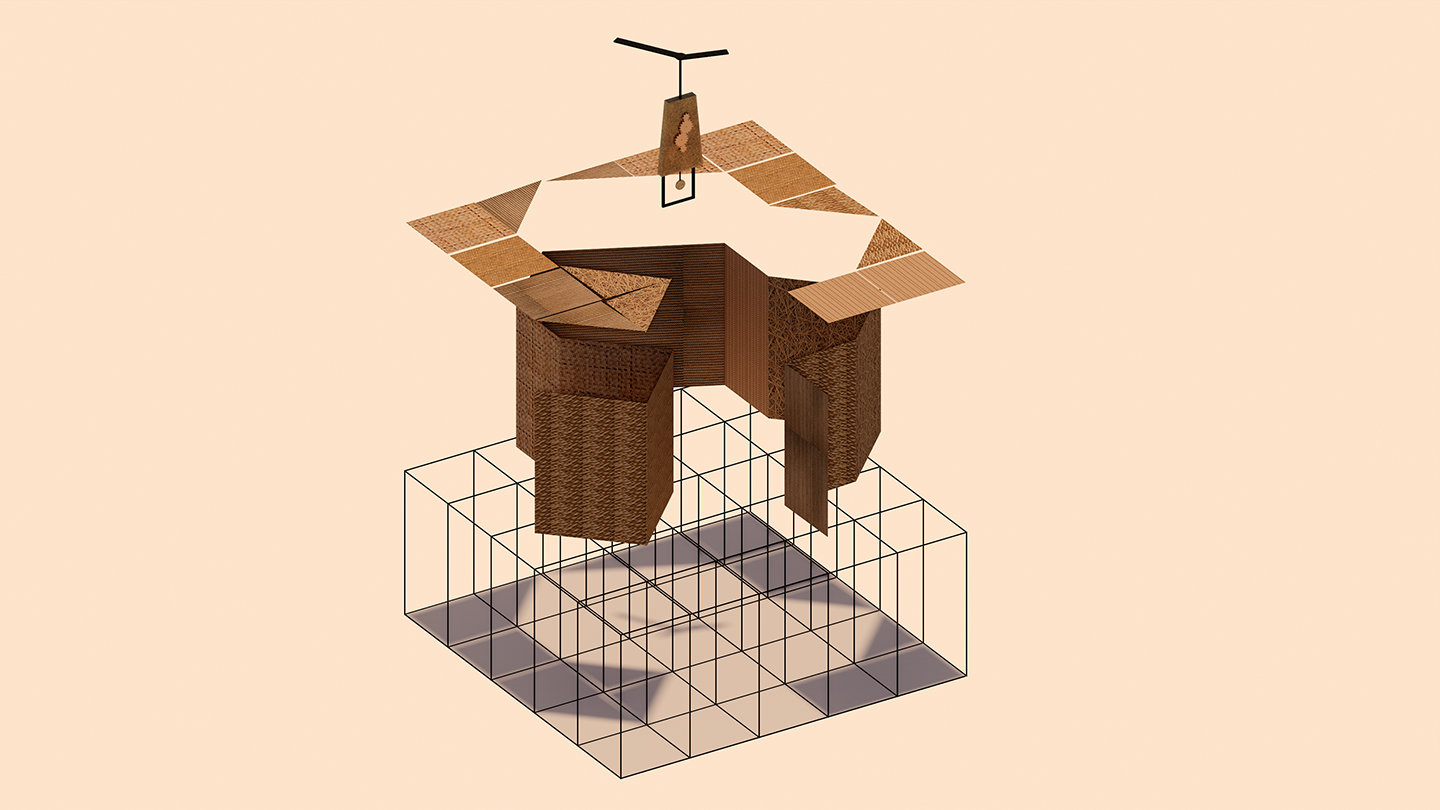
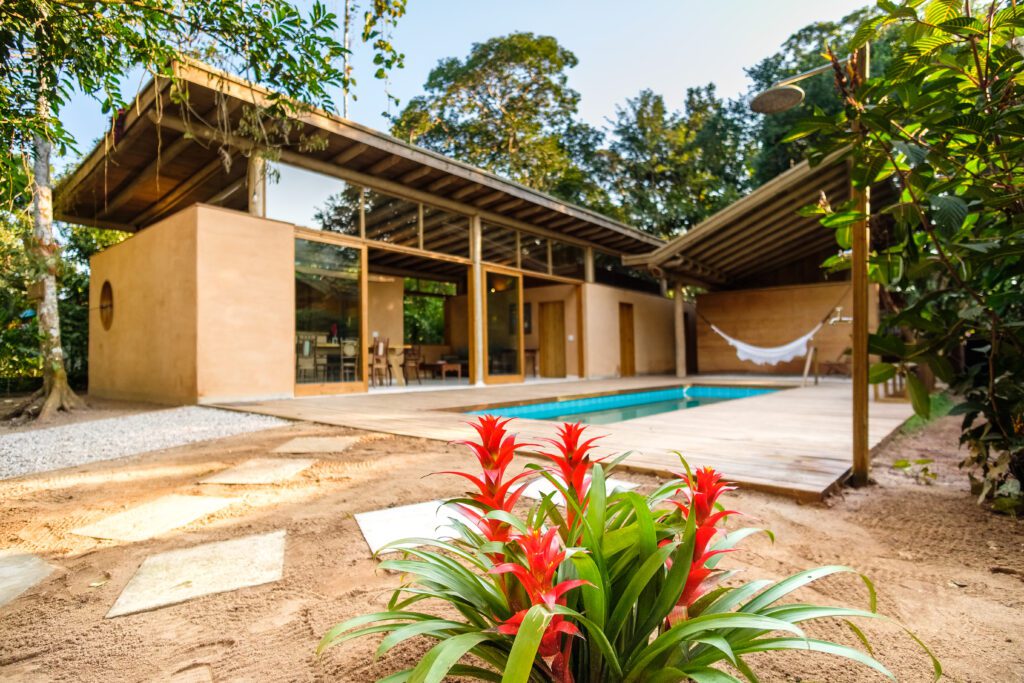
The AzulPitanga pavilion emerges from the contrast between the rigor of industrial production and the delicacy of manual labor. Its structure is defined by a modular 1x1 meter grid, which repeats until it forms a 4x4 meter space, supported by 2.10 meter-high steel rebar pillars. This regular, industrial, and rational grid supports planes of hand-woven banana fibers, which run through the structure in different directions. The weaves vary in density and opacity, filtering light, marking paths, and creating permeable surfaces that give the space a vibrant texture.

The spatiality is organized based on an unconventional duality: the covered perimeter forms a shaded and protected "outside," while the uncovered center reveals the void as an "inside," open to light and expanded vision. At the heart of the pavilion, a mechanical tower clock introduces the dimension of time. Winding, it must be activated periodically during the exhibition. Thus, it marks industrial time, the time of nature, and the time of craftsmanship—times that here intersect in the same spatial fabric.
The fiber lining the pavilion is produced by Fibrarte, an artisans' association from Missão Velha, Ceará, Brazil's eighth-largest banana producer. Fibrarte transforms what would otherwise be banana waste into raw materials. The mechanical clock was installed by Geraldo Freire of Metalúrgica Freire in Juazeiro do Norte, a leading manufacturer and maintainer of clocks and tower bells.

Project development: Brazil

SHIGERU BAN ARCHITECTS
Paper Log House
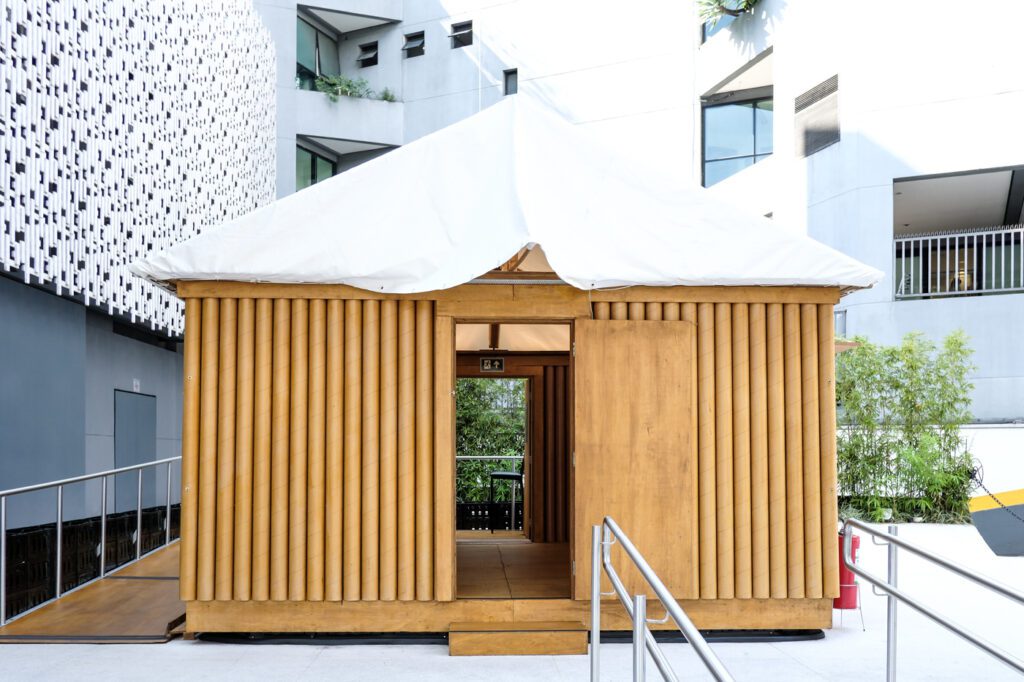
House made of paper tubes, marine plywood, crates, sand and canvas

Using cardboard, a material that is part of the daily lives of so many people across diverse cultures, Shigeru Ban initially produced temporary structures, such as exhibition sets, and gradually gained recognition for his use of this type of paper, which reached its peak in the "Disaster Relief Design" project. This program, launched in 1995, provides for the construction of temporary shelters in the event of natural disasters or situations of social vulnerability.

Paper Log Houses are innovative temporary shelter solutions for people who have lost their homes in areas affected by natural disasters.

The architect uses paper tubes and wood panels to build an easy-to-assemble structure that can be completed quickly. The foundation is made of crates and sandbags, which facilitates construction and provides stability. This project is adaptable to different geographic and cultural contexts. With a sustainable and efficient approach, it has been implemented in various situations, offering quick and safe shelter. Construction is typically carried out collaboratively by a team of local student volunteers.

The house presented here was developed specifically for the exhibition "Japanese Principles: Design and Resources," at Japan House São Paulo. The chosen model is based on the original design of the first emergency buildings developed during the Kobe Earthquake in Japan (1995).

For the assembly, JHSP prioritized the active participation of architecture professors and students, following the original collective construction format as a fundamental aspect of promoting awareness of the importance of collaborative work toward community reconstruction—another distinctly Japanese characteristic that can be incorporated even more significantly in Brazil. JHSP invited FAUUSP and ETEC Itaquera IIs, who, as an outreach activity for the students, adapted the design by Shigeru Ban Architects, prepared the materials, and built the house. For the final assembly stage, the invitation was extended to the students of Escola da Cidade.

At a full scale, 1:1, the house was adapted to the exhibition context, taking into account the circulation of a larger number of people, and followed the original concept of using local materials and labor. To increase access for a variety of audiences, a ramp and handrail were added to the design.

At the end of the 14th São Paulo International Architecture Biennial, the building will be sent to FAUUSP to be used by its students as a study object.

Project development: Brazil

IKUYA SAGARA, KUSAKANMURI
生まれながらにして、還るところが約束されている
From birth there is a promised place to which one must return
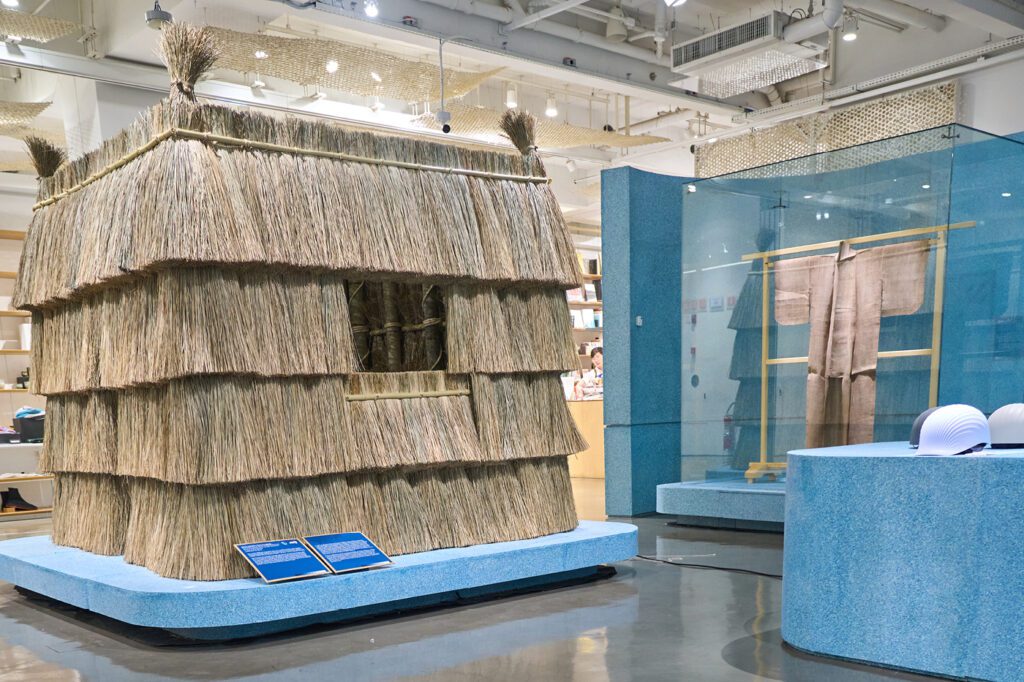
construction of reed, bamboo and sisal rope

Ikuya Sagara (1980) was born in Kōbe, Hyogo Prefecture, where he lives and works. Sagara is a craftsman of kayabuki (traditional Japanese thatched roofs), and his work consists of making, preserving, teaching, and promoting the art of thatched construction.

There are records of this type of roofing described in the two oldest books on Japanese history, the Kojiki and Nihon Shoki, both compiled in the 8th century, demonstrating its long history. In the 1960s, more than 5 million buildings using thatch were recorded in Japan. However, by 2010, this number had dropped to 100,000, a warning of changes in construction methods and the use of other materials, such as metal. The decline in this type of construction makes it difficult to perpetuate a traditional technique. With less demand, artisans' work becomes scarce, as does the interest of young people in learning the craft, impacting a cultural and social chain.

The region where Sagara lives preserves 700 examples of these traditional roofs, which motivates him to maintain his work while also seeking ways to promote and explore the potential of these plants and their benefits. These roofs ensure great thermal comfort, with good sunlight and ventilation; they are water-resistant; they can be made from raw materials that are currently available or typical of a given location; and all the elements that make up their structure are biodegradable: straw, bamboo, and rope. Traditionally, rice is prevalent in these constructions, as its history is tied to the development of Japanese culture, and it also serves as an example of the maximized use of a resource: its straw, husk, and bran have various uses in crafts and industry, and the grain is used in spiritual ceremonies.

The construction presented here was developed specifically for the exhibition "Japanese Principles: Design and Resources," at Japan House São Paulo. The artisan drew inspiration from ancestral Japanese shelters and used reeds, a species grown in abundance in the São Paulo municipality of Registro, to minimize environmental impacts by utilizing readily available raw materials. He explores Japanese techniques and craftsmanship while reflecting on the need for responsible cycles. Observing the environment, he perceives how the experiences and needs of an individual or community can establish a sustainable relationship with nature, regenerating it to preserve it.

Project implementation: China
Project development: USA

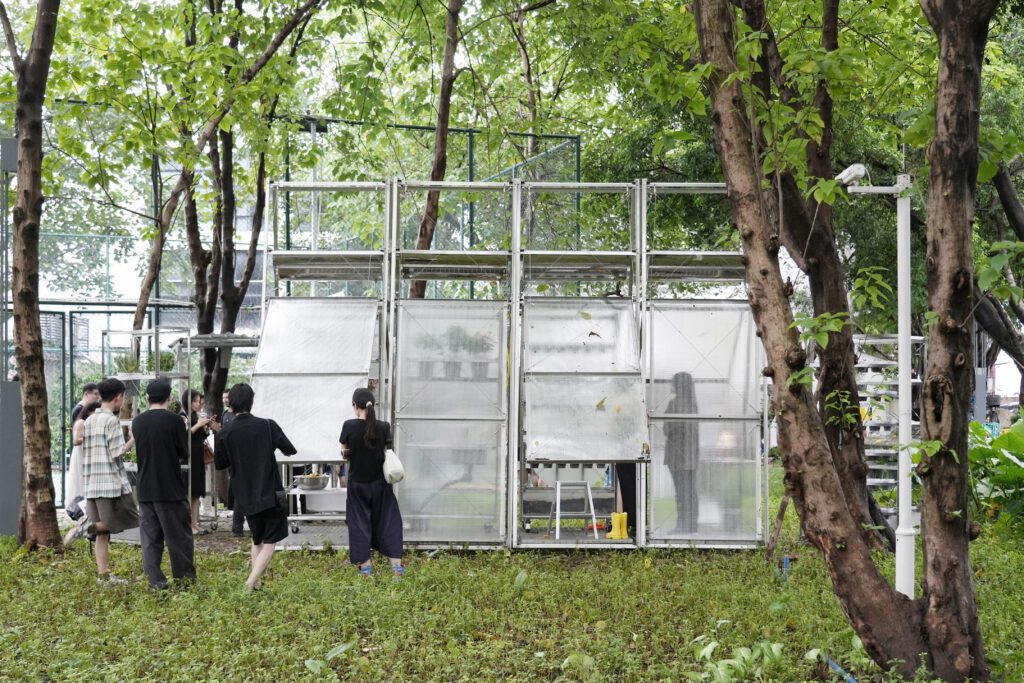
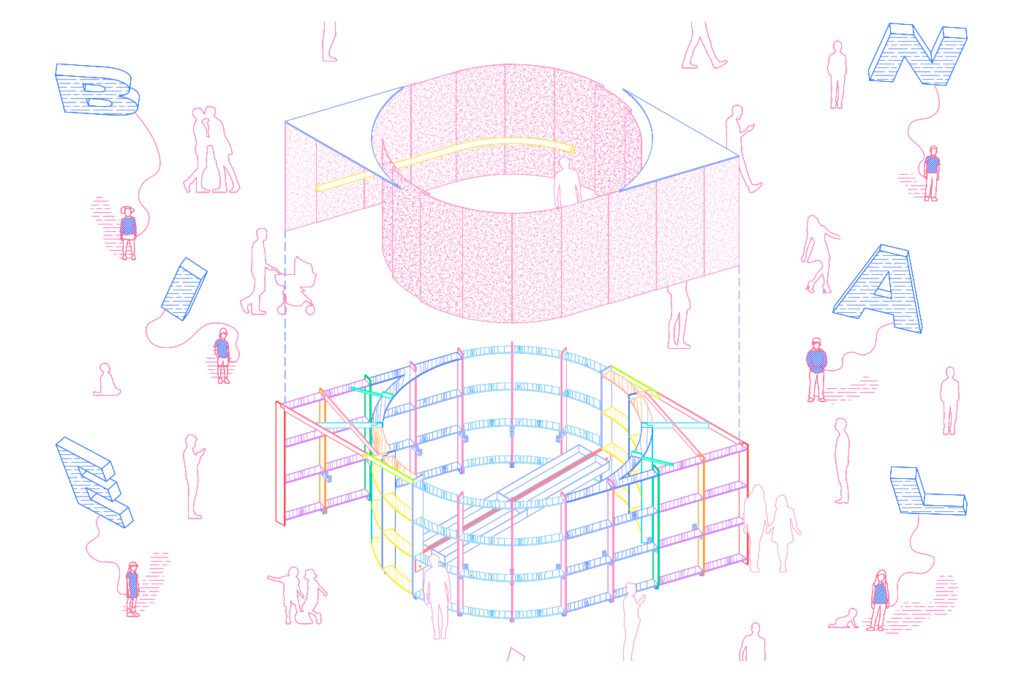
Your Greenhouse Is Your Living Room is an environmental device that amalgamates the roles of a greenhouse, an outdoor kitchen, and a living room. It speculates on the agency of growing vegetables and sharing food as a collective act to combat environmental extremes. Designed for abandoned and underused urban spaces, the pavilion features an assemblage of movable and operable furniture that animates the surroundings with vegetable growing racks, kitchen counters, and folding tables. When enclosed, it serves as a greenhouse that encourages growing activities; when opened, it transforms into an outdoor living room that fosters new forms of community sharing in urban life.

The pavilion embodies a microclimate of care that nurtures both plants and humans. It promotes a system of collective farming, where contaminated soil from nearby farmland is treated on site and stored in portable pots designed for communal growing and product exchange among community members. Rainwater, harvested and filtered through the metal reservoir overhead, circulates in the pavilion for gardening and cooking activities. Owing to spatial tactics that mitigate the challenges posed by extreme weather in a subtropical climate, such as strategic gaps between panels that allow for passive cooling, the structure provides an optimal environment for plants, providing the visitors with balanced conditions of ventilation and shading to co-inhabit the space with plants and other species.

Office for Roundtable is a design practice and research collective led by Leyuan Li, currently based in Denver, Colorado, and Guangzhou, China. Their projects span a broad spectrum of different types and scales at the cross-section between interior and urban realms, exploring spaces and events that facilitate sharing among diverse communities to create collective narratives. Recent built projects have been featured on PLOT, ArchDaily, Designboom, Architect’s Newspaper, Gooood, and KoozArch, among others. Most recently, Office for Roundtable was awarded an Honorable Mention in AN’s Best of Practice Awards in the Architect (New Firm) - Southwest category in 2025.

JXY Studio is an interdisciplinary architecture and art studio co-founded by Yue Xu and Jiaxun Xu. Our work aims to push the boundaries of traditional architectural design and explore innovative approaches to the construction of space and narrative through a broader range of mediums, involving the fields of design, research, and visual arts, incorporating imagery, painting, installation, photography, moving image, and other multimedia forms. Combined with extensive experience in digital creation, spatial installation, artistic re-conceptualization of space, and innovative urbanism, each project of the studio is grounded in both logical research and inventive practice. Drawing inspiration from the rich cultural heritage of Lingnan and the intersection of Eastern and Western cultures, we use this unique perspective to fuel the interdisciplinary explorations of architecture and art.

Project development: Brazil

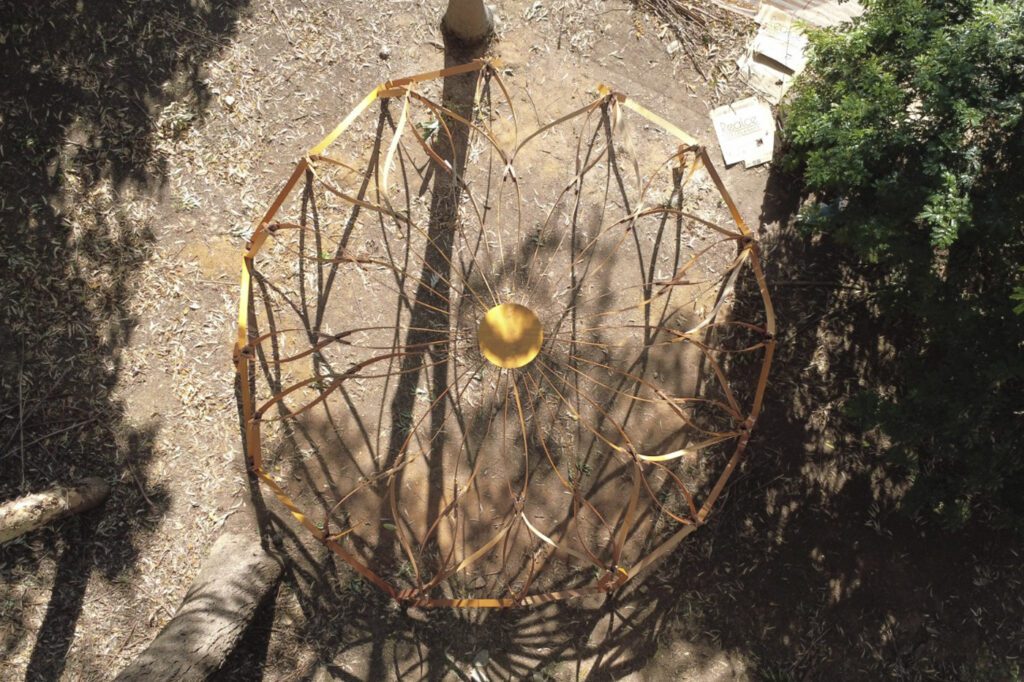
The POMPEIA DOME is the result of an academic and experimental exercise conducted by Class III of the Postgraduate Course “Wooden Architecture: Design and Technology” at the Madeira Center in partnership with the IPT.

The project arose from the challenge of creating a detachable, lightweight, and hand-built structure, using wood as the primary material. A domus wasn't the first proposal, but the circular geometry gained stability in the prototypes developed, and an evolution of processes emerged. The proposal involved everything from the initial design, through the structural study, to the complete execution of the project by the students themselves, in a collective process of intense experimentation.

The choice of manual construction was not only a practical limitation, but above all a pedagogical and conceptual decision. Every joint, cut, and connection of the domus was made without the use of industrial machinery, allowing participants to reconnect with the physical understanding of the material. This direct immersion provided a unique learning experience about wood's strength, plasticity, and behavior under various structural stresses.

Seen from above, the structure reveals its radial geometry. Wooden slats extend from a central core and extend around the perimeter, forming a pattern that combines symmetry and organicity. The lines suggest a spiraling movement, reminiscent of forms found in nature, such as petals or leaf veins. This constructive logic ensures a balance of forces, with each element working in compression and flexion, supported by the whole. In this frame, the dome appears not only as an architectural object but also as a living diagram of the relationship between form and the path of forces.

The Pompeii Dome thus establishes itself as a constructed experiment: a space where theory and practice merge, creating a space for living and contemplation. It highlights the potential of wood as a structural element in modular systems, exploring precise connections that ensure stability while revealing an aesthetic of lightness and organicity.

The name was given in honor of architect Prof. Dr. Roberto Alfredo Pompeia, who passed away prematurely in 2024 and was responsible for the "Structural Concepts in Wood: Form" course in the Wood Architecture program. The course is a partnership between IPT and the Wood Technology Reference Center, and its objectives include promoting the use of this noble, sustainable, and renewable material in civil construction.

The project's implementation reinforces the importance of experimentation in teaching architecture and wood engineering. More than a single construction, the domus is the result of a collective process that values craftsmanship, cooperation, and technical research. By physically occupying the space, the POMPEIA DOME embodies the intersection of construction tradition and contemporary research, using wood as the material for the future.

Project development: Brazil

As their final project, the second class of the postgraduate course “Wooden Architecture: Design and Technology” at the Madeira Center, in partnership with the Institute of Technological Research (IPT), developed a prototype of a geodesic structure, named “Carmodésica”.

To develop a lightweight and functional pavilion, the goal was to create a simple yet efficient structure capable of spanning large spans using small, modular, interconnected parts. The idea was that these parts could be manufactured rationally, allowing for easy assembly, disassembly, and transportation, optimizing available resources.

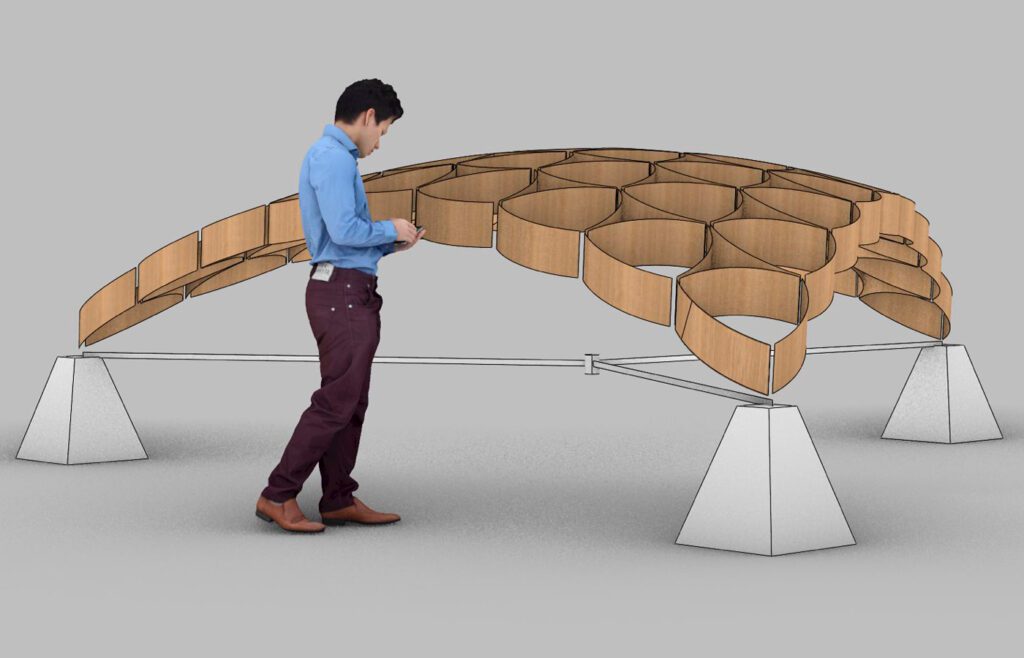
The project emerged as a way to deepen the study of modular wood construction systems, with an emphasis on the use of triangular geometries. 135 curved wooden slats were produced, glued, and pressed in a specific mold, forming 45 triangular modules. These structural units are connected by 55 specially designed and machined metal parts, with oblong holes that allow for small angle adjustments and enhance the flexibility and adaptability of the structure as a whole.

The veneers used are thin and flexible, yet strong, and their multi-layer bonding results in self-supporting elements with precise curvatures. The combination of engineered wood and metal connections offers a balance of strength, lightness, and adaptability.

The study developed by the class sought to fully explore the construction possibilities of glued laminated timber, proposing forms that challenge convention and emphasize the rational use of materials. The proposal also investigated how flexibility and modulation allow for varied spatial and aesthetic configurations.

This exercise allowed the creation of different geodesic pavilions from a single base structure, which can be assembled concave or convex, depending on the space's usage and context. This facilitates the creation of unique and innovative environments, based on solid geometric and structural principles, with a strong architectural and experimental appeal.

Project implementation: Brazil
Project development: Brazil

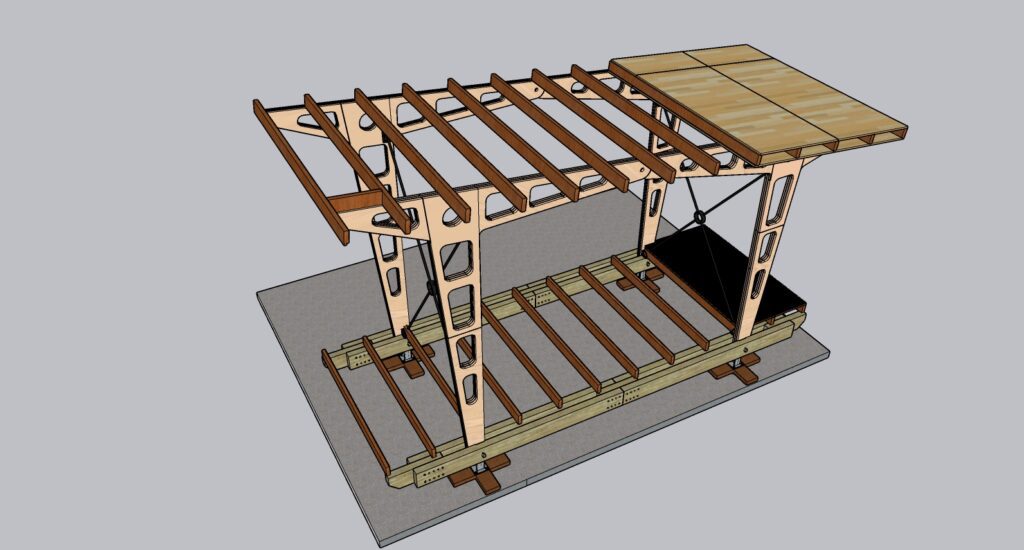
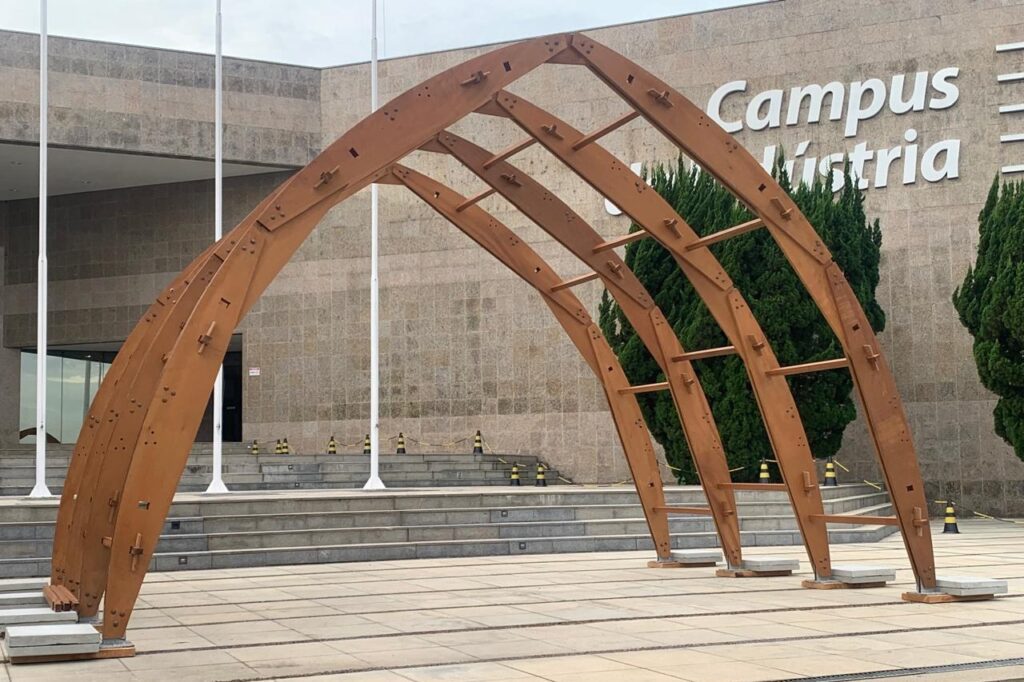
The first class of the Wood Center's Postgraduate Program, in partnership with IPT, was formed by architects, engineers, and designers interested in a pioneering proposal to expand knowledge of wood applied to Brazilian civil construction, thus seeking to address a significant gap in the training of professionals in the Brazilian market. The Integrated Project for the conclusion of the course was proposed to the students as a collective work applying the concepts discussed during the course, such as knowledge of the material and technologies, assembly logistics, geometric and aesthetic experimentation of form, dimensioning, among others, in addition to allowing students to gain real-world experience with the process and implications of design decisions. The Experimental Prototype was developed with the aim of producing a small pavilion that could be assembled from prefabricated modular wooden elements. The tri-articulated gantry is constructed from 30 mm plywood sheets, CNC-cut, glued, and bolted together to form a single pillar-and-beam assembly that supports the roof panels, manufactured using 12 x 5 cm commercial parts and 12 mm plywood sheets. The metal connection of the hot-dip galvanized steel base supports, in addition to the gantry, the floor structure, which is supported by factory-produced native wood decking panels. The assembly, designed from 2.40 m modules, allows for the gantry to be repeated and the pavilion's area to be adapted to accommodate available expansion space. The team, comprised of students and faculty, worked in the IPT carpentry shop, with the assistance of the technician in charge, to produce the prototype parts. Only the machining of the gantry panels was done externally. Understanding the complexity and difficulty of the adopted solutions and applying creativity to find viable solutions were part of the challenge of producing all the elements in a way that allowed for easy and quick assembly on site. The development of the project and the production of the prototype were supported by partner companies: Indusparquet, Rothoblaas, Immergrum, Montana Química, Osawa, Antoni Compensados, IBF, Amarante Madeiras, Formtap, Módulo Sequência, Mado Esquadrias, Omintrade.

Project implementation: Brazil
Project development: Brazil

Tecnoíndia Module

This is a project related to the areas of architecture and civil engineering, specifically in the field of low-cost housing and/or emergency housing.

The construction of quality, low-cost housing is an issue that affects thousands of families in Brazil. Federal, state, and municipal governments, in their housing programs, including for Indigenous peoples, use construction techniques that, with rare exceptions, largely involve masonry houses made of ceramic bricks or blocks, resulting in long construction times and material waste, among other factors. The project presented uses wood as a raw material; as a rule, public financial institutions, Banco do Brasil and Caixa Econômica Federal, do not finance wooden houses. The foundation of the proposed system seeks to respond to Indigenous peoples' demand for housing in contemporary society, establishing a design that can be understood as cultural, as it is modeled on the designs of traditional Indigenous houses. The system is modular and can also be used in emergency situations, constituting a fast-building, durable, and low-maintenance alternative.

The presented project uses wood as a raw material due to the material's qualities, highlighting the attribute of being totally sustainable, as it can be replenished in the environment.

The system features an innovative feature in developing the entire project based on the study of indigenous peoples' homes, where the roof and enclosing walls form a single structure, defining the design of the house itself, configured through the traditional ogival cut of indigenous dwellings. In conventional urban homes, the walls and roof are separate elements.

The system presented establishes the design of a wooden module piece, cut from commercially sized boards. The positioning of the pieces follows a sequence that forms an ogival arch, where the two parts of the arch are assembled so that each part consists of five module pieces, executed in sequence.

Two modular pieces are connected to two others using a modular piece positioned between them. The other part of the pointed arch is constructed in the same way, and the two parts are connected by the ridge. The entire connection process is done with screws.
Tecnoíndia Module Prototype

The Tecnoíndia Module prototype project is based on the design of traditional Brazilian indigenous houses, also incorporating the experiences of the French architect Philibert D´Lorme (1514-1570).
It seeks to combine the way indigenous houses are built with the needs of contemporary society.

From a single module piece, which is juxtaposed, the ogival portico common to indigenous houses is created.
Sets of pieces, connected by screws and arranged side by side, form the structural portico that will be repeated every 1.25 meters.

The Tecnoíndia Module is innovative and sustainable. The wood used demonstrates attention to and respect for ancestral technologies. The design is simple and sophisticated. The modular structure allows for easy assembly and disassembly.

Project implementation: Brazil
Project development: Brazil

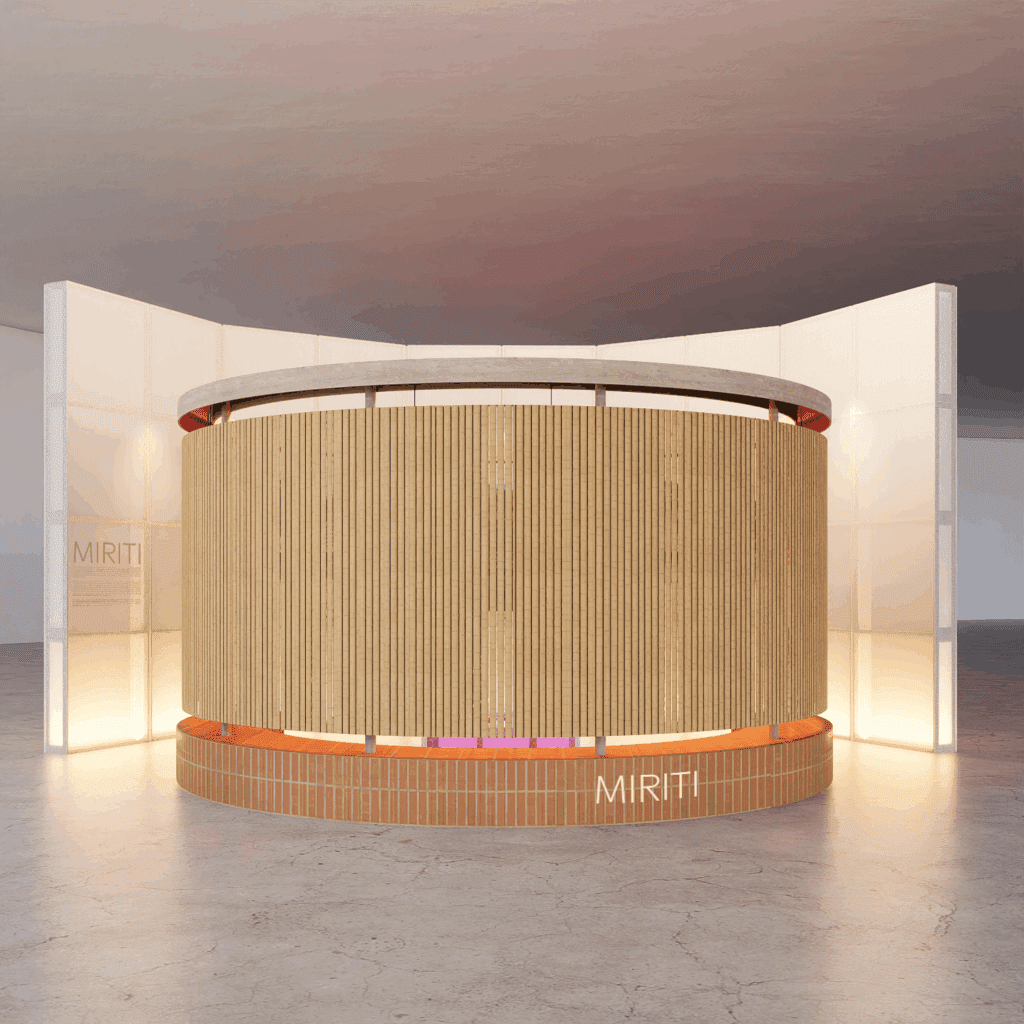
The miriti pavilion, designed by the Pará-based architecture firm Guá Arquitetura, in partnership with Joel Cordeiro's Atelier Miriti Sustentabilidade, presents miriti as a social technology and avant-garde material. Originating from the Amazonian palm tree Mauritia flexuosa, miriti has been a part of the culture of Abaetetuba for generations, where miriti crafts sustain families and mobilize a symbolic repertoire. Here, this ancestral knowledge meets contemporary engineering and reveals a material capable of reshaping, through this knowledge, the vocabulary of 21st-century architecture.

Lightness is both an argument and a proof. Research indicates that the petiole of the miriti tree is about six times lighter than ordinary wood, without sacrificing strength and durability. Its performance, when properly processed, surpasses that of ordinary MDF. This balance between weight and strength organizes the construction system and defines spatiality, making miriti a promising new sustainable and renewable material.

For this project, miriti is presented in three different forms, showcasing its versatility and creating an innovative construction experience. In the structure, the miriti "MDF Cross Laminated Board," developed with master Joel Cordeiro (Miriti Sustainability), demonstrates the robustness of the glued laminate; cross-layers stabilize the material and distribute stress, converting lightness into rigidity. Along the perimeter, splint curtains display the raw miriti, without structural processing, creating light and ventilation filters that vibrate with the air, demonstrating its lightness and ethereal character. In the background, translucent walls made by artisan Nazaré Alvino from handmade miriti paper, developed through the arts, like miriti washi, reveal the fiber's versatility and comprehensive use of the material; even the processing dust is returned as an input for the composite.

Another important fact is that the management is regenerative. The raw material comes from the stems of the oldest leaves; the palm tree is not cut down. Careful, timely pruning stimulates sprouting and maintains the production cycle, while the design prioritizes disassembly, lightweight transport, and reassembly, extending the lifespan of the components. Thus, sustainability ceases to be an adjective and becomes a method.

There's also an ongoing economic and cultural project. Since 2022, Guá has been researching, alongside artisans from Abaetetuba, ways to expand the application of miriti in architecture and design, increasing the perceived value of this material, maximizing income, and generating visibility and recognition for Abaetetuba's artisans. The curatorial platform, which has yielded awards, supports this experiment and points to a redistributive value chain, in which authorship is shared and the forest remains standing.

Upon entering the pavilion, visitors notice layers, the hand-crafted gestures, the engineering of the slats, the porosity that invites the wind, the light that passes through the fibers and illuminates the volumes. The light and ventilated complex affirms that innovation arises from the intersection of traditional knowledge and architectural reasoning. If the 21st century demands low-carbon and meaningful materials, miriti, light, renewable, and rooted, presents itself as the material of the future.

This pavilion is its manifesto, a trial of an architecture that learns from the forest and restores value, care and permanence.

Project development: Brazil

Ecosapiens is a multidisciplinary studio focused on building healthy environments. It works on ecological projects and projects across technologies, buildings, and territories, integrating people and nature.

In this installation, we present a response to a warming world through construction with hemp, a plant species that captures CO2 from the atmosphere during its development.

When its fibers are used in hempcrete (a mixture of hemp and lime), the captured carbon is stored in the building for decades, ultimately resulting in a positive carbon balance resulting in a low environmental impact building that helps mitigate climate change.

The installation combines a prefabricated module made of wood, lime and hemp panels and another module made of bricks built on site, highlighting the versatility of the technique used in construction as a seal, which is very efficient from a thermal and acoustic point of view.

In addition to hemp, in Brazil it makes sense to consider building with other fibers such as sugarcane and coconut, which, when mixed with lime, have characteristics similar to hempcrete.

In Brazil, hemp is produced by associations for therapeutic purposes whose medicinal value is indisputable and its fiber, precisely the material used in construction, is still an unused byproduct.

Since we have no tradition of industrial hemp cultivation, its agroecological production creates an essential social value chain, allowing small farmers to remain in the countryside with dignity.

Project implementation: Brazil
Project development: Brazil

Imagine an ephemeral artifact. Architectural, yes, but fleeting. A body erected in time, a space suspended between extremes—where the environment ceases to be merely a setting and becomes a character.

What's at stake? What agreements must be made so that life can continue in this world as we know it?

How can we bring to the table simple yet meaningful words: generosity, empathy, commitment, respect, and a common goal?

How can we reconnect with nature? How can we allow man-made things to bend to the power of nature?

To achieve this, we draw symbols. We imagine a concentric space that invites us to the center, that attracts us.

A contained, intimate interior, proportions that embrace, limits that mirror.

But not clear mirrors—blurred, diffuse reflections, where faces are lost and presences mingle. A suggestion that we are not alone. That the other inhabits us.

There are two accesses. Two doors. Two possible crossings.

Both interrupted. Both pointing to sides of the same whole.

A divided space — symmetrical and mirrored.

In the center, a table. A barrier and a meeting point. An invitation to conversation. A place of dispute.

Upon it rests a restrained, controlled nature.

It will be the agenda. It will be evidence.

Above, an artificial sky. The dome of the Palace of Arts, where light comes not from the sun, but from a constructed will.

This nature, trapped in the time of this artifact, provokes. Resists. Depends.

Who will take care of her? Who will bear the responsibility?

What's at stake in this room? What's being negotiated in this room?

Project implementation: Brazil
Project development: Brazil

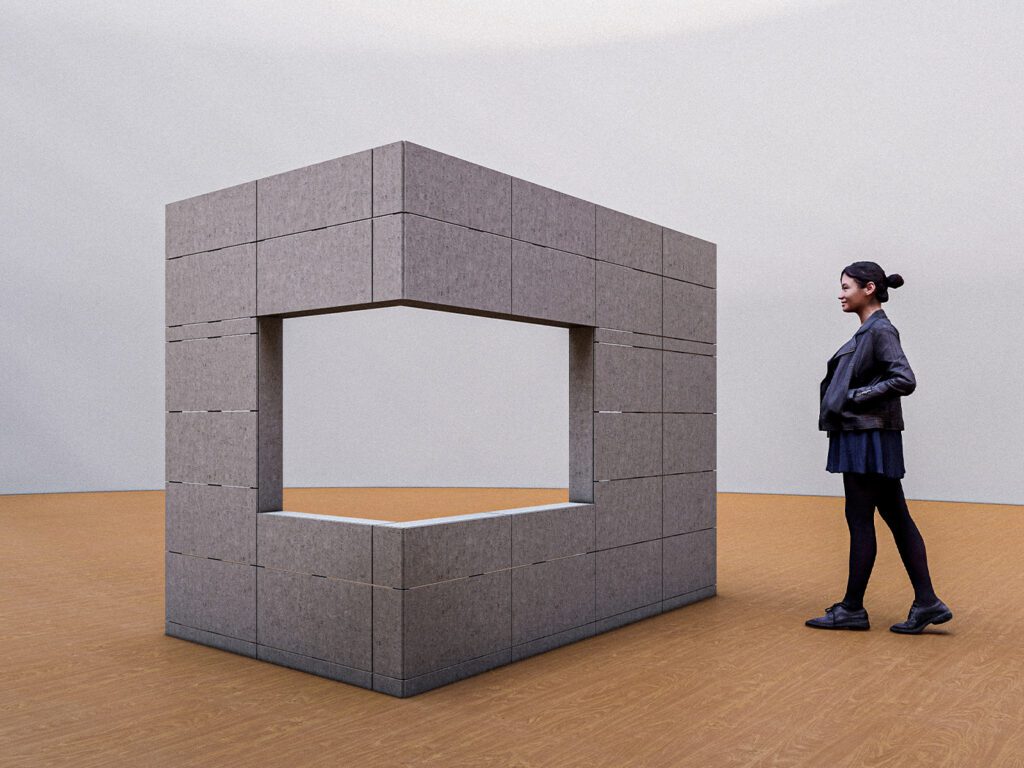
The exhibition proposal aims to discuss the possibility of large-scale construction with prefabricated elements in earth and straw for a sustainable construction path that can be easily achieved.

The idea of serial reproduction of the artifact, which does not translate into industrialized production systems.

Instead, we look at the popular and the work of the craftsman, that is, reproducibility according to the manual gesture with its specific virtues.

Earth and straw: domestic materials of human culture, are abundant construction resources in the territories and, together, form an opportune amalgam for architecture capable of self-structuring prefabricated blocks.

According to the latest IBGE Census from 2022, 87.9% of Brazilian households had exterior wall materials made of masonry or rammed earth with cladding, 7.2% were unclad masonry, and 4.1% were made of timber. This material is, therefore, one of the largest construction resources available in the country.

We present the test of a construction system for load-bearing walls in lightweight rammed earth, in order to contribute to the development of the technique and its applications: a block measuring 30x30x20cm, weighing 30kg and with a simple pressure load capacity of 8400kg to 15000kg (14 to 25kg/cm²).

Unlike foreign experiments in rammed earth prefabrication, especially the Austrian one, under the command of engineer Martin Rauch, which calls for mechanized efficiency in large-sized parts, here we sought a conceptual approximation with the research of Brazilian architect João Filgueiras Lima, in which every part must be sized to be carried by the hands of those working on the construction site.

Project development: Brazil and France

The combination of experiences and construction techniques around the world is making earthen houses increasingly economical, sustainable and beautiful!

These techniques and research are spread throughout the world. Here we have a glimpse of France, which, through Craterre/ENSAG, has a postgraduate program dedicated exclusively to earthen architecture and construction. A glimpse of other parts of the world, including Africa, our sister continent, where several techniques originated and blended with many others already used by the indigenous peoples of Brazil.

The contemporary Brazilian works on display here demonstrate the versatility of land use. The MST (Municipal Workers' Movement) mobilizes collective efforts to build earthen buildings in settlements. And some residences help break some of the paradigms still prevalent in Brazil. The houses can be high-end or nondescript, simply appropriate to their context. In short, earth is everywhere, being used in a wide variety of ways.

Our exhibition semicircle has materiality inside, in an arc greater than 180 degrees, because more than half of the houses on the planet are made of earth.
We've come together here to spread this knowledge as much as possible. There's no major industry interested in this topic, so there's no advertising. Land is almost always free. It's right under our feet. We're still few, but we're very confident in what we're doing. Not only is the house healthier, but we're emitting much less CO2 during and after construction. We, architects and builders, are extremely responsible for the planet's degradation. The construction industry is one of the largest contributors to the planet's CO2 emissions. It's up to us to decide which construction materials best suit the urgent need to change this situation.

CRAterre
The CRAterre association has extensive experience in the technical support of raw earth construction projects and housing projects for the largest possible number of people, in different contexts.

NAP PLAC – Research Support Center: Production and Language of the Built Environment / FAU USP

Argus Caruso Architecture
It is a studio specializing in Earthen Architecture and Construction. Directed by Architect Argus Caruso.

Laboraterra Architecture
It is a studio specializing in Earthen Architecture and Construction. Directed by Architects Alain Briatte and Luciano Bottino.

This exhibition was held with the support of the French Institute on the occasion of the Saison France – Brazil

Project development: United Kingdom

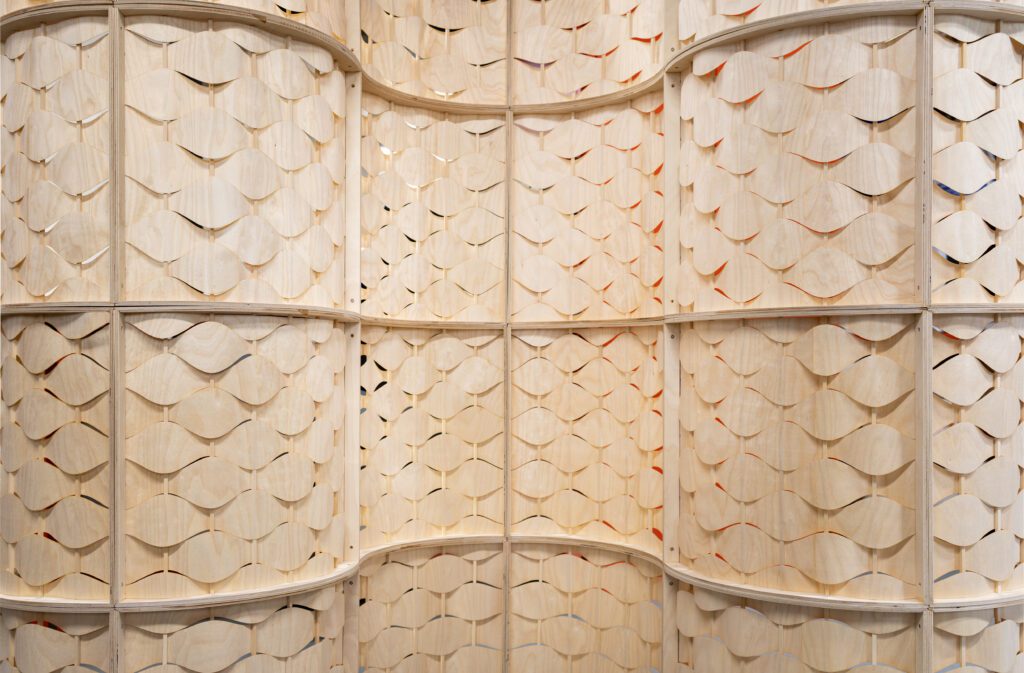
Woven Breathing Façade reimagines architecture as a living, adaptive organism. Conceived as a self-regulating system, it passively responds to heat, humidity, and rainfall by harnessing the hygroscopic properties of wood. Without electricity or mechanical components, its woven elements expand and contract with atmospheric shifts, opening to ventilate, closing to protect, and continually negotiating with the surrounding climate.

Instead of relying on technological complexity or artificial control, the project draws on the intrinsic intelligence of natural materials. Inspired by traditional basket-weaving techniques, the façade transforms wood’s innate hygroscopic capacity into a responsive textile. Each stitch functions as a pore, tightening or loosening with environmental change, creating a living weave that breathes with its context.

Over the course of the biennale, the installation will remain in motion. Subtle shifts in temperature, humidity, and even the presence of visitors will activate the façade, turning it into a slow performance of coexistence with natural forces.

At a time of climate extremes and ecological urgency, Woven Breathing Façade offers an alternative vision for the built environment. Rather than sealed, isolated systems dependent on energy-intensive infrastructures, it imagines buildings as porous membranes—sensitive, adaptive, and alive. This bio-inspired approach proposes a radical shift in how we design and inhabit space: an architecture that does not impose control, but instead listens, senses, and evolves in resonance with the rhythms of its environment.

Acknowledgements:
Breathing Woven Façade was developed through the RESPIRE: Passive, Responsive, Variable Porosity Building Skins research project, funded by a Leverhulme Trust Research Project Grant. Special thanks to Natalia Pynirtzi for her contribution to this work; and to Oliver Perry and Nathan Hudson for their technical support. The project was undertaken in partnership with the Hub for Biotechnology in the Built Environment (HBBE www.bbe.ac.uk) funded by Research England’s Expanding Excellence in England (E3) fund.

Project implementation: Brazil
Project development: Brazil

This 1:2 scale prototype presents, in detail, a section of the facade of Platina 220, a building designed for the Tatuapé neighborhood of São Paulo. By presenting a constructed fragment, the exhibition offers visitors the opportunity to closely understand the construction logic and materials that make up this landmark building in the urban landscape of São Paulo.

Unlike the most common solution in corporate buildings—a continuous glass skin—Platina 220 adopts a ventilated façade system. In this model, the external porcelain cladding is attached to the masonry using a metal support, creating a cavity between the two layers for air circulation. This solution, in addition to enhancing the building's architectural expression, is technically and sustainably designed: the constant air circulation removes approximately 20% of the incoming heat, improving thermal insulation and reducing the internal air conditioning load.

The construction logic is directly linked to the architectural gesture. The openings, distributed in a non-linear fashion, are combined with terraces arranged in different positions, creating a singular volume. The building's vertical prism thus appears to be sculpted by the solids and voids of the facade, generating dynamism and an architectural interpretation that goes beyond the repetition of floors.

Another striking aspect is the use of darker tones in the lower block, which visually reinforces the tower's verticality and creates the impression of buttresses—as if supporting the structure and lending solidity to the whole. This articulation of technique and form contributes to a building with a strong presence in the urban fabric, balancing constructive rationality, energy efficiency, and visual identity.

In the exhibition, the prototype is not merely a representational exercise. It functions as a key to interpreting the real building, bringing the public closer to the project's materiality. By revealing the thickness of the facade, the fastening system, and the relationship between the planes, this physical cutout highlights how architecture can be simultaneously rigorous, innovative, and sensitive to contemporary demands for comfort, sustainability, and aesthetic expression.

Virtual Tour of the 14th BIAsp 

The 14th São Paulo International Architecture Biennial, Extremes: Architectures for a hot world., It has expanded beyond physical space and can now be visited from anywhere! 

The virtual tour offers a new perspective on the exhibition, which took place from September 18th to October 19th at the Oca in Ibirapuera Park, allowing for fluid, free, and intuitive navigation between the different spaces. During the visit, curatorial content, high-definition images, and details that deepen the spatial and conceptual understanding of the artworks are available. 

The platform broadens access, preserves the memory of the Biennial, and creates new ways to experience architecture. 

Visit the 14th BIAsp here!  

Explore at your own pace, revisit routes, and deepen your experiences. 

The virtual tour will soon be available on the IABsp (Brazilian Institute of Architects – São Paulo branch) website.